mirror of
https://github.com/crewAIInc/crewAI.git
synced 2025-12-17 21:08:29 +00:00
Compare commits
3 Commits
bugfix/con
...
brandon/ad
| Author | SHA1 | Date | |
|---|---|---|---|

|
283b61fecc | ||
|
|
c977c24cc6 | ||
|
|
24dd00db04 |
1
.gitignore
vendored
1
.gitignore
vendored
@@ -22,4 +22,3 @@ crew_tasks_output.json
|
||||
.ruff_cache
|
||||
.venv
|
||||
agentops.log
|
||||
test_flow.html
|
||||
@@ -136,21 +136,17 @@ crewai test -n 5 -m gpt-3.5-turbo
|
||||
|
||||
### 8. Run
|
||||
|
||||
Run the crew or flow.
|
||||
Run the crew.
|
||||
|
||||
```shell Terminal
|
||||
crewai run
|
||||
```
|
||||
|
||||
<Note>
|
||||
Starting from version 0.103.0, the `crewai run` command can be used to run both standard crews and flows. For flows, it automatically detects the type from pyproject.toml and runs the appropriate command. This is now the recommended way to run both crews and flows.
|
||||
</Note>
|
||||
|
||||
<Note>
|
||||
Make sure to run these commands from the directory where your CrewAI project is set up.
|
||||
Some commands may require additional configuration or setup within your project structure.
|
||||
</Note>
|
||||
|
||||
|
||||
### 9. Chat
|
||||
|
||||
Starting in version `0.98.0`, when you run the `crewai chat` command, you start an interactive session with your crew. The AI assistant will guide you by asking for necessary inputs to execute the crew. Once all inputs are provided, the crew will execute its tasks.
|
||||
@@ -179,6 +175,7 @@ def crew(self) -> Crew:
|
||||
```
|
||||
</Note>
|
||||
|
||||
|
||||
### 10. API Keys
|
||||
|
||||
When running ```crewai create crew``` command, the CLI will first show you the top 5 most common LLM providers and ask you to select one.
|
||||
|
||||
@@ -1,350 +0,0 @@
|
||||
---
|
||||
title: 'Event Listeners'
|
||||
description: 'Tap into CrewAI events to build custom integrations and monitoring'
|
||||
---
|
||||
|
||||
# Event Listeners
|
||||
|
||||
CrewAI provides a powerful event system that allows you to listen for and react to various events that occur during the execution of your Crew. This feature enables you to build custom integrations, monitoring solutions, logging systems, or any other functionality that needs to be triggered based on CrewAI's internal events.
|
||||
|
||||
## How It Works
|
||||
|
||||
CrewAI uses an event bus architecture to emit events throughout the execution lifecycle. The event system is built on the following components:
|
||||
|
||||
1. **CrewAIEventsBus**: A singleton event bus that manages event registration and emission
|
||||
2. **CrewEvent**: Base class for all events in the system
|
||||
3. **BaseEventListener**: Abstract base class for creating custom event listeners
|
||||
|
||||
When specific actions occur in CrewAI (like a Crew starting execution, an Agent completing a task, or a tool being used), the system emits corresponding events. You can register handlers for these events to execute custom code when they occur.
|
||||
|
||||
## Creating a Custom Event Listener
|
||||
|
||||
To create a custom event listener, you need to:
|
||||
|
||||
1. Create a class that inherits from `BaseEventListener`
|
||||
2. Implement the `setup_listeners` method
|
||||
3. Register handlers for the events you're interested in
|
||||
4. Create an instance of your listener in the appropriate file
|
||||
|
||||
Here's a simple example of a custom event listener class:
|
||||
|
||||
```python
|
||||
from crewai.utilities.events import (
|
||||
CrewKickoffStartedEvent,
|
||||
CrewKickoffCompletedEvent,
|
||||
AgentExecutionCompletedEvent,
|
||||
)
|
||||
from crewai.utilities.events.base_event_listener import BaseEventListener
|
||||
|
||||
class MyCustomListener(BaseEventListener):
|
||||
def __init__(self):
|
||||
super().__init__()
|
||||
|
||||
def setup_listeners(self, crewai_event_bus):
|
||||
@crewai_event_bus.on(CrewKickoffStartedEvent)
|
||||
def on_crew_started(source, event):
|
||||
print(f"Crew '{event.crew_name}' has started execution!")
|
||||
|
||||
@crewai_event_bus.on(CrewKickoffCompletedEvent)
|
||||
def on_crew_completed(source, event):
|
||||
print(f"Crew '{event.crew_name}' has completed execution!")
|
||||
print(f"Output: {event.output}")
|
||||
|
||||
@crewai_event_bus.on(AgentExecutionCompletedEvent)
|
||||
def on_agent_execution_completed(source, event):
|
||||
print(f"Agent '{event.agent.role}' completed task")
|
||||
print(f"Output: {event.output}")
|
||||
```
|
||||
|
||||
## Properly Registering Your Listener
|
||||
|
||||
Simply defining your listener class isn't enough. You need to create an instance of it and ensure it's imported in your application. This ensures that:
|
||||
|
||||
1. The event handlers are registered with the event bus
|
||||
2. The listener instance remains in memory (not garbage collected)
|
||||
3. The listener is active when events are emitted
|
||||
|
||||
### Option 1: Import and Instantiate in Your Crew or Flow Implementation
|
||||
|
||||
The most important thing is to create an instance of your listener in the file where your Crew or Flow is defined and executed:
|
||||
|
||||
#### For Crew-based Applications
|
||||
|
||||
Create and import your listener at the top of your Crew implementation file:
|
||||
|
||||
```python
|
||||
# In your crew.py file
|
||||
from crewai import Agent, Crew, Task
|
||||
from my_listeners import MyCustomListener
|
||||
|
||||
# Create an instance of your listener
|
||||
my_listener = MyCustomListener()
|
||||
|
||||
class MyCustomCrew:
|
||||
# Your crew implementation...
|
||||
|
||||
def crew(self):
|
||||
return Crew(
|
||||
agents=[...],
|
||||
tasks=[...],
|
||||
# ...
|
||||
)
|
||||
```
|
||||
|
||||
#### For Flow-based Applications
|
||||
|
||||
Create and import your listener at the top of your Flow implementation file:
|
||||
|
||||
```python
|
||||
# In your main.py or flow.py file
|
||||
from crewai.flow import Flow, listen, start
|
||||
from my_listeners import MyCustomListener
|
||||
|
||||
# Create an instance of your listener
|
||||
my_listener = MyCustomListener()
|
||||
|
||||
class MyCustomFlow(Flow):
|
||||
# Your flow implementation...
|
||||
|
||||
@start()
|
||||
def first_step(self):
|
||||
# ...
|
||||
```
|
||||
|
||||
This ensures that your listener is loaded and active when your Crew or Flow is executed.
|
||||
|
||||
### Option 2: Create a Package for Your Listeners
|
||||
|
||||
For a more structured approach, especially if you have multiple listeners:
|
||||
|
||||
1. Create a package for your listeners:
|
||||
|
||||
```
|
||||
my_project/
|
||||
├── listeners/
|
||||
│ ├── __init__.py
|
||||
│ ├── my_custom_listener.py
|
||||
│ └── another_listener.py
|
||||
```
|
||||
|
||||
2. In `my_custom_listener.py`, define your listener class and create an instance:
|
||||
|
||||
```python
|
||||
# my_custom_listener.py
|
||||
from crewai.utilities.events.base_event_listener import BaseEventListener
|
||||
# ... import events ...
|
||||
|
||||
class MyCustomListener(BaseEventListener):
|
||||
# ... implementation ...
|
||||
|
||||
# Create an instance of your listener
|
||||
my_custom_listener = MyCustomListener()
|
||||
```
|
||||
|
||||
3. In `__init__.py`, import the listener instances to ensure they're loaded:
|
||||
|
||||
```python
|
||||
# __init__.py
|
||||
from .my_custom_listener import my_custom_listener
|
||||
from .another_listener import another_listener
|
||||
|
||||
# Optionally export them if you need to access them elsewhere
|
||||
__all__ = ['my_custom_listener', 'another_listener']
|
||||
```
|
||||
|
||||
4. Import your listeners package in your Crew or Flow file:
|
||||
|
||||
```python
|
||||
# In your crew.py or flow.py file
|
||||
import my_project.listeners # This loads all your listeners
|
||||
|
||||
class MyCustomCrew:
|
||||
# Your crew implementation...
|
||||
```
|
||||
|
||||
This is exactly how CrewAI's built-in `agentops_listener` is registered. In the CrewAI codebase, you'll find:
|
||||
|
||||
```python
|
||||
# src/crewai/utilities/events/third_party/__init__.py
|
||||
from .agentops_listener import agentops_listener
|
||||
```
|
||||
|
||||
This ensures the `agentops_listener` is loaded when the `crewai.utilities.events` package is imported.
|
||||
|
||||
## Available Event Types
|
||||
|
||||
CrewAI provides a wide range of events that you can listen for:
|
||||
|
||||
### Crew Events
|
||||
|
||||
- **CrewKickoffStartedEvent**: Emitted when a Crew starts execution
|
||||
- **CrewKickoffCompletedEvent**: Emitted when a Crew completes execution
|
||||
- **CrewKickoffFailedEvent**: Emitted when a Crew fails to complete execution
|
||||
- **CrewTestStartedEvent**: Emitted when a Crew starts testing
|
||||
- **CrewTestCompletedEvent**: Emitted when a Crew completes testing
|
||||
- **CrewTestFailedEvent**: Emitted when a Crew fails to complete testing
|
||||
- **CrewTrainStartedEvent**: Emitted when a Crew starts training
|
||||
- **CrewTrainCompletedEvent**: Emitted when a Crew completes training
|
||||
- **CrewTrainFailedEvent**: Emitted when a Crew fails to complete training
|
||||
|
||||
### Agent Events
|
||||
|
||||
- **AgentExecutionStartedEvent**: Emitted when an Agent starts executing a task
|
||||
- **AgentExecutionCompletedEvent**: Emitted when an Agent completes executing a task
|
||||
- **AgentExecutionErrorEvent**: Emitted when an Agent encounters an error during execution
|
||||
|
||||
### Task Events
|
||||
|
||||
- **TaskStartedEvent**: Emitted when a Task starts execution
|
||||
- **TaskCompletedEvent**: Emitted when a Task completes execution
|
||||
- **TaskFailedEvent**: Emitted when a Task fails to complete execution
|
||||
- **TaskEvaluationEvent**: Emitted when a Task is evaluated
|
||||
|
||||
### Tool Usage Events
|
||||
|
||||
- **ToolUsageStartedEvent**: Emitted when a tool execution is started
|
||||
- **ToolUsageFinishedEvent**: Emitted when a tool execution is completed
|
||||
- **ToolUsageErrorEvent**: Emitted when a tool execution encounters an error
|
||||
- **ToolValidateInputErrorEvent**: Emitted when a tool input validation encounters an error
|
||||
- **ToolExecutionErrorEvent**: Emitted when a tool execution encounters an error
|
||||
- **ToolSelectionErrorEvent**: Emitted when there's an error selecting a tool
|
||||
|
||||
### Flow Events
|
||||
|
||||
- **FlowCreatedEvent**: Emitted when a Flow is created
|
||||
- **FlowStartedEvent**: Emitted when a Flow starts execution
|
||||
- **FlowFinishedEvent**: Emitted when a Flow completes execution
|
||||
- **FlowPlotEvent**: Emitted when a Flow is plotted
|
||||
- **MethodExecutionStartedEvent**: Emitted when a Flow method starts execution
|
||||
- **MethodExecutionFinishedEvent**: Emitted when a Flow method completes execution
|
||||
- **MethodExecutionFailedEvent**: Emitted when a Flow method fails to complete execution
|
||||
|
||||
### LLM Events
|
||||
|
||||
- **LLMCallStartedEvent**: Emitted when an LLM call starts
|
||||
- **LLMCallCompletedEvent**: Emitted when an LLM call completes
|
||||
- **LLMCallFailedEvent**: Emitted when an LLM call fails
|
||||
- **LLMStreamChunkEvent**: Emitted for each chunk received during streaming LLM responses
|
||||
|
||||
## Event Handler Structure
|
||||
|
||||
Each event handler receives two parameters:
|
||||
|
||||
1. **source**: The object that emitted the event
|
||||
2. **event**: The event instance, containing event-specific data
|
||||
|
||||
The structure of the event object depends on the event type, but all events inherit from `CrewEvent` and include:
|
||||
|
||||
- **timestamp**: The time when the event was emitted
|
||||
- **type**: A string identifier for the event type
|
||||
|
||||
Additional fields vary by event type. For example, `CrewKickoffCompletedEvent` includes `crew_name` and `output` fields.
|
||||
|
||||
## Real-World Example: Integration with AgentOps
|
||||
|
||||
CrewAI includes an example of a third-party integration with [AgentOps](https://github.com/AgentOps-AI/agentops), a monitoring and observability platform for AI agents. Here's how it's implemented:
|
||||
|
||||
```python
|
||||
from typing import Optional
|
||||
|
||||
from crewai.utilities.events import (
|
||||
CrewKickoffCompletedEvent,
|
||||
ToolUsageErrorEvent,
|
||||
ToolUsageStartedEvent,
|
||||
)
|
||||
from crewai.utilities.events.base_event_listener import BaseEventListener
|
||||
from crewai.utilities.events.crew_events import CrewKickoffStartedEvent
|
||||
from crewai.utilities.events.task_events import TaskEvaluationEvent
|
||||
|
||||
try:
|
||||
import agentops
|
||||
AGENTOPS_INSTALLED = True
|
||||
except ImportError:
|
||||
AGENTOPS_INSTALLED = False
|
||||
|
||||
class AgentOpsListener(BaseEventListener):
|
||||
tool_event: Optional["agentops.ToolEvent"] = None
|
||||
session: Optional["agentops.Session"] = None
|
||||
|
||||
def __init__(self):
|
||||
super().__init__()
|
||||
|
||||
def setup_listeners(self, crewai_event_bus):
|
||||
if not AGENTOPS_INSTALLED:
|
||||
return
|
||||
|
||||
@crewai_event_bus.on(CrewKickoffStartedEvent)
|
||||
def on_crew_kickoff_started(source, event: CrewKickoffStartedEvent):
|
||||
self.session = agentops.init()
|
||||
for agent in source.agents:
|
||||
if self.session:
|
||||
self.session.create_agent(
|
||||
name=agent.role,
|
||||
agent_id=str(agent.id),
|
||||
)
|
||||
|
||||
@crewai_event_bus.on(CrewKickoffCompletedEvent)
|
||||
def on_crew_kickoff_completed(source, event: CrewKickoffCompletedEvent):
|
||||
if self.session:
|
||||
self.session.end_session(
|
||||
end_state="Success",
|
||||
end_state_reason="Finished Execution",
|
||||
)
|
||||
|
||||
@crewai_event_bus.on(ToolUsageStartedEvent)
|
||||
def on_tool_usage_started(source, event: ToolUsageStartedEvent):
|
||||
self.tool_event = agentops.ToolEvent(name=event.tool_name)
|
||||
if self.session:
|
||||
self.session.record(self.tool_event)
|
||||
|
||||
@crewai_event_bus.on(ToolUsageErrorEvent)
|
||||
def on_tool_usage_error(source, event: ToolUsageErrorEvent):
|
||||
agentops.ErrorEvent(exception=event.error, trigger_event=self.tool_event)
|
||||
```
|
||||
|
||||
This listener initializes an AgentOps session when a Crew starts, registers agents with AgentOps, tracks tool usage, and ends the session when the Crew completes.
|
||||
|
||||
The AgentOps listener is registered in CrewAI's event system through the import in `src/crewai/utilities/events/third_party/__init__.py`:
|
||||
|
||||
```python
|
||||
from .agentops_listener import agentops_listener
|
||||
```
|
||||
|
||||
This ensures the `agentops_listener` is loaded when the `crewai.utilities.events` package is imported.
|
||||
|
||||
## Advanced Usage: Scoped Handlers
|
||||
|
||||
For temporary event handling (useful for testing or specific operations), you can use the `scoped_handlers` context manager:
|
||||
|
||||
```python
|
||||
from crewai.utilities.events import crewai_event_bus, CrewKickoffStartedEvent
|
||||
|
||||
with crewai_event_bus.scoped_handlers():
|
||||
@crewai_event_bus.on(CrewKickoffStartedEvent)
|
||||
def temp_handler(source, event):
|
||||
print("This handler only exists within this context")
|
||||
|
||||
# Do something that emits events
|
||||
|
||||
# Outside the context, the temporary handler is removed
|
||||
```
|
||||
|
||||
## Use Cases
|
||||
|
||||
Event listeners can be used for a variety of purposes:
|
||||
|
||||
1. **Logging and Monitoring**: Track the execution of your Crew and log important events
|
||||
2. **Analytics**: Collect data about your Crew's performance and behavior
|
||||
3. **Debugging**: Set up temporary listeners to debug specific issues
|
||||
4. **Integration**: Connect CrewAI with external systems like monitoring platforms, databases, or notification services
|
||||
5. **Custom Behavior**: Trigger custom actions based on specific events
|
||||
|
||||
## Best Practices
|
||||
|
||||
1. **Keep Handlers Light**: Event handlers should be lightweight and avoid blocking operations
|
||||
2. **Error Handling**: Include proper error handling in your event handlers to prevent exceptions from affecting the main execution
|
||||
3. **Cleanup**: If your listener allocates resources, ensure they're properly cleaned up
|
||||
4. **Selective Listening**: Only listen for events you actually need to handle
|
||||
5. **Testing**: Test your event listeners in isolation to ensure they behave as expected
|
||||
|
||||
By leveraging CrewAI's event system, you can extend its functionality and integrate it seamlessly with your existing infrastructure.
|
||||
@@ -150,12 +150,12 @@ final_output = flow.kickoff()
|
||||
|
||||
print("---- Final Output ----")
|
||||
print(final_output)
|
||||
```
|
||||
````
|
||||
|
||||
```text Output
|
||||
---- Final Output ----
|
||||
Second method received: Output from first_method
|
||||
```
|
||||
````
|
||||
|
||||
</CodeGroup>
|
||||
|
||||
@@ -738,34 +738,3 @@ Also, check out our YouTube video on how to use flows in CrewAI below!
|
||||
referrerpolicy="strict-origin-when-cross-origin"
|
||||
allowfullscreen
|
||||
></iframe>
|
||||
|
||||
## Running Flows
|
||||
|
||||
There are two ways to run a flow:
|
||||
|
||||
### Using the Flow API
|
||||
|
||||
You can run a flow programmatically by creating an instance of your flow class and calling the `kickoff()` method:
|
||||
|
||||
```python
|
||||
flow = ExampleFlow()
|
||||
result = flow.kickoff()
|
||||
```
|
||||
|
||||
### Using the CLI
|
||||
|
||||
Starting from version 0.103.0, you can run flows using the `crewai run` command:
|
||||
|
||||
```shell
|
||||
crewai run
|
||||
```
|
||||
|
||||
This command automatically detects if your project is a flow (based on the `type = "flow"` setting in your pyproject.toml) and runs it accordingly. This is the recommended way to run flows from the command line.
|
||||
|
||||
For backward compatibility, you can also use:
|
||||
|
||||
```shell
|
||||
crewai flow kickoff
|
||||
```
|
||||
|
||||
However, the `crewai run` command is now the preferred method as it works for both crews and flows.
|
||||
|
||||
File diff suppressed because it is too large
Load Diff
@@ -506,7 +506,7 @@ my_crew = Crew(
|
||||
)
|
||||
```
|
||||
|
||||
### Resetting Memory via cli
|
||||
### Resetting Memory
|
||||
|
||||
```shell
|
||||
crewai reset-memories [OPTIONS]
|
||||
@@ -520,46 +520,8 @@ crewai reset-memories [OPTIONS]
|
||||
| `-s`, `--short` | Reset SHORT TERM memory. | Flag (boolean) | False |
|
||||
| `-e`, `--entities` | Reset ENTITIES memory. | Flag (boolean) | False |
|
||||
| `-k`, `--kickoff-outputs` | Reset LATEST KICKOFF TASK OUTPUTS. | Flag (boolean) | False |
|
||||
| `-kn`, `--knowledge` | Reset KNOWLEDEGE storage | Flag (boolean) | False |
|
||||
| `-a`, `--all` | Reset ALL memories. | Flag (boolean) | False |
|
||||
|
||||
Note: To use the cli command you need to have your crew in a file called crew.py in the same directory.
|
||||
|
||||
|
||||
|
||||
|
||||
### Resetting Memory via crew object
|
||||
|
||||
```python
|
||||
|
||||
my_crew = Crew(
|
||||
agents=[...],
|
||||
tasks=[...],
|
||||
process=Process.sequential,
|
||||
memory=True,
|
||||
verbose=True,
|
||||
embedder={
|
||||
"provider": "custom",
|
||||
"config": {
|
||||
"embedder": CustomEmbedder()
|
||||
}
|
||||
}
|
||||
)
|
||||
|
||||
my_crew.reset_memories(command_type = 'all') # Resets all the memory
|
||||
```
|
||||
|
||||
#### Resetting Memory Options
|
||||
|
||||
| Command Type | Description |
|
||||
| :----------------- | :------------------------------- |
|
||||
| `long` | Reset LONG TERM memory. |
|
||||
| `short` | Reset SHORT TERM memory. |
|
||||
| `entities` | Reset ENTITIES memory. |
|
||||
| `kickoff_outputs` | Reset LATEST KICKOFF TASK OUTPUTS. |
|
||||
| `knowledge` | Reset KNOWLEDGE memory. |
|
||||
| `all` | Reset ALL memories. |
|
||||
|
||||
|
||||
## Benefits of Using CrewAI's Memory System
|
||||
|
||||
|
||||
@@ -876,19 +876,6 @@ save_output_task = Task(
|
||||
#...
|
||||
```
|
||||
|
||||
Check out the video below to see how to use structured outputs in CrewAI:
|
||||
|
||||
<iframe
|
||||
width="560"
|
||||
height="315"
|
||||
src="https://www.youtube.com/embed/dNpKQk5uxHw"
|
||||
title="YouTube video player"
|
||||
frameborder="0"
|
||||
allow="accelerometer; autoplay; clipboard-write; encrypted-media; gyroscope; picture-in-picture; web-share"
|
||||
referrerpolicy="strict-origin-when-cross-origin"
|
||||
allowfullscreen
|
||||
></iframe>
|
||||
|
||||
## Conclusion
|
||||
|
||||
Tasks are the driving force behind the actions of agents in CrewAI.
|
||||
|
||||
@@ -48,6 +48,7 @@ Define a crew with a designated manager and establish a clear chain of command.
|
||||
</Tip>
|
||||
|
||||
```python Code
|
||||
from langchain_openai import ChatOpenAI
|
||||
from crewai import Crew, Process, Agent
|
||||
|
||||
# Agents are defined with attributes for backstory, cache, and verbose mode
|
||||
@@ -55,51 +56,38 @@ researcher = Agent(
|
||||
role='Researcher',
|
||||
goal='Conduct in-depth analysis',
|
||||
backstory='Experienced data analyst with a knack for uncovering hidden trends.',
|
||||
cache=True,
|
||||
verbose=False,
|
||||
# tools=[] # This can be optionally specified; defaults to an empty list
|
||||
use_system_prompt=True, # Enable or disable system prompts for this agent
|
||||
max_rpm=30, # Limit on the number of requests per minute
|
||||
max_iter=5 # Maximum number of iterations for a final answer
|
||||
)
|
||||
writer = Agent(
|
||||
role='Writer',
|
||||
goal='Create engaging content',
|
||||
backstory='Creative writer passionate about storytelling in technical domains.',
|
||||
cache=True,
|
||||
verbose=False,
|
||||
# tools=[] # Optionally specify tools; defaults to an empty list
|
||||
use_system_prompt=True, # Enable or disable system prompts for this agent
|
||||
max_rpm=30, # Limit on the number of requests per minute
|
||||
max_iter=5 # Maximum number of iterations for a final answer
|
||||
)
|
||||
|
||||
# Establishing the crew with a hierarchical process and additional configurations
|
||||
project_crew = Crew(
|
||||
tasks=[...], # Tasks to be delegated and executed under the manager's supervision
|
||||
agents=[researcher, writer],
|
||||
manager_llm="gpt-4o", # Specify which LLM the manager should use
|
||||
process=Process.hierarchical,
|
||||
planning=True,
|
||||
manager_llm=ChatOpenAI(temperature=0, model="gpt-4"), # Mandatory if manager_agent is not set
|
||||
process=Process.hierarchical, # Specifies the hierarchical management approach
|
||||
respect_context_window=True, # Enable respect of the context window for tasks
|
||||
memory=True, # Enable memory usage for enhanced task execution
|
||||
manager_agent=None, # Optional: explicitly set a specific agent as manager instead of the manager_llm
|
||||
planning=True, # Enable planning feature for pre-execution strategy
|
||||
)
|
||||
```
|
||||
|
||||
### Using a Custom Manager Agent
|
||||
|
||||
Alternatively, you can create a custom manager agent with specific attributes tailored to your project's management needs. This gives you more control over the manager's behavior and capabilities.
|
||||
|
||||
```python
|
||||
# Define a custom manager agent
|
||||
manager = Agent(
|
||||
role="Project Manager",
|
||||
goal="Efficiently manage the crew and ensure high-quality task completion",
|
||||
backstory="You're an experienced project manager, skilled in overseeing complex projects and guiding teams to success.",
|
||||
allow_delegation=True,
|
||||
)
|
||||
|
||||
# Use the custom manager in your crew
|
||||
project_crew = Crew(
|
||||
tasks=[...],
|
||||
agents=[researcher, writer],
|
||||
manager_agent=manager, # Use your custom manager agent
|
||||
process=Process.hierarchical,
|
||||
planning=True,
|
||||
)
|
||||
```
|
||||
|
||||
<Tip>
|
||||
For more details on creating and customizing a manager agent, check out the [Custom Manager Agent documentation](https://docs.crewai.com/how-to/custom-manager-agent#custom-manager-agent).
|
||||
</Tip>
|
||||
|
||||
|
||||
### Workflow in Action
|
||||
|
||||
1. **Task Assignment**: The manager assigns tasks strategically, considering each agent's capabilities and available tools.
|
||||
|
||||
@@ -54,8 +54,7 @@ coding_agent = Agent(
|
||||
# Create a task that requires code execution
|
||||
data_analysis_task = Task(
|
||||
description="Analyze the given dataset and calculate the average age of participants. Ages: {ages}",
|
||||
agent=coding_agent,
|
||||
expected_output="The average age of the participants."
|
||||
agent=coding_agent
|
||||
)
|
||||
|
||||
# Create a crew and add the task
|
||||
|
||||
@@ -1,100 +0,0 @@
|
||||
---
|
||||
title: Agent Monitoring with Langfuse
|
||||
description: Learn how to integrate Langfuse with CrewAI via OpenTelemetry using OpenLit
|
||||
icon: magnifying-glass-chart
|
||||
---
|
||||
|
||||
# Integrate Langfuse with CrewAI
|
||||
|
||||
This notebook demonstrates how to integrate **Langfuse** with **CrewAI** using OpenTelemetry via the **OpenLit** SDK. By the end of this notebook, you will be able to trace your CrewAI applications with Langfuse for improved observability and debugging.
|
||||
|
||||
> **What is Langfuse?** [Langfuse](https://langfuse.com) is an open-source LLM engineering platform. It provides tracing and monitoring capabilities for LLM applications, helping developers debug, analyze, and optimize their AI systems. Langfuse integrates with various tools and frameworks via native integrations, OpenTelemetry, and APIs/SDKs.
|
||||
|
||||
[](https://langfuse.com/watch-demo)
|
||||
|
||||
## Get Started
|
||||
|
||||
We'll walk through a simple example of using CrewAI and integrating it with Langfuse via OpenTelemetry using OpenLit.
|
||||
|
||||
### Step 1: Install Dependencies
|
||||
|
||||
|
||||
```python
|
||||
%pip install langfuse openlit crewai crewai_tools
|
||||
```
|
||||
|
||||
### Step 2: Set Up Environment Variables
|
||||
|
||||
Set your Langfuse API keys and configure OpenTelemetry export settings to send traces to Langfuse. Please refer to the [Langfuse OpenTelemetry Docs](https://langfuse.com/docs/opentelemetry/get-started) for more information on the Langfuse OpenTelemetry endpoint `/api/public/otel` and authentication.
|
||||
|
||||
|
||||
```python
|
||||
import os
|
||||
import base64
|
||||
|
||||
LANGFUSE_PUBLIC_KEY="pk-lf-..."
|
||||
LANGFUSE_SECRET_KEY="sk-lf-..."
|
||||
LANGFUSE_AUTH=base64.b64encode(f"{LANGFUSE_PUBLIC_KEY}:{LANGFUSE_SECRET_KEY}".encode()).decode()
|
||||
|
||||
os.environ["OTEL_EXPORTER_OTLP_ENDPOINT"] = "https://cloud.langfuse.com/api/public/otel" # EU data region
|
||||
# os.environ["OTEL_EXPORTER_OTLP_ENDPOINT"] = "https://us.cloud.langfuse.com/api/public/otel" # US data region
|
||||
os.environ["OTEL_EXPORTER_OTLP_HEADERS"] = f"Authorization=Basic {LANGFUSE_AUTH}"
|
||||
|
||||
# your openai key
|
||||
os.environ["OPENAI_API_KEY"] = "sk-..."
|
||||
```
|
||||
|
||||
### Step 3: Initialize OpenLit
|
||||
|
||||
Initialize the OpenLit OpenTelemetry instrumentation SDK to start capturing OpenTelemetry traces.
|
||||
|
||||
|
||||
```python
|
||||
import openlit
|
||||
|
||||
openlit.init()
|
||||
```
|
||||
|
||||
### Step 4: Create a Simple CrewAI Application
|
||||
|
||||
We'll create a simple CrewAI application where multiple agents collaborate to answer a user's question.
|
||||
|
||||
|
||||
```python
|
||||
from crewai import Agent, Task, Crew
|
||||
|
||||
from crewai_tools import (
|
||||
WebsiteSearchTool
|
||||
)
|
||||
|
||||
web_rag_tool = WebsiteSearchTool()
|
||||
|
||||
writer = Agent(
|
||||
role="Writer",
|
||||
goal="You make math engaging and understandable for young children through poetry",
|
||||
backstory="You're an expert in writing haikus but you know nothing of math.",
|
||||
tools=[web_rag_tool],
|
||||
)
|
||||
|
||||
task = Task(description=("What is {multiplication}?"),
|
||||
expected_output=("Compose a haiku that includes the answer."),
|
||||
agent=writer)
|
||||
|
||||
crew = Crew(
|
||||
agents=[writer],
|
||||
tasks=[task],
|
||||
share_crew=False
|
||||
)
|
||||
```
|
||||
|
||||
### Step 5: See Traces in Langfuse
|
||||
|
||||
After running the agent, you can view the traces generated by your CrewAI application in [Langfuse](https://cloud.langfuse.com). You should see detailed steps of the LLM interactions, which can help you debug and optimize your AI agent.
|
||||
|
||||
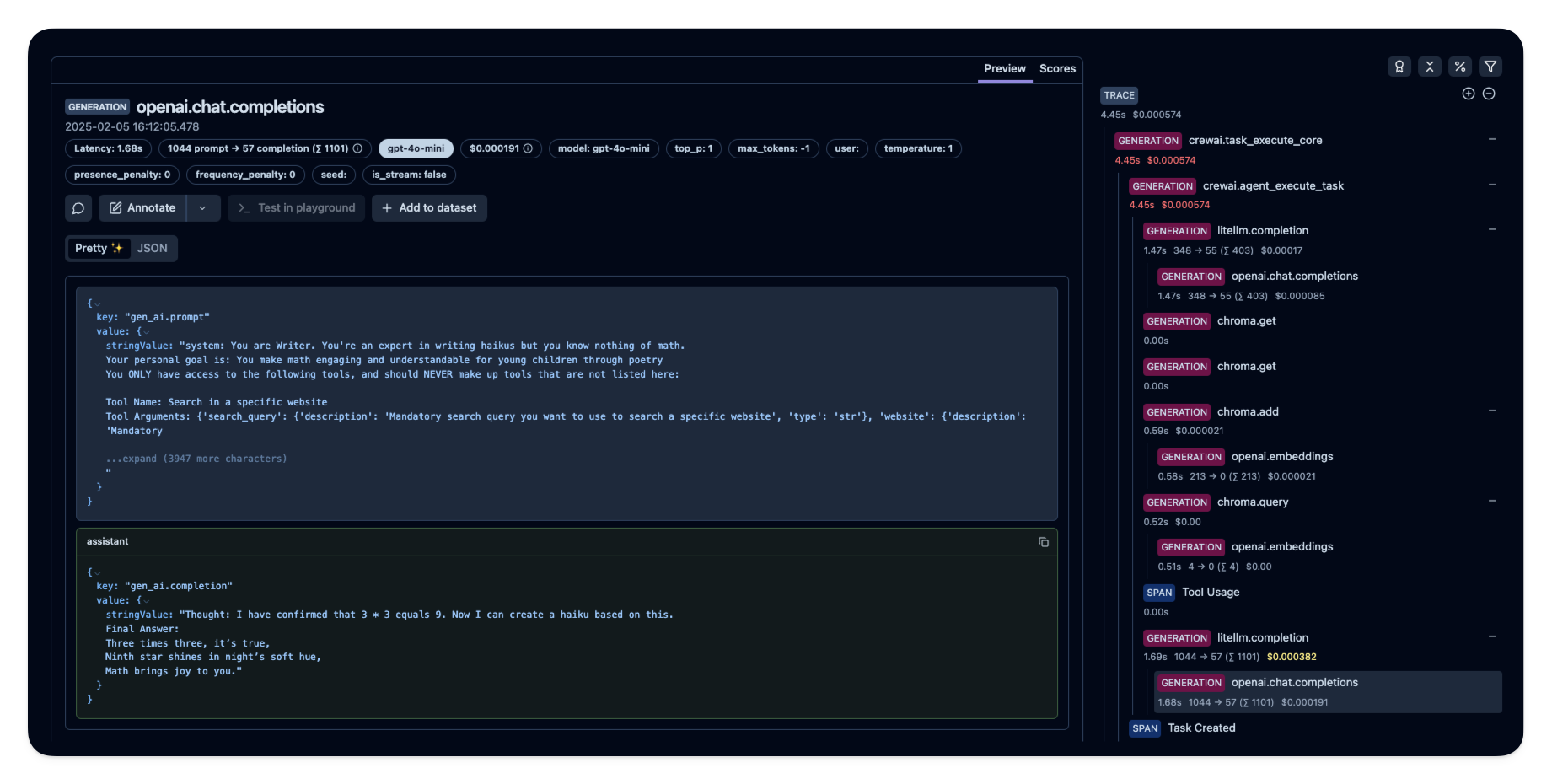
|
||||
|
||||
_[Public example trace in Langfuse](https://cloud.langfuse.com/project/cloramnkj0002jz088vzn1ja4/traces/e2cf380ffc8d47d28da98f136140642b?timestamp=2025-02-05T15%3A12%3A02.717Z&observation=3b32338ee6a5d9af)_
|
||||
|
||||
## References
|
||||
|
||||
- [Langfuse OpenTelemetry Docs](https://langfuse.com/docs/opentelemetry/get-started)
|
||||
211
docs/how-to/portkey-observability-and-guardrails.mdx
Normal file
211
docs/how-to/portkey-observability-and-guardrails.mdx
Normal file
@@ -0,0 +1,211 @@
|
||||
# Portkey Integration with CrewAI
|
||||
<img src="https://raw.githubusercontent.com/siddharthsambharia-portkey/Portkey-Product-Images/main/Portkey-CrewAI.png" alt="Portkey CrewAI Header Image" width="70%" />
|
||||
|
||||
|
||||
[Portkey](https://portkey.ai/?utm_source=crewai&utm_medium=crewai&utm_campaign=crewai) is a 2-line upgrade to make your CrewAI agents reliable, cost-efficient, and fast.
|
||||
|
||||
Portkey adds 4 core production capabilities to any CrewAI agent:
|
||||
1. Routing to **200+ LLMs**
|
||||
2. Making each LLM call more robust
|
||||
3. Full-stack tracing & cost, performance analytics
|
||||
4. Real-time guardrails to enforce behavior
|
||||
|
||||
|
||||
|
||||
|
||||
|
||||
## Getting Started
|
||||
|
||||
1. **Install Required Packages:**
|
||||
|
||||
```bash
|
||||
pip install -qU crewai portkey-ai
|
||||
```
|
||||
|
||||
2. **Configure the LLM Client:**
|
||||
|
||||
To build CrewAI Agents with Portkey, you'll need two keys:
|
||||
- **Portkey API Key**: Sign up on the [Portkey app](https://app.portkey.ai/?utm_source=crewai&utm_medium=crewai&utm_campaign=crewai) and copy your API key
|
||||
- **Virtual Key**: Virtual Keys securely manage your LLM API keys in one place. Store your LLM provider API keys securely in Portkey's vault
|
||||
|
||||
```python
|
||||
from crewai import LLM
|
||||
from portkey_ai import createHeaders, PORTKEY_GATEWAY_URL
|
||||
|
||||
gpt_llm = LLM(
|
||||
model="gpt-4",
|
||||
base_url=PORTKEY_GATEWAY_URL,
|
||||
api_key="dummy", # We are using Virtual key
|
||||
extra_headers=createHeaders(
|
||||
api_key="YOUR_PORTKEY_API_KEY",
|
||||
virtual_key="YOUR_VIRTUAL_KEY", # Enter your Virtual key from Portkey
|
||||
)
|
||||
)
|
||||
```
|
||||
|
||||
3. **Create and Run Your First Agent:**
|
||||
|
||||
```python
|
||||
from crewai import Agent, Task, Crew
|
||||
|
||||
# Define your agents with roles and goals
|
||||
coder = Agent(
|
||||
role='Software developer',
|
||||
goal='Write clear, concise code on demand',
|
||||
backstory='An expert coder with a keen eye for software trends.',
|
||||
llm=gpt_llm
|
||||
)
|
||||
|
||||
# Create tasks for your agents
|
||||
task1 = Task(
|
||||
description="Define the HTML for making a simple website with heading- Hello World! Portkey is working!",
|
||||
expected_output="A clear and concise HTML code",
|
||||
agent=coder
|
||||
)
|
||||
|
||||
# Instantiate your crew
|
||||
crew = Crew(
|
||||
agents=[coder],
|
||||
tasks=[task1],
|
||||
)
|
||||
|
||||
result = crew.kickoff()
|
||||
print(result)
|
||||
```
|
||||
|
||||
|
||||
## Key Features
|
||||
|
||||
| Feature | Description |
|
||||
|---------|-------------|
|
||||
| 🌐 Multi-LLM Support | Access OpenAI, Anthropic, Gemini, Azure, and 250+ providers through a unified interface |
|
||||
| 🛡️ Production Reliability | Implement retries, timeouts, load balancing, and fallbacks |
|
||||
| 📊 Advanced Observability | Track 40+ metrics including costs, tokens, latency, and custom metadata |
|
||||
| 🔍 Comprehensive Logging | Debug with detailed execution traces and function call logs |
|
||||
| 🚧 Security Controls | Set budget limits and implement role-based access control |
|
||||
| 🔄 Performance Analytics | Capture and analyze feedback for continuous improvement |
|
||||
| 💾 Intelligent Caching | Reduce costs and latency with semantic or simple caching |
|
||||
|
||||
|
||||
## Production Features with Portkey Configs
|
||||
|
||||
All features mentioned below are through Portkey's Config system. Portkey's Config system allows you to define routing strategies using simple JSON objects in your LLM API calls. You can create and manage Configs directly in your code or through the Portkey Dashboard. Each Config has a unique ID for easy reference.
|
||||
|
||||
<Frame>
|
||||
<img src="https://raw.githubusercontent.com/Portkey-AI/docs-core/refs/heads/main/images/libraries/libraries-3.avif"/>
|
||||
</Frame>
|
||||
|
||||
|
||||
### 1. Use 250+ LLMs
|
||||
Access various LLMs like Anthropic, Gemini, Mistral, Azure OpenAI, and more with minimal code changes. Switch between providers or use them together seamlessly. [Learn more about Universal API](https://portkey.ai/docs/product/ai-gateway/universal-api)
|
||||
|
||||
|
||||
Easily switch between different LLM providers:
|
||||
|
||||
```python
|
||||
# Anthropic Configuration
|
||||
anthropic_llm = LLM(
|
||||
model="claude-3-5-sonnet-latest",
|
||||
base_url=PORTKEY_GATEWAY_URL,
|
||||
api_key="dummy",
|
||||
extra_headers=createHeaders(
|
||||
api_key="YOUR_PORTKEY_API_KEY",
|
||||
virtual_key="YOUR_ANTHROPIC_VIRTUAL_KEY", #You don't need provider when using Virtual keys
|
||||
trace_id="anthropic_agent"
|
||||
)
|
||||
)
|
||||
|
||||
# Azure OpenAI Configuration
|
||||
azure_llm = LLM(
|
||||
model="gpt-4",
|
||||
base_url=PORTKEY_GATEWAY_URL,
|
||||
api_key="dummy",
|
||||
extra_headers=createHeaders(
|
||||
api_key="YOUR_PORTKEY_API_KEY",
|
||||
virtual_key="YOUR_AZURE_VIRTUAL_KEY", #You don't need provider when using Virtual keys
|
||||
trace_id="azure_agent"
|
||||
)
|
||||
)
|
||||
```
|
||||
|
||||
|
||||
### 2. Caching
|
||||
Improve response times and reduce costs with two powerful caching modes:
|
||||
- **Simple Cache**: Perfect for exact matches
|
||||
- **Semantic Cache**: Matches responses for requests that are semantically similar
|
||||
[Learn more about Caching](https://portkey.ai/docs/product/ai-gateway/cache-simple-and-semantic)
|
||||
|
||||
```py
|
||||
config = {
|
||||
"cache": {
|
||||
"mode": "semantic", # or "simple" for exact matching
|
||||
}
|
||||
}
|
||||
```
|
||||
|
||||
### 3. Production Reliability
|
||||
Portkey provides comprehensive reliability features:
|
||||
- **Automatic Retries**: Handle temporary failures gracefully
|
||||
- **Request Timeouts**: Prevent hanging operations
|
||||
- **Conditional Routing**: Route requests based on specific conditions
|
||||
- **Fallbacks**: Set up automatic provider failovers
|
||||
- **Load Balancing**: Distribute requests efficiently
|
||||
|
||||
[Learn more about Reliability Features](https://portkey.ai/docs/product/ai-gateway/)
|
||||
|
||||
|
||||
|
||||
### 4. Metrics
|
||||
|
||||
Agent runs are complex. Portkey automatically logs **40+ comprehensive metrics** for your AI agents, including cost, tokens used, latency, etc. Whether you need a broad overview or granular insights into your agent runs, Portkey's customizable filters provide the metrics you need.
|
||||
|
||||
|
||||
- Cost per agent interaction
|
||||
- Response times and latency
|
||||
- Token usage and efficiency
|
||||
- Success/failure rates
|
||||
- Cache hit rates
|
||||
|
||||
<img src="https://github.com/siddharthsambharia-portkey/Portkey-Product-Images/blob/main/Portkey-Dashboard.png?raw=true" width="70%" alt="Portkey Dashboard" />
|
||||
|
||||
### 5. Detailed Logging
|
||||
Logs are essential for understanding agent behavior, diagnosing issues, and improving performance. They provide a detailed record of agent activities and tool use, which is crucial for debugging and optimizing processes.
|
||||
|
||||
|
||||
Access a dedicated section to view records of agent executions, including parameters, outcomes, function calls, and errors. Filter logs based on multiple parameters such as trace ID, model, tokens used, and metadata.
|
||||
|
||||
<details>
|
||||
<summary><b>Traces</b></summary>
|
||||
<img src="https://raw.githubusercontent.com/siddharthsambharia-portkey/Portkey-Product-Images/main/Portkey-Traces.png" alt="Portkey Traces" width="70%" />
|
||||
</details>
|
||||
|
||||
<details>
|
||||
<summary><b>Logs</b></summary>
|
||||
<img src="https://raw.githubusercontent.com/siddharthsambharia-portkey/Portkey-Product-Images/main/Portkey-Logs.png" alt="Portkey Logs" width="70%" />
|
||||
</details>
|
||||
|
||||
### 6. Enterprise Security Features
|
||||
- Set budget limit and rate limts per Virtual Key (disposable API keys)
|
||||
- Implement role-based access control
|
||||
- Track system changes with audit logs
|
||||
- Configure data retention policies
|
||||
|
||||
|
||||
|
||||
For detailed information on creating and managing Configs, visit the [Portkey documentation](https://docs.portkey.ai/product/ai-gateway/configs).
|
||||
|
||||
## Resources
|
||||
|
||||
- [📘 Portkey Documentation](https://docs.portkey.ai)
|
||||
- [📊 Portkey Dashboard](https://app.portkey.ai/?utm_source=crewai&utm_medium=crewai&utm_campaign=crewai)
|
||||
- [🐦 Twitter](https://twitter.com/portkeyai)
|
||||
- [💬 Discord Community](https://discord.gg/DD7vgKK299)
|
||||
|
||||
|
||||
|
||||
|
||||
|
||||
|
||||
|
||||
|
||||
|
||||
@@ -1,5 +1,5 @@
|
||||
---
|
||||
title: Agent Monitoring with Portkey
|
||||
title: Portkey Observability and Guardrails
|
||||
description: How to use Portkey with CrewAI
|
||||
icon: key
|
||||
---
|
||||
|
||||
@@ -15,77 +15,117 @@ icon: wrench
|
||||
If you need to update Python, visit [python.org/downloads](https://python.org/downloads)
|
||||
</Note>
|
||||
|
||||
CrewAI uses the `uv` as its dependency management and package handling tool. It simplifies project setup and execution, offering a seamless experience.
|
||||
# Setting Up Your Environment
|
||||
|
||||
If you haven't installed `uv` yet, follow **step 1** to quickly get it set up on your system, else you can skip to **step 2**.
|
||||
Before installing CrewAI, it's recommended to set up a virtual environment. This helps isolate your project dependencies and avoid conflicts.
|
||||
|
||||
<Steps>
|
||||
<Step title="Install uv">
|
||||
- **On macOS/Linux:**
|
||||
<Step title="Create a Virtual Environment">
|
||||
Choose your preferred method to create a virtual environment:
|
||||
|
||||
Use `curl` to download the script and execute it with `sh`:
|
||||
|
||||
```shell
|
||||
curl -LsSf https://astral.sh/uv/install.sh | sh
|
||||
```
|
||||
If your system doesn't have `curl`, you can use `wget`:
|
||||
|
||||
```shell
|
||||
wget -qO- https://astral.sh/uv/install.sh | sh
|
||||
**Using venv (Python's built-in tool):**
|
||||
```shell Terminal
|
||||
python3 -m venv .venv
|
||||
```
|
||||
|
||||
- **On Windows:**
|
||||
|
||||
Use `irm` to download the script and `iex` to execute it:
|
||||
|
||||
```shell
|
||||
powershell -ExecutionPolicy ByPass -c "irm https://astral.sh/uv/install.ps1 | iex"
|
||||
**Using conda:**
|
||||
```shell Terminal
|
||||
conda create -n crewai-env python=3.12
|
||||
```
|
||||
If you run into any issues, refer to [UV's installation guide](https://docs.astral.sh/uv/getting-started/installation/) for more information.
|
||||
</Step>
|
||||
|
||||
<Step title="Install CrewAI 🚀">
|
||||
- Run the following command to install `crewai` CLI:
|
||||
```shell
|
||||
uv tool install crewai
|
||||
```
|
||||
<Warning>
|
||||
If you encounter a `PATH` warning, run this command to update your shell:
|
||||
```shell
|
||||
uv tool update-shell
|
||||
```
|
||||
</Warning>
|
||||
<Step title="Activate the Virtual Environment">
|
||||
Activate your virtual environment based on your platform:
|
||||
|
||||
- To verify that `crewai` is installed, run:
|
||||
```shell
|
||||
uv tools list
|
||||
**On macOS/Linux (venv):**
|
||||
```shell Terminal
|
||||
source .venv/bin/activate
|
||||
```
|
||||
- You should see something like:
|
||||
```markdown
|
||||
crewai v0.102.0
|
||||
- crewai
|
||||
|
||||
**On Windows (venv):**
|
||||
```shell Terminal
|
||||
.venv\Scripts\activate
|
||||
```
|
||||
|
||||
**Using conda (all platforms):**
|
||||
```shell Terminal
|
||||
conda activate crewai-env
|
||||
```
|
||||
<Check>Installation successful! You're ready to create your first crew! 🎉</Check>
|
||||
</Step>
|
||||
</Steps>
|
||||
|
||||
# Creating a CrewAI Project
|
||||
# Installing CrewAI
|
||||
|
||||
We recommend using the `YAML` template scaffolding for a structured approach to defining agents and tasks. Here's how to get started:
|
||||
Now let's get you set up! 🚀
|
||||
|
||||
<Steps>
|
||||
<Step title="Generate Project Scaffolding">
|
||||
- Run the `crewai` CLI command:
|
||||
```shell
|
||||
crewai create crew <your_project_name>
|
||||
<Step title="Install CrewAI">
|
||||
Install CrewAI with all recommended tools using either method:
|
||||
```shell Terminal
|
||||
pip install 'crewai[tools]'
|
||||
```
|
||||
or
|
||||
```shell Terminal
|
||||
pip install crewai crewai-tools
|
||||
```
|
||||
|
||||
- This creates a new project with the following structure:
|
||||
<Note>
|
||||
Both methods install the core package and additional tools needed for most use cases.
|
||||
</Note>
|
||||
</Step>
|
||||
|
||||
<Step title="Upgrade CrewAI (Existing Installations Only)">
|
||||
If you have an older version of CrewAI installed, you can upgrade it:
|
||||
```shell Terminal
|
||||
pip install --upgrade crewai crewai-tools
|
||||
```
|
||||
|
||||
<Warning>
|
||||
If you see a Poetry-related warning, you'll need to migrate to our new dependency manager:
|
||||
```shell Terminal
|
||||
crewai update
|
||||
```
|
||||
This will update your project to use [UV](https://github.com/astral-sh/uv), our new faster dependency manager.
|
||||
</Warning>
|
||||
|
||||
<Note>
|
||||
Skip this step if you're doing a fresh installation.
|
||||
</Note>
|
||||
</Step>
|
||||
|
||||
<Step title="Verify Installation">
|
||||
Check your installed versions:
|
||||
```shell Terminal
|
||||
pip freeze | grep crewai
|
||||
```
|
||||
|
||||
You should see something like:
|
||||
```markdown Output
|
||||
crewai==X.X.X
|
||||
crewai-tools==X.X.X
|
||||
```
|
||||
<Check>Installation successful! You're ready to create your first crew.</Check>
|
||||
</Step>
|
||||
</Steps>
|
||||
|
||||
# Creating a New Project
|
||||
|
||||
<Tip>
|
||||
We recommend using the YAML Template scaffolding for a structured approach to defining agents and tasks.
|
||||
</Tip>
|
||||
|
||||
<Steps>
|
||||
<Step title="Generate Project Structure">
|
||||
Run the CrewAI CLI command:
|
||||
```shell Terminal
|
||||
crewai create crew <project_name>
|
||||
```
|
||||
|
||||
This creates a new project with the following structure:
|
||||
<Frame>
|
||||
```
|
||||
my_project/
|
||||
├── .gitignore
|
||||
├── knowledge/
|
||||
├── pyproject.toml
|
||||
├── README.md
|
||||
├── .env
|
||||
@@ -104,8 +144,20 @@ We recommend using the `YAML` template scaffolding for a structured approach to
|
||||
</Frame>
|
||||
</Step>
|
||||
|
||||
<Step title="Install Additional Tools">
|
||||
You can install additional tools using UV:
|
||||
```shell Terminal
|
||||
uv add <tool-name>
|
||||
```
|
||||
|
||||
<Tip>
|
||||
UV is our preferred package manager as it's significantly faster than pip and provides better dependency resolution.
|
||||
</Tip>
|
||||
</Step>
|
||||
|
||||
<Step title="Customize Your Project">
|
||||
- Your project will contain these essential files:
|
||||
Your project will contain these essential files:
|
||||
|
||||
| File | Purpose |
|
||||
| --- | --- |
|
||||
| `agents.yaml` | Define your AI agents and their roles |
|
||||
@@ -114,25 +166,11 @@ We recommend using the `YAML` template scaffolding for a structured approach to
|
||||
| `main.py` | Project entry point and execution flow |
|
||||
| `crew.py` | Crew orchestration and coordination |
|
||||
| `tools/` | Directory for custom agent tools |
|
||||
| `knowledge/` | Directory for knowledge base |
|
||||
|
||||
- Start by editing `agents.yaml` and `tasks.yaml` to define your crew's behavior.
|
||||
- Keep sensitive information like API keys in `.env`.
|
||||
</Step>
|
||||
|
||||
<Step title="Run your Crew">
|
||||
- Before you run your crew, make sure to run:
|
||||
```bash
|
||||
crewai install
|
||||
```
|
||||
- If you need to install additional packages, use:
|
||||
```shell
|
||||
uv add <package-name>
|
||||
```
|
||||
- To run your crew, execute the following command in the root of your project:
|
||||
```bash
|
||||
crewai run
|
||||
```
|
||||
<Tip>
|
||||
Start by editing `agents.yaml` and `tasks.yaml` to define your crew's behavior.
|
||||
Keep sensitive information like API keys in `.env`.
|
||||
</Tip>
|
||||
</Step>
|
||||
</Steps>
|
||||
|
||||
|
||||
@@ -103,8 +103,7 @@
|
||||
"how-to/langtrace-observability",
|
||||
"how-to/mlflow-observability",
|
||||
"how-to/openlit-observability",
|
||||
"how-to/portkey-observability",
|
||||
"how-to/langfuse-observability"
|
||||
"how-to/portkey-observability"
|
||||
]
|
||||
},
|
||||
{
|
||||
@@ -116,8 +115,6 @@
|
||||
{
|
||||
"group": "Tools",
|
||||
"pages": [
|
||||
"tools/aimindtool",
|
||||
"tools/bravesearchtool",
|
||||
"tools/browserbaseloadtool",
|
||||
"tools/codedocssearchtool",
|
||||
"tools/codeinterpretertool",
|
||||
@@ -134,32 +131,18 @@
|
||||
"tools/firecrawlscrapewebsitetool",
|
||||
"tools/firecrawlsearchtool",
|
||||
"tools/githubsearchtool",
|
||||
"tools/hyperbrowserloadtool",
|
||||
"tools/linkupsearchtool",
|
||||
"tools/llamaindextool",
|
||||
"tools/serperdevtool",
|
||||
"tools/s3readertool",
|
||||
"tools/s3writertool",
|
||||
"tools/scrapegraphscrapetool",
|
||||
"tools/scrapeelementfromwebsitetool",
|
||||
"tools/jsonsearchtool",
|
||||
"tools/mdxsearchtool",
|
||||
"tools/mysqltool",
|
||||
"tools/multiontool",
|
||||
"tools/nl2sqltool",
|
||||
"tools/patronustools",
|
||||
"tools/pdfsearchtool",
|
||||
"tools/pgsearchtool",
|
||||
"tools/qdrantvectorsearchtool",
|
||||
"tools/ragtool",
|
||||
"tools/scrapewebsitetool",
|
||||
"tools/scrapflyscrapetool",
|
||||
"tools/seleniumscrapingtool",
|
||||
"tools/snowflakesearchtool",
|
||||
"tools/spidertool",
|
||||
"tools/txtsearchtool",
|
||||
"tools/visiontool",
|
||||
"tools/weaviatevectorsearchtool",
|
||||
"tools/websitesearchtool",
|
||||
"tools/xmlsearchtool",
|
||||
"tools/youtubechannelsearchtool",
|
||||
|
||||
@@ -8,10 +8,10 @@ icon: rocket
|
||||
|
||||
Let's create a simple crew that will help us `research` and `report` on the `latest AI developments` for a given topic or subject.
|
||||
|
||||
Before we proceed, make sure you have finished installing CrewAI.
|
||||
Before we proceed, make sure you have `crewai` and `crewai-tools` installed.
|
||||
If you haven't installed them yet, you can do so by following the [installation guide](/installation).
|
||||
|
||||
Follow the steps below to get Crewing! 🚣♂️
|
||||
Follow the steps below to get crewing! 🚣♂️
|
||||
|
||||
<Steps>
|
||||
<Step title="Create your crew">
|
||||
@@ -23,13 +23,6 @@ Follow the steps below to get Crewing! 🚣♂️
|
||||
```
|
||||
</CodeGroup>
|
||||
</Step>
|
||||
<Step title="Navigate to your new crew project">
|
||||
<CodeGroup>
|
||||
```shell Terminal
|
||||
cd latest-ai-development
|
||||
```
|
||||
</CodeGroup>
|
||||
</Step>
|
||||
<Step title="Modify your `agents.yaml` file">
|
||||
<Tip>
|
||||
You can also modify the agents as needed to fit your use case or copy and paste as is to your project.
|
||||
@@ -179,21 +172,16 @@ Follow the steps below to get Crewing! 🚣♂️
|
||||
- A [Serper.dev](https://serper.dev/) API key: `SERPER_API_KEY=YOUR_KEY_HERE`
|
||||
</Step>
|
||||
<Step title="Lock and install the dependencies">
|
||||
- Lock the dependencies and install them by using the CLI command:
|
||||
Lock the dependencies and install them by using the CLI command but first, navigate to your project directory:
|
||||
<CodeGroup>
|
||||
```shell Terminal
|
||||
cd latest-ai-development
|
||||
crewai install
|
||||
```
|
||||
</CodeGroup>
|
||||
- If you have additional packages that you want to install, you can do so by running:
|
||||
<CodeGroup>
|
||||
```shell Terminal
|
||||
uv add <package-name>
|
||||
```
|
||||
</CodeGroup>
|
||||
</Step>
|
||||
<Step title="Run your crew">
|
||||
- To run your crew, execute the following command in the root of your project:
|
||||
To run your crew, execute the following command in the root of your project:
|
||||
<CodeGroup>
|
||||
```bash Terminal
|
||||
crewai run
|
||||
@@ -270,12 +258,6 @@ Follow the steps below to get Crewing! 🚣♂️
|
||||
</Step>
|
||||
</Steps>
|
||||
|
||||
<Check>
|
||||
Congratulations!
|
||||
|
||||
You have successfully set up your crew project and are ready to start building your own agentic workflows!
|
||||
</Check>
|
||||
|
||||
### Note on Consistency in Naming
|
||||
|
||||
The names you use in your YAML files (`agents.yaml` and `tasks.yaml`) should match the method names in your Python code.
|
||||
@@ -315,9 +297,194 @@ email_summarizer_task:
|
||||
- research_task
|
||||
```
|
||||
|
||||
Use the annotations to properly reference the agent and task in the `crew.py` file.
|
||||
|
||||
### Annotations include:
|
||||
|
||||
Here are examples of how to use each annotation in your CrewAI project, and when you should use them:
|
||||
|
||||
#### @agent
|
||||
Used to define an agent in your crew. Use this when:
|
||||
- You need to create a specialized AI agent with a specific role
|
||||
- You want the agent to be automatically collected and managed by the crew
|
||||
- You need to reuse the same agent configuration across multiple tasks
|
||||
|
||||
```python
|
||||
@agent
|
||||
def research_agent(self) -> Agent:
|
||||
return Agent(
|
||||
role="Research Analyst",
|
||||
goal="Conduct thorough research on given topics",
|
||||
backstory="Expert researcher with years of experience in data analysis",
|
||||
tools=[SerperDevTool()],
|
||||
verbose=True
|
||||
)
|
||||
```
|
||||
|
||||
#### @task
|
||||
Used to define a task that can be executed by agents. Use this when:
|
||||
- You need to define a specific piece of work for an agent
|
||||
- You want tasks to be automatically sequenced and managed
|
||||
- You need to establish dependencies between different tasks
|
||||
|
||||
```python
|
||||
@task
|
||||
def research_task(self) -> Task:
|
||||
return Task(
|
||||
description="Research the latest developments in AI technology",
|
||||
expected_output="A comprehensive report on AI advancements",
|
||||
agent=self.research_agent(),
|
||||
output_file="output/research.md"
|
||||
)
|
||||
```
|
||||
|
||||
#### @crew
|
||||
Used to define your crew configuration. Use this when:
|
||||
- You want to automatically collect all @agent and @task definitions
|
||||
- You need to specify how tasks should be processed (sequential or hierarchical)
|
||||
- You want to set up crew-wide configurations
|
||||
|
||||
```python
|
||||
@crew
|
||||
def research_crew(self) -> Crew:
|
||||
return Crew(
|
||||
agents=self.agents, # Automatically collected from @agent methods
|
||||
tasks=self.tasks, # Automatically collected from @task methods
|
||||
process=Process.sequential,
|
||||
verbose=True
|
||||
)
|
||||
```
|
||||
|
||||
#### @tool
|
||||
Used to create custom tools for your agents. Use this when:
|
||||
- You need to give agents specific capabilities (like web search, data analysis)
|
||||
- You want to encapsulate external API calls or complex operations
|
||||
- You need to share functionality across multiple agents
|
||||
|
||||
```python
|
||||
@tool
|
||||
def web_search_tool(query: str, max_results: int = 5) -> list[str]:
|
||||
"""
|
||||
Search the web for information.
|
||||
|
||||
Args:
|
||||
query: The search query
|
||||
max_results: Maximum number of results to return
|
||||
|
||||
Returns:
|
||||
List of search results
|
||||
"""
|
||||
# Implement your search logic here
|
||||
return [f"Result {i} for: {query}" for i in range(max_results)]
|
||||
```
|
||||
|
||||
#### @before_kickoff
|
||||
Used to execute logic before the crew starts. Use this when:
|
||||
- You need to validate or preprocess input data
|
||||
- You want to set up resources or configurations before execution
|
||||
- You need to perform any initialization logic
|
||||
|
||||
```python
|
||||
@before_kickoff
|
||||
def validate_inputs(self, inputs: Optional[Dict[str, Any]]) -> Optional[Dict[str, Any]]:
|
||||
"""Validate and preprocess inputs before the crew starts."""
|
||||
if inputs is None:
|
||||
return None
|
||||
|
||||
if 'topic' not in inputs:
|
||||
raise ValueError("Topic is required")
|
||||
|
||||
# Add additional context
|
||||
inputs['timestamp'] = datetime.now().isoformat()
|
||||
inputs['topic'] = inputs['topic'].strip().lower()
|
||||
return inputs
|
||||
```
|
||||
|
||||
#### @after_kickoff
|
||||
Used to process results after the crew completes. Use this when:
|
||||
- You need to format or transform the final output
|
||||
- You want to perform cleanup operations
|
||||
- You need to save or log the results in a specific way
|
||||
|
||||
```python
|
||||
@after_kickoff
|
||||
def process_results(self, result: CrewOutput) -> CrewOutput:
|
||||
"""Process and format the results after the crew completes."""
|
||||
result.raw = result.raw.strip()
|
||||
result.raw = f"""
|
||||
# Research Results
|
||||
Generated on: {datetime.now().isoformat()}
|
||||
|
||||
{result.raw}
|
||||
"""
|
||||
return result
|
||||
```
|
||||
|
||||
#### @callback
|
||||
Used to handle events during crew execution. Use this when:
|
||||
- You need to monitor task progress
|
||||
- You want to log intermediate results
|
||||
- You need to implement custom progress tracking or metrics
|
||||
|
||||
```python
|
||||
@callback
|
||||
def log_task_completion(self, task: Task, output: str):
|
||||
"""Log task completion details for monitoring."""
|
||||
print(f"Task '{task.description}' completed")
|
||||
print(f"Output length: {len(output)} characters")
|
||||
print(f"Agent used: {task.agent.role}")
|
||||
print("-" * 50)
|
||||
```
|
||||
|
||||
#### @cache_handler
|
||||
Used to implement custom caching for task results. Use this when:
|
||||
- You want to avoid redundant expensive operations
|
||||
- You need to implement custom cache storage or expiration logic
|
||||
- You want to persist results between runs
|
||||
|
||||
```python
|
||||
@cache_handler
|
||||
def custom_cache(self, key: str) -> Optional[str]:
|
||||
"""Custom cache implementation for storing task results."""
|
||||
cache_file = f"cache/{key}.json"
|
||||
|
||||
if os.path.exists(cache_file):
|
||||
with open(cache_file, 'r') as f:
|
||||
data = json.load(f)
|
||||
# Check if cache is still valid (e.g., not expired)
|
||||
if datetime.fromisoformat(data['timestamp']) > datetime.now() - timedelta(days=1):
|
||||
return data['result']
|
||||
return None
|
||||
```
|
||||
|
||||
<Note>
|
||||
These decorators are part of the CrewAI framework and help organize your crew's structure by automatically collecting agents, tasks, and handling various lifecycle events.
|
||||
They should be used within a class decorated with `@CrewBase`.
|
||||
</Note>
|
||||
|
||||
### Replay Tasks from Latest Crew Kickoff
|
||||
|
||||
CrewAI now includes a replay feature that allows you to list the tasks from the last run and replay from a specific one. To use this feature, run.
|
||||
|
||||
```shell
|
||||
crewai replay <task_id>
|
||||
```
|
||||
|
||||
Replace `<task_id>` with the ID of the task you want to replay.
|
||||
|
||||
### Reset Crew Memory
|
||||
|
||||
If you need to reset the memory of your crew before running it again, you can do so by calling the reset memory feature:
|
||||
|
||||
```shell
|
||||
crewai reset-memories --all
|
||||
```
|
||||
|
||||
This will clear the crew's memory, allowing for a fresh start.
|
||||
|
||||
## Deploying Your Project
|
||||
|
||||
The easiest way to deploy your crew is through [CrewAI Enterprise](http://app.crewai.com), where you can deploy your crew in a few clicks.
|
||||
The easiest way to deploy your crew is through CrewAI Enterprise, where you can deploy your crew in a few clicks.
|
||||
|
||||
<CardGroup cols={2}>
|
||||
<Card
|
||||
|
||||
@@ -1,118 +0,0 @@
|
||||
---
|
||||
title: AI Mind Tool
|
||||
description: The `AIMindTool` is designed to query data sources in natural language.
|
||||
icon: brain
|
||||
---
|
||||
|
||||
# `AIMindTool`
|
||||
|
||||
## Description
|
||||
|
||||
The `AIMindTool` is a wrapper around [AI-Minds](https://mindsdb.com/minds) provided by [MindsDB](https://mindsdb.com/). It allows you to query data sources in natural language by simply configuring their connection parameters. This tool is useful when you need answers to questions from your data stored in various data sources including PostgreSQL, MySQL, MariaDB, ClickHouse, Snowflake, and Google BigQuery.
|
||||
|
||||
Minds are AI systems that work similarly to large language models (LLMs) but go beyond by answering any question from any data. This is accomplished by:
|
||||
- Selecting the most relevant data for an answer using parametric search
|
||||
- Understanding the meaning and providing responses within the correct context through semantic search
|
||||
- Delivering precise answers by analyzing data and using machine learning (ML) models
|
||||
|
||||
## Installation
|
||||
|
||||
To incorporate this tool into your project, you need to install the Minds SDK:
|
||||
|
||||
```shell
|
||||
uv add minds-sdk
|
||||
```
|
||||
|
||||
## Steps to Get Started
|
||||
|
||||
To effectively use the `AIMindTool`, follow these steps:
|
||||
|
||||
1. **Package Installation**: Confirm that the `crewai[tools]` and `minds-sdk` packages are installed in your Python environment.
|
||||
2. **API Key Acquisition**: Sign up for a Minds account [here](https://mdb.ai/register), and obtain an API key.
|
||||
3. **Environment Configuration**: Store your obtained API key in an environment variable named `MINDS_API_KEY` to facilitate its use by the tool.
|
||||
|
||||
## Example
|
||||
|
||||
The following example demonstrates how to initialize the tool and execute a query:
|
||||
|
||||
```python Code
|
||||
from crewai_tools import AIMindTool
|
||||
|
||||
# Initialize the AIMindTool
|
||||
aimind_tool = AIMindTool(
|
||||
datasources=[
|
||||
{
|
||||
"description": "house sales data",
|
||||
"engine": "postgres",
|
||||
"connection_data": {
|
||||
"user": "demo_user",
|
||||
"password": "demo_password",
|
||||
"host": "samples.mindsdb.com",
|
||||
"port": 5432,
|
||||
"database": "demo",
|
||||
"schema": "demo_data"
|
||||
},
|
||||
"tables": ["house_sales"]
|
||||
}
|
||||
]
|
||||
)
|
||||
|
||||
# Run a natural language query
|
||||
result = aimind_tool.run("How many 3 bedroom houses were sold in 2008?")
|
||||
print(result)
|
||||
```
|
||||
|
||||
## Parameters
|
||||
|
||||
The `AIMindTool` accepts the following parameters:
|
||||
|
||||
- **api_key**: Optional. Your Minds API key. If not provided, it will be read from the `MINDS_API_KEY` environment variable.
|
||||
- **datasources**: A list of dictionaries, each containing the following keys:
|
||||
- **description**: A description of the data contained in the datasource.
|
||||
- **engine**: The engine (or type) of the datasource.
|
||||
- **connection_data**: A dictionary containing the connection parameters for the datasource.
|
||||
- **tables**: A list of tables that the data source will use. This is optional and can be omitted if all tables in the data source are to be used.
|
||||
|
||||
A list of supported data sources and their connection parameters can be found [here](https://docs.mdb.ai/docs/data_sources).
|
||||
|
||||
## Agent Integration Example
|
||||
|
||||
Here's how to integrate the `AIMindTool` with a CrewAI agent:
|
||||
|
||||
```python Code
|
||||
from crewai import Agent
|
||||
from crewai.project import agent
|
||||
from crewai_tools import AIMindTool
|
||||
|
||||
# Initialize the tool
|
||||
aimind_tool = AIMindTool(
|
||||
datasources=[
|
||||
{
|
||||
"description": "sales data",
|
||||
"engine": "postgres",
|
||||
"connection_data": {
|
||||
"user": "your_user",
|
||||
"password": "your_password",
|
||||
"host": "your_host",
|
||||
"port": 5432,
|
||||
"database": "your_db",
|
||||
"schema": "your_schema"
|
||||
},
|
||||
"tables": ["sales"]
|
||||
}
|
||||
]
|
||||
)
|
||||
|
||||
# Define an agent with the AIMindTool
|
||||
@agent
|
||||
def data_analyst(self) -> Agent:
|
||||
return Agent(
|
||||
config=self.agents_config["data_analyst"],
|
||||
allow_delegation=False,
|
||||
tools=[aimind_tool]
|
||||
)
|
||||
```
|
||||
|
||||
## Conclusion
|
||||
|
||||
The `AIMindTool` provides a powerful way to query your data sources using natural language, making it easier to extract insights without writing complex SQL queries. By connecting to various data sources and leveraging AI-Minds technology, this tool enables agents to access and analyze data efficiently.
|
||||
@@ -1,96 +0,0 @@
|
||||
---
|
||||
title: Brave Search
|
||||
description: The `BraveSearchTool` is designed to search the internet using the Brave Search API.
|
||||
icon: searchengin
|
||||
---
|
||||
|
||||
# `BraveSearchTool`
|
||||
|
||||
## Description
|
||||
|
||||
This tool is designed to perform web searches using the Brave Search API. It allows you to search the internet with a specified query and retrieve relevant results. The tool supports customizable result counts and country-specific searches.
|
||||
|
||||
## Installation
|
||||
|
||||
To incorporate this tool into your project, follow the installation instructions below:
|
||||
|
||||
```shell
|
||||
pip install 'crewai[tools]'
|
||||
```
|
||||
|
||||
## Steps to Get Started
|
||||
|
||||
To effectively use the `BraveSearchTool`, follow these steps:
|
||||
|
||||
1. **Package Installation**: Confirm that the `crewai[tools]` package is installed in your Python environment.
|
||||
2. **API Key Acquisition**: Acquire a Brave Search API key by registering at [Brave Search API](https://api.search.brave.com/app/keys).
|
||||
3. **Environment Configuration**: Store your obtained API key in an environment variable named `BRAVE_API_KEY` to facilitate its use by the tool.
|
||||
|
||||
## Example
|
||||
|
||||
The following example demonstrates how to initialize the tool and execute a search with a given query:
|
||||
|
||||
```python Code
|
||||
from crewai_tools import BraveSearchTool
|
||||
|
||||
# Initialize the tool for internet searching capabilities
|
||||
tool = BraveSearchTool()
|
||||
|
||||
# Execute a search
|
||||
results = tool.run(search_query="CrewAI agent framework")
|
||||
print(results)
|
||||
```
|
||||
|
||||
## Parameters
|
||||
|
||||
The `BraveSearchTool` accepts the following parameters:
|
||||
|
||||
- **search_query**: Mandatory. The search query you want to use to search the internet.
|
||||
- **country**: Optional. Specify the country for the search results. Default is empty string.
|
||||
- **n_results**: Optional. Number of search results to return. Default is `10`.
|
||||
- **save_file**: Optional. Whether to save the search results to a file. Default is `False`.
|
||||
|
||||
## Example with Parameters
|
||||
|
||||
Here is an example demonstrating how to use the tool with additional parameters:
|
||||
|
||||
```python Code
|
||||
from crewai_tools import BraveSearchTool
|
||||
|
||||
# Initialize the tool with custom parameters
|
||||
tool = BraveSearchTool(
|
||||
country="US",
|
||||
n_results=5,
|
||||
save_file=True
|
||||
)
|
||||
|
||||
# Execute a search
|
||||
results = tool.run(search_query="Latest AI developments")
|
||||
print(results)
|
||||
```
|
||||
|
||||
## Agent Integration Example
|
||||
|
||||
Here's how to integrate the `BraveSearchTool` with a CrewAI agent:
|
||||
|
||||
```python Code
|
||||
from crewai import Agent
|
||||
from crewai.project import agent
|
||||
from crewai_tools import BraveSearchTool
|
||||
|
||||
# Initialize the tool
|
||||
brave_search_tool = BraveSearchTool()
|
||||
|
||||
# Define an agent with the BraveSearchTool
|
||||
@agent
|
||||
def researcher(self) -> Agent:
|
||||
return Agent(
|
||||
config=self.agents_config["researcher"],
|
||||
allow_delegation=False,
|
||||
tools=[brave_search_tool]
|
||||
)
|
||||
```
|
||||
|
||||
## Conclusion
|
||||
|
||||
By integrating the `BraveSearchTool` into Python projects, users gain the ability to conduct real-time, relevant searches across the internet directly from their applications. The tool provides a simple interface to the powerful Brave Search API, making it easy to retrieve and process search results programmatically. By adhering to the setup and usage guidelines provided, incorporating this tool into projects is streamlined and straightforward.
|
||||
@@ -8,15 +8,18 @@ icon: code-simple
|
||||
|
||||
## Description
|
||||
|
||||
The `CodeInterpreterTool` enables CrewAI agents to execute Python 3 code that they generate autonomously. The code is run in a secure, isolated Docker container, ensuring safety regardless of the content. This functionality is particularly valuable as it allows agents to create code, execute it, obtain the results, and utilize that information to inform subsequent decisions and actions.
|
||||
This tool enables the Agent to execute Python 3 code that it has generated autonomously. The code is run in a secure, isolated environment, ensuring safety regardless of the content.
|
||||
|
||||
This functionality is particularly valuable as it allows the Agent to create code, execute it within the same ecosystem,
|
||||
obtain the results, and utilize that information to inform subsequent decisions and actions.
|
||||
|
||||
## Requirements
|
||||
|
||||
- Docker must be installed and running on your system. If you don't have it, you can install it from [here](https://docs.docker.com/get-docker/).
|
||||
- Docker
|
||||
|
||||
## Installation
|
||||
|
||||
To use this tool, you need to install the CrewAI tools package:
|
||||
Install the `crewai_tools` package
|
||||
|
||||
```shell
|
||||
pip install 'crewai[tools]'
|
||||
@@ -24,153 +27,27 @@ pip install 'crewai[tools]'
|
||||
|
||||
## Example
|
||||
|
||||
The following example demonstrates how to use the `CodeInterpreterTool` with a CrewAI agent:
|
||||
Remember that when using this tool, the code must be generated by the Agent itself.
|
||||
The code must be a Python3 code. And it will take some time for the first time to run
|
||||
because it needs to build the Docker image.
|
||||
|
||||
```python Code
|
||||
from crewai import Agent, Task, Crew, Process
|
||||
from crewai import Agent
|
||||
from crewai_tools import CodeInterpreterTool
|
||||
|
||||
# Initialize the tool
|
||||
code_interpreter = CodeInterpreterTool()
|
||||
|
||||
# Define an agent that uses the tool
|
||||
programmer_agent = Agent(
|
||||
role="Python Programmer",
|
||||
goal="Write and execute Python code to solve problems",
|
||||
backstory="An expert Python programmer who can write efficient code to solve complex problems.",
|
||||
tools=[code_interpreter],
|
||||
verbose=True,
|
||||
Agent(
|
||||
...
|
||||
tools=[CodeInterpreterTool()],
|
||||
)
|
||||
|
||||
# Example task to generate and execute code
|
||||
coding_task = Task(
|
||||
description="Write a Python function to calculate the Fibonacci sequence up to the 10th number and print the result.",
|
||||
expected_output="The Fibonacci sequence up to the 10th number.",
|
||||
agent=programmer_agent,
|
||||
)
|
||||
|
||||
# Create and run the crew
|
||||
crew = Crew(
|
||||
agents=[programmer_agent],
|
||||
tasks=[coding_task],
|
||||
verbose=True,
|
||||
process=Process.sequential,
|
||||
)
|
||||
result = crew.kickoff()
|
||||
```
|
||||
|
||||
You can also enable code execution directly when creating an agent:
|
||||
We also provide a simple way to use it directly from the Agent.
|
||||
|
||||
```python Code
|
||||
from crewai import Agent
|
||||
|
||||
# Create an agent with code execution enabled
|
||||
programmer_agent = Agent(
|
||||
role="Python Programmer",
|
||||
goal="Write and execute Python code to solve problems",
|
||||
backstory="An expert Python programmer who can write efficient code to solve complex problems.",
|
||||
allow_code_execution=True, # This automatically adds the CodeInterpreterTool
|
||||
verbose=True,
|
||||
agent = Agent(
|
||||
...
|
||||
allow_code_execution=True,
|
||||
)
|
||||
```
|
||||
|
||||
## Parameters
|
||||
|
||||
The `CodeInterpreterTool` accepts the following parameters during initialization:
|
||||
|
||||
- **user_dockerfile_path**: Optional. Path to a custom Dockerfile to use for the code interpreter container.
|
||||
- **user_docker_base_url**: Optional. URL to the Docker daemon to use for running the container.
|
||||
- **unsafe_mode**: Optional. Whether to run code directly on the host machine instead of in a Docker container. Default is `False`. Use with caution!
|
||||
|
||||
When using the tool with an agent, the agent will need to provide:
|
||||
|
||||
- **code**: Required. The Python 3 code to execute.
|
||||
- **libraries_used**: Required. A list of libraries used in the code that need to be installed.
|
||||
|
||||
## Agent Integration Example
|
||||
|
||||
Here's a more detailed example of how to integrate the `CodeInterpreterTool` with a CrewAI agent:
|
||||
|
||||
```python Code
|
||||
from crewai import Agent, Task, Crew
|
||||
from crewai_tools import CodeInterpreterTool
|
||||
|
||||
# Initialize the tool
|
||||
code_interpreter = CodeInterpreterTool()
|
||||
|
||||
# Define an agent that uses the tool
|
||||
data_analyst = Agent(
|
||||
role="Data Analyst",
|
||||
goal="Analyze data using Python code",
|
||||
backstory="""You are an expert data analyst who specializes in using Python
|
||||
to analyze and visualize data. You can write efficient code to process
|
||||
large datasets and extract meaningful insights.""",
|
||||
tools=[code_interpreter],
|
||||
verbose=True,
|
||||
)
|
||||
|
||||
# Create a task for the agent
|
||||
analysis_task = Task(
|
||||
description="""
|
||||
Write Python code to:
|
||||
1. Generate a random dataset of 100 points with x and y coordinates
|
||||
2. Calculate the correlation coefficient between x and y
|
||||
3. Create a scatter plot of the data
|
||||
4. Print the correlation coefficient and save the plot as 'scatter.png'
|
||||
|
||||
Make sure to handle any necessary imports and print the results.
|
||||
""",
|
||||
expected_output="The correlation coefficient and confirmation that the scatter plot has been saved.",
|
||||
agent=data_analyst,
|
||||
)
|
||||
|
||||
# Run the task
|
||||
crew = Crew(
|
||||
agents=[data_analyst],
|
||||
tasks=[analysis_task],
|
||||
verbose=True,
|
||||
process=Process.sequential,
|
||||
)
|
||||
result = crew.kickoff()
|
||||
```
|
||||
|
||||
## Implementation Details
|
||||
|
||||
The `CodeInterpreterTool` uses Docker to create a secure environment for code execution:
|
||||
|
||||
```python Code
|
||||
class CodeInterpreterTool(BaseTool):
|
||||
name: str = "Code Interpreter"
|
||||
description: str = "Interprets Python3 code strings with a final print statement."
|
||||
args_schema: Type[BaseModel] = CodeInterpreterSchema
|
||||
default_image_tag: str = "code-interpreter:latest"
|
||||
|
||||
def _run(self, **kwargs) -> str:
|
||||
code = kwargs.get("code", self.code)
|
||||
libraries_used = kwargs.get("libraries_used", [])
|
||||
|
||||
if self.unsafe_mode:
|
||||
return self.run_code_unsafe(code, libraries_used)
|
||||
else:
|
||||
return self.run_code_in_docker(code, libraries_used)
|
||||
```
|
||||
|
||||
The tool performs the following steps:
|
||||
1. Verifies that the Docker image exists or builds it if necessary
|
||||
2. Creates a Docker container with the current working directory mounted
|
||||
3. Installs any required libraries specified by the agent
|
||||
4. Executes the Python code in the container
|
||||
5. Returns the output of the code execution
|
||||
6. Cleans up by stopping and removing the container
|
||||
|
||||
## Security Considerations
|
||||
|
||||
By default, the `CodeInterpreterTool` runs code in an isolated Docker container, which provides a layer of security. However, there are still some security considerations to keep in mind:
|
||||
|
||||
1. The Docker container has access to the current working directory, so sensitive files could potentially be accessed.
|
||||
2. The `unsafe_mode` parameter allows code to be executed directly on the host machine, which should only be used in trusted environments.
|
||||
3. Be cautious when allowing agents to install arbitrary libraries, as they could potentially include malicious code.
|
||||
|
||||
## Conclusion
|
||||
|
||||
The `CodeInterpreterTool` provides a powerful way for CrewAI agents to execute Python code in a relatively secure environment. By enabling agents to write and run code, it significantly expands their problem-solving capabilities, especially for tasks involving data analysis, calculations, or other computational work. This tool is particularly useful for agents that need to perform complex operations that are more efficiently expressed in code than in natural language.
|
||||
|
||||
@@ -1,86 +0,0 @@
|
||||
---
|
||||
title: Hyperbrowser Load Tool
|
||||
description: The `HyperbrowserLoadTool` enables web scraping and crawling using Hyperbrowser.
|
||||
icon: globe
|
||||
---
|
||||
|
||||
# `HyperbrowserLoadTool`
|
||||
|
||||
## Description
|
||||
|
||||
The `HyperbrowserLoadTool` enables web scraping and crawling using [Hyperbrowser](https://hyperbrowser.ai), a platform for running and scaling headless browsers. This tool allows you to scrape a single page or crawl an entire site, returning the content in properly formatted markdown or HTML.
|
||||
|
||||
Key Features:
|
||||
- Instant Scalability - Spin up hundreds of browser sessions in seconds without infrastructure headaches
|
||||
- Simple Integration - Works seamlessly with popular tools like Puppeteer and Playwright
|
||||
- Powerful APIs - Easy to use APIs for scraping/crawling any site
|
||||
- Bypass Anti-Bot Measures - Built-in stealth mode, ad blocking, automatic CAPTCHA solving, and rotating proxies
|
||||
|
||||
## Installation
|
||||
|
||||
To use this tool, you need to install the Hyperbrowser SDK:
|
||||
|
||||
```shell
|
||||
uv add hyperbrowser
|
||||
```
|
||||
|
||||
## Steps to Get Started
|
||||
|
||||
To effectively use the `HyperbrowserLoadTool`, follow these steps:
|
||||
|
||||
1. **Sign Up**: Head to [Hyperbrowser](https://app.hyperbrowser.ai/) to sign up and generate an API key.
|
||||
2. **API Key**: Set the `HYPERBROWSER_API_KEY` environment variable or pass it directly to the tool constructor.
|
||||
3. **Install SDK**: Install the Hyperbrowser SDK using the command above.
|
||||
|
||||
## Example
|
||||
|
||||
The following example demonstrates how to initialize the tool and use it to scrape a website:
|
||||
|
||||
```python Code
|
||||
from crewai_tools import HyperbrowserLoadTool
|
||||
from crewai import Agent
|
||||
|
||||
# Initialize the tool with your API key
|
||||
tool = HyperbrowserLoadTool(api_key="your_api_key") # Or use environment variable
|
||||
|
||||
# Define an agent that uses the tool
|
||||
@agent
|
||||
def web_researcher(self) -> Agent:
|
||||
'''
|
||||
This agent uses the HyperbrowserLoadTool to scrape websites
|
||||
and extract information.
|
||||
'''
|
||||
return Agent(
|
||||
config=self.agents_config["web_researcher"],
|
||||
tools=[tool]
|
||||
)
|
||||
```
|
||||
|
||||
## Parameters
|
||||
|
||||
The `HyperbrowserLoadTool` accepts the following parameters:
|
||||
|
||||
### Constructor Parameters
|
||||
- **api_key**: Optional. Your Hyperbrowser API key. If not provided, it will be read from the `HYPERBROWSER_API_KEY` environment variable.
|
||||
|
||||
### Run Parameters
|
||||
- **url**: Required. The website URL to scrape or crawl.
|
||||
- **operation**: Optional. The operation to perform on the website. Either 'scrape' or 'crawl'. Default is 'scrape'.
|
||||
- **params**: Optional. Additional parameters for the scrape or crawl operation.
|
||||
|
||||
## Supported Parameters
|
||||
|
||||
For detailed information on all supported parameters, visit:
|
||||
- [Scrape Parameters](https://docs.hyperbrowser.ai/reference/sdks/python/scrape#start-scrape-job-and-wait)
|
||||
- [Crawl Parameters](https://docs.hyperbrowser.ai/reference/sdks/python/crawl#start-crawl-job-and-wait)
|
||||
|
||||
## Return Format
|
||||
|
||||
The tool returns content in the following format:
|
||||
|
||||
- For **scrape** operations: The content of the page in markdown or HTML format.
|
||||
- For **crawl** operations: The content of each page separated by dividers, including the URL of each page.
|
||||
|
||||
## Conclusion
|
||||
|
||||
The `HyperbrowserLoadTool` provides a powerful way to scrape and crawl websites, handling complex scenarios like anti-bot measures, CAPTCHAs, and more. By leveraging Hyperbrowser's platform, this tool enables agents to access and extract web content efficiently.
|
||||
@@ -1,112 +0,0 @@
|
||||
---
|
||||
title: Linkup Search Tool
|
||||
description: The `LinkupSearchTool` enables querying the Linkup API for contextual information.
|
||||
icon: link
|
||||
---
|
||||
|
||||
# `LinkupSearchTool`
|
||||
|
||||
## Description
|
||||
|
||||
The `LinkupSearchTool` provides the ability to query the Linkup API for contextual information and retrieve structured results. This tool is ideal for enriching workflows with up-to-date and reliable information from Linkup, allowing agents to access relevant data during their tasks.
|
||||
|
||||
## Installation
|
||||
|
||||
To use this tool, you need to install the Linkup SDK:
|
||||
|
||||
```shell
|
||||
uv add linkup-sdk
|
||||
```
|
||||
|
||||
## Steps to Get Started
|
||||
|
||||
To effectively use the `LinkupSearchTool`, follow these steps:
|
||||
|
||||
1. **API Key**: Obtain a Linkup API key.
|
||||
2. **Environment Setup**: Set up your environment with the API key.
|
||||
3. **Install SDK**: Install the Linkup SDK using the command above.
|
||||
|
||||
## Example
|
||||
|
||||
The following example demonstrates how to initialize the tool and use it in an agent:
|
||||
|
||||
```python Code
|
||||
from crewai_tools import LinkupSearchTool
|
||||
from crewai import Agent
|
||||
import os
|
||||
|
||||
# Initialize the tool with your API key
|
||||
linkup_tool = LinkupSearchTool(api_key=os.getenv("LINKUP_API_KEY"))
|
||||
|
||||
# Define an agent that uses the tool
|
||||
@agent
|
||||
def researcher(self) -> Agent:
|
||||
'''
|
||||
This agent uses the LinkupSearchTool to retrieve contextual information
|
||||
from the Linkup API.
|
||||
'''
|
||||
return Agent(
|
||||
config=self.agents_config["researcher"],
|
||||
tools=[linkup_tool]
|
||||
)
|
||||
```
|
||||
|
||||
## Parameters
|
||||
|
||||
The `LinkupSearchTool` accepts the following parameters:
|
||||
|
||||
### Constructor Parameters
|
||||
- **api_key**: Required. Your Linkup API key.
|
||||
|
||||
### Run Parameters
|
||||
- **query**: Required. The search term or phrase.
|
||||
- **depth**: Optional. The search depth. Default is "standard".
|
||||
- **output_type**: Optional. The type of output. Default is "searchResults".
|
||||
|
||||
## Advanced Usage
|
||||
|
||||
You can customize the search parameters for more specific results:
|
||||
|
||||
```python Code
|
||||
# Perform a search with custom parameters
|
||||
results = linkup_tool.run(
|
||||
query="Women Nobel Prize Physics",
|
||||
depth="deep",
|
||||
output_type="searchResults"
|
||||
)
|
||||
```
|
||||
|
||||
## Return Format
|
||||
|
||||
The tool returns results in the following format:
|
||||
|
||||
```json
|
||||
{
|
||||
"success": true,
|
||||
"results": [
|
||||
{
|
||||
"name": "Result Title",
|
||||
"url": "https://example.com/result",
|
||||
"content": "Content of the result..."
|
||||
},
|
||||
// Additional results...
|
||||
]
|
||||
}
|
||||
```
|
||||
|
||||
If an error occurs, the response will be:
|
||||
|
||||
```json
|
||||
{
|
||||
"success": false,
|
||||
"error": "Error message"
|
||||
}
|
||||
```
|
||||
|
||||
## Error Handling
|
||||
|
||||
The tool gracefully handles API errors and provides structured feedback. If the API request fails, the tool will return a dictionary with `success: false` and an error message.
|
||||
|
||||
## Conclusion
|
||||
|
||||
The `LinkupSearchTool` provides a seamless way to integrate Linkup's contextual information retrieval capabilities into your CrewAI agents. By leveraging this tool, agents can access relevant and up-to-date information to enhance their decision-making and task execution.
|
||||
@@ -1,146 +0,0 @@
|
||||
---
|
||||
title: LlamaIndex Tool
|
||||
description: The `LlamaIndexTool` is a wrapper for LlamaIndex tools and query engines.
|
||||
icon: address-book
|
||||
---
|
||||
|
||||
# `LlamaIndexTool`
|
||||
|
||||
## Description
|
||||
|
||||
The `LlamaIndexTool` is designed to be a general wrapper around LlamaIndex tools and query engines, enabling you to leverage LlamaIndex resources in terms of RAG/agentic pipelines as tools to plug into CrewAI agents. This tool allows you to seamlessly integrate LlamaIndex's powerful data processing and retrieval capabilities into your CrewAI workflows.
|
||||
|
||||
## Installation
|
||||
|
||||
To use this tool, you need to install LlamaIndex:
|
||||
|
||||
```shell
|
||||
uv add llama-index
|
||||
```
|
||||
|
||||
## Steps to Get Started
|
||||
|
||||
To effectively use the `LlamaIndexTool`, follow these steps:
|
||||
|
||||
1. **Install LlamaIndex**: Install the LlamaIndex package using the command above.
|
||||
2. **Set Up LlamaIndex**: Follow the [LlamaIndex documentation](https://docs.llamaindex.ai/) to set up a RAG/agent pipeline.
|
||||
3. **Create a Tool or Query Engine**: Create a LlamaIndex tool or query engine that you want to use with CrewAI.
|
||||
|
||||
## Example
|
||||
|
||||
The following examples demonstrate how to initialize the tool from different LlamaIndex components:
|
||||
|
||||
### From a LlamaIndex Tool
|
||||
|
||||
```python Code
|
||||
from crewai_tools import LlamaIndexTool
|
||||
from crewai import Agent
|
||||
from llama_index.core.tools import FunctionTool
|
||||
|
||||
# Example 1: Initialize from FunctionTool
|
||||
def search_data(query: str) -> str:
|
||||
"""Search for information in the data."""
|
||||
# Your implementation here
|
||||
return f"Results for: {query}"
|
||||
|
||||
# Create a LlamaIndex FunctionTool
|
||||
og_tool = FunctionTool.from_defaults(
|
||||
search_data,
|
||||
name="DataSearchTool",
|
||||
description="Search for information in the data"
|
||||
)
|
||||
|
||||
# Wrap it with LlamaIndexTool
|
||||
tool = LlamaIndexTool.from_tool(og_tool)
|
||||
|
||||
# Define an agent that uses the tool
|
||||
@agent
|
||||
def researcher(self) -> Agent:
|
||||
'''
|
||||
This agent uses the LlamaIndexTool to search for information.
|
||||
'''
|
||||
return Agent(
|
||||
config=self.agents_config["researcher"],
|
||||
tools=[tool]
|
||||
)
|
||||
```
|
||||
|
||||
### From LlamaHub Tools
|
||||
|
||||
```python Code
|
||||
from crewai_tools import LlamaIndexTool
|
||||
from llama_index.tools.wolfram_alpha import WolframAlphaToolSpec
|
||||
|
||||
# Initialize from LlamaHub Tools
|
||||
wolfram_spec = WolframAlphaToolSpec(app_id="your_app_id")
|
||||
wolfram_tools = wolfram_spec.to_tool_list()
|
||||
tools = [LlamaIndexTool.from_tool(t) for t in wolfram_tools]
|
||||
```
|
||||
|
||||
### From a LlamaIndex Query Engine
|
||||
|
||||
```python Code
|
||||
from crewai_tools import LlamaIndexTool
|
||||
from llama_index.core import VectorStoreIndex
|
||||
from llama_index.core.readers import SimpleDirectoryReader
|
||||
|
||||
# Load documents
|
||||
documents = SimpleDirectoryReader("./data").load_data()
|
||||
|
||||
# Create an index
|
||||
index = VectorStoreIndex.from_documents(documents)
|
||||
|
||||
# Create a query engine
|
||||
query_engine = index.as_query_engine()
|
||||
|
||||
# Create a LlamaIndexTool from the query engine
|
||||
query_tool = LlamaIndexTool.from_query_engine(
|
||||
query_engine,
|
||||
name="Company Data Query Tool",
|
||||
description="Use this tool to lookup information in company documents"
|
||||
)
|
||||
```
|
||||
|
||||
## Class Methods
|
||||
|
||||
The `LlamaIndexTool` provides two main class methods for creating instances:
|
||||
|
||||
### from_tool
|
||||
|
||||
Creates a `LlamaIndexTool` from a LlamaIndex tool.
|
||||
|
||||
```python Code
|
||||
@classmethod
|
||||
def from_tool(cls, tool: Any, **kwargs: Any) -> "LlamaIndexTool":
|
||||
# Implementation details
|
||||
```
|
||||
|
||||
### from_query_engine
|
||||
|
||||
Creates a `LlamaIndexTool` from a LlamaIndex query engine.
|
||||
|
||||
```python Code
|
||||
@classmethod
|
||||
def from_query_engine(
|
||||
cls,
|
||||
query_engine: Any,
|
||||
name: Optional[str] = None,
|
||||
description: Optional[str] = None,
|
||||
return_direct: bool = False,
|
||||
**kwargs: Any,
|
||||
) -> "LlamaIndexTool":
|
||||
# Implementation details
|
||||
```
|
||||
|
||||
## Parameters
|
||||
|
||||
The `from_query_engine` method accepts the following parameters:
|
||||
|
||||
- **query_engine**: Required. The LlamaIndex query engine to wrap.
|
||||
- **name**: Optional. The name of the tool.
|
||||
- **description**: Optional. The description of the tool.
|
||||
- **return_direct**: Optional. Whether to return the response directly. Default is `False`.
|
||||
|
||||
## Conclusion
|
||||
|
||||
The `LlamaIndexTool` provides a powerful way to integrate LlamaIndex's capabilities into CrewAI agents. By wrapping LlamaIndex tools and query engines, it enables agents to leverage sophisticated data retrieval and processing functionalities, enhancing their ability to work with complex information sources.
|
||||
@@ -1,128 +0,0 @@
|
||||
---
|
||||
title: MultiOn Tool
|
||||
description: The `MultiOnTool` empowers CrewAI agents with the capability to navigate and interact with the web through natural language instructions.
|
||||
icon: globe
|
||||
---
|
||||
|
||||
# `MultiOnTool`
|
||||
|
||||
## Description
|
||||
|
||||
The `MultiOnTool` is designed to wrap [MultiOn's](https://docs.multion.ai/welcome) web browsing capabilities, enabling CrewAI agents to control web browsers using natural language instructions. This tool facilitates seamless web browsing, making it an essential asset for projects requiring dynamic web data interaction and automation of web-based tasks.
|
||||
|
||||
## Installation
|
||||
|
||||
To use this tool, you need to install the MultiOn package:
|
||||
|
||||
```shell
|
||||
uv add multion
|
||||
```
|
||||
|
||||
You'll also need to install the MultiOn browser extension and enable API usage.
|
||||
|
||||
## Steps to Get Started
|
||||
|
||||
To effectively use the `MultiOnTool`, follow these steps:
|
||||
|
||||
1. **Install CrewAI**: Ensure that the `crewai[tools]` package is installed in your Python environment.
|
||||
2. **Install and use MultiOn**: Follow [MultiOn documentation](https://docs.multion.ai/learn/browser-extension) for installing the MultiOn Browser Extension.
|
||||
3. **Enable API Usage**: Click on the MultiOn extension in the extensions folder of your browser (not the hovering MultiOn icon on the web page) to open the extension configurations. Click the API Enabled toggle to enable the API.
|
||||
|
||||
## Example
|
||||
|
||||
The following example demonstrates how to initialize the tool and execute a web browsing task:
|
||||
|
||||
```python Code
|
||||
from crewai import Agent, Task, Crew
|
||||
from crewai_tools import MultiOnTool
|
||||
|
||||
# Initialize the tool
|
||||
multion_tool = MultiOnTool(api_key="YOUR_MULTION_API_KEY", local=False)
|
||||
|
||||
# Define an agent that uses the tool
|
||||
browser_agent = Agent(
|
||||
role="Browser Agent",
|
||||
goal="Control web browsers using natural language",
|
||||
backstory="An expert browsing agent.",
|
||||
tools=[multion_tool],
|
||||
verbose=True,
|
||||
)
|
||||
|
||||
# Example task to search and summarize news
|
||||
browse_task = Task(
|
||||
description="Summarize the top 3 trending AI News headlines",
|
||||
expected_output="A summary of the top 3 trending AI News headlines",
|
||||
agent=browser_agent,
|
||||
)
|
||||
|
||||
# Create and run the crew
|
||||
crew = Crew(agents=[browser_agent], tasks=[browse_task])
|
||||
result = crew.kickoff()
|
||||
```
|
||||
|
||||
## Parameters
|
||||
|
||||
The `MultiOnTool` accepts the following parameters during initialization:
|
||||
|
||||
- **api_key**: Optional. Specifies the MultiOn API key. If not provided, it will look for the `MULTION_API_KEY` environment variable.
|
||||
- **local**: Optional. Set to `True` to run the agent locally on your browser. Make sure the MultiOn browser extension is installed and API Enabled is checked. Default is `False`.
|
||||
- **max_steps**: Optional. Sets the maximum number of steps the MultiOn agent can take for a command. Default is `3`.
|
||||
|
||||
## Usage
|
||||
|
||||
When using the `MultiOnTool`, the agent will provide natural language instructions that the tool translates into web browsing actions. The tool returns the results of the browsing session along with a status.
|
||||
|
||||
```python Code
|
||||
# Example of using the tool with an agent
|
||||
browser_agent = Agent(
|
||||
role="Web Browser Agent",
|
||||
goal="Search for and summarize information from the web",
|
||||
backstory="An expert at finding and extracting information from websites.",
|
||||
tools=[multion_tool],
|
||||
verbose=True,
|
||||
)
|
||||
|
||||
# Create a task for the agent
|
||||
search_task = Task(
|
||||
description="Search for the latest AI news on TechCrunch and summarize the top 3 headlines",
|
||||
expected_output="A summary of the top 3 AI news headlines from TechCrunch",
|
||||
agent=browser_agent,
|
||||
)
|
||||
|
||||
# Run the task
|
||||
crew = Crew(agents=[browser_agent], tasks=[search_task])
|
||||
result = crew.kickoff()
|
||||
```
|
||||
|
||||
If the status returned is `CONTINUE`, the agent should be instructed to reissue the same instruction to continue execution.
|
||||
|
||||
## Implementation Details
|
||||
|
||||
The `MultiOnTool` is implemented as a subclass of `BaseTool` from CrewAI. It wraps the MultiOn client to provide web browsing capabilities:
|
||||
|
||||
```python Code
|
||||
class MultiOnTool(BaseTool):
|
||||
"""Tool to wrap MultiOn Browse Capabilities."""
|
||||
|
||||
name: str = "Multion Browse Tool"
|
||||
description: str = """Multion gives the ability for LLMs to control web browsers using natural language instructions.
|
||||
If the status is 'CONTINUE', reissue the same instruction to continue execution
|
||||
"""
|
||||
|
||||
# Implementation details...
|
||||
|
||||
def _run(self, cmd: str, *args: Any, **kwargs: Any) -> str:
|
||||
"""
|
||||
Run the Multion client with the given command.
|
||||
|
||||
Args:
|
||||
cmd (str): The detailed and specific natural language instruction for web browsing
|
||||
*args (Any): Additional arguments to pass to the Multion client
|
||||
**kwargs (Any): Additional keyword arguments to pass to the Multion client
|
||||
"""
|
||||
# Implementation details...
|
||||
```
|
||||
|
||||
## Conclusion
|
||||
|
||||
The `MultiOnTool` provides a powerful way to integrate web browsing capabilities into CrewAI agents. By enabling agents to interact with websites through natural language instructions, it opens up a wide range of possibilities for web-based tasks, from data collection and research to automated interactions with web services.
|
||||
@@ -1,195 +0,0 @@
|
||||
---
|
||||
title: Patronus Evaluation Tools
|
||||
description: The Patronus evaluation tools enable CrewAI agents to evaluate and score model inputs and outputs using the Patronus AI platform.
|
||||
icon: check
|
||||
---
|
||||
|
||||
# `Patronus Evaluation Tools`
|
||||
|
||||
## Description
|
||||
|
||||
The [Patronus evaluation tools](https://patronus.ai) are designed to enable CrewAI agents to evaluate and score model inputs and outputs using the Patronus AI platform. These tools provide different levels of control over the evaluation process, from allowing agents to select the most appropriate evaluator and criteria to using predefined criteria or custom local evaluators.
|
||||
|
||||
There are three main Patronus evaluation tools:
|
||||
|
||||
1. **PatronusEvalTool**: Allows agents to select the most appropriate evaluator and criteria for the evaluation task.
|
||||
2. **PatronusPredefinedCriteriaEvalTool**: Uses predefined evaluator and criteria specified by the user.
|
||||
3. **PatronusLocalEvaluatorTool**: Uses custom function evaluators defined by the user.
|
||||
|
||||
## Installation
|
||||
|
||||
To use these tools, you need to install the Patronus package:
|
||||
|
||||
```shell
|
||||
uv add patronus
|
||||
```
|
||||
|
||||
You'll also need to set up your Patronus API key as an environment variable:
|
||||
|
||||
```shell
|
||||
export PATRONUS_API_KEY="your_patronus_api_key"
|
||||
```
|
||||
|
||||
## Steps to Get Started
|
||||
|
||||
To effectively use the Patronus evaluation tools, follow these steps:
|
||||
|
||||
1. **Install Patronus**: Install the Patronus package using the command above.
|
||||
2. **Set Up API Key**: Set your Patronus API key as an environment variable.
|
||||
3. **Choose the Right Tool**: Select the appropriate Patronus evaluation tool based on your needs.
|
||||
4. **Configure the Tool**: Configure the tool with the necessary parameters.
|
||||
|
||||
## Examples
|
||||
|
||||
### Using PatronusEvalTool
|
||||
|
||||
The following example demonstrates how to use the `PatronusEvalTool`, which allows agents to select the most appropriate evaluator and criteria:
|
||||
|
||||
```python Code
|
||||
from crewai import Agent, Task, Crew
|
||||
from crewai_tools import PatronusEvalTool
|
||||
|
||||
# Initialize the tool
|
||||
patronus_eval_tool = PatronusEvalTool()
|
||||
|
||||
# Define an agent that uses the tool
|
||||
coding_agent = Agent(
|
||||
role="Coding Agent",
|
||||
goal="Generate high quality code and verify that the output is code",
|
||||
backstory="An experienced coder who can generate high quality python code.",
|
||||
tools=[patronus_eval_tool],
|
||||
verbose=True,
|
||||
)
|
||||
|
||||
# Example task to generate and evaluate code
|
||||
generate_code_task = Task(
|
||||
description="Create a simple program to generate the first N numbers in the Fibonacci sequence. Select the most appropriate evaluator and criteria for evaluating your output.",
|
||||
expected_output="Program that generates the first N numbers in the Fibonacci sequence.",
|
||||
agent=coding_agent,
|
||||
)
|
||||
|
||||
# Create and run the crew
|
||||
crew = Crew(agents=[coding_agent], tasks=[generate_code_task])
|
||||
result = crew.kickoff()
|
||||
```
|
||||
|
||||
### Using PatronusPredefinedCriteriaEvalTool
|
||||
|
||||
The following example demonstrates how to use the `PatronusPredefinedCriteriaEvalTool`, which uses predefined evaluator and criteria:
|
||||
|
||||
```python Code
|
||||
from crewai import Agent, Task, Crew
|
||||
from crewai_tools import PatronusPredefinedCriteriaEvalTool
|
||||
|
||||
# Initialize the tool with predefined criteria
|
||||
patronus_eval_tool = PatronusPredefinedCriteriaEvalTool(
|
||||
evaluators=[{"evaluator": "judge", "criteria": "contains-code"}]
|
||||
)
|
||||
|
||||
# Define an agent that uses the tool
|
||||
coding_agent = Agent(
|
||||
role="Coding Agent",
|
||||
goal="Generate high quality code",
|
||||
backstory="An experienced coder who can generate high quality python code.",
|
||||
tools=[patronus_eval_tool],
|
||||
verbose=True,
|
||||
)
|
||||
|
||||
# Example task to generate code
|
||||
generate_code_task = Task(
|
||||
description="Create a simple program to generate the first N numbers in the Fibonacci sequence.",
|
||||
expected_output="Program that generates the first N numbers in the Fibonacci sequence.",
|
||||
agent=coding_agent,
|
||||
)
|
||||
|
||||
# Create and run the crew
|
||||
crew = Crew(agents=[coding_agent], tasks=[generate_code_task])
|
||||
result = crew.kickoff()
|
||||
```
|
||||
|
||||
### Using PatronusLocalEvaluatorTool
|
||||
|
||||
The following example demonstrates how to use the `PatronusLocalEvaluatorTool`, which uses custom function evaluators:
|
||||
|
||||
```python Code
|
||||
from crewai import Agent, Task, Crew
|
||||
from crewai_tools import PatronusLocalEvaluatorTool
|
||||
from patronus import Client, EvaluationResult
|
||||
import random
|
||||
|
||||
# Initialize the Patronus client
|
||||
client = Client()
|
||||
|
||||
# Register a custom evaluator
|
||||
@client.register_local_evaluator("random_evaluator")
|
||||
def random_evaluator(**kwargs):
|
||||
score = random.random()
|
||||
return EvaluationResult(
|
||||
score_raw=score,
|
||||
pass_=score >= 0.5,
|
||||
explanation="example explanation",
|
||||
)
|
||||
|
||||
# Initialize the tool with the custom evaluator
|
||||
patronus_eval_tool = PatronusLocalEvaluatorTool(
|
||||
patronus_client=client,
|
||||
evaluator="random_evaluator",
|
||||
evaluated_model_gold_answer="example label",
|
||||
)
|
||||
|
||||
# Define an agent that uses the tool
|
||||
coding_agent = Agent(
|
||||
role="Coding Agent",
|
||||
goal="Generate high quality code",
|
||||
backstory="An experienced coder who can generate high quality python code.",
|
||||
tools=[patronus_eval_tool],
|
||||
verbose=True,
|
||||
)
|
||||
|
||||
# Example task to generate code
|
||||
generate_code_task = Task(
|
||||
description="Create a simple program to generate the first N numbers in the Fibonacci sequence.",
|
||||
expected_output="Program that generates the first N numbers in the Fibonacci sequence.",
|
||||
agent=coding_agent,
|
||||
)
|
||||
|
||||
# Create and run the crew
|
||||
crew = Crew(agents=[coding_agent], tasks=[generate_code_task])
|
||||
result = crew.kickoff()
|
||||
```
|
||||
|
||||
## Parameters
|
||||
|
||||
### PatronusEvalTool
|
||||
|
||||
The `PatronusEvalTool` does not require any parameters during initialization. It automatically fetches available evaluators and criteria from the Patronus API.
|
||||
|
||||
### PatronusPredefinedCriteriaEvalTool
|
||||
|
||||
The `PatronusPredefinedCriteriaEvalTool` accepts the following parameters during initialization:
|
||||
|
||||
- **evaluators**: Required. A list of dictionaries containing the evaluator and criteria to use. For example: `[{"evaluator": "judge", "criteria": "contains-code"}]`.
|
||||
|
||||
### PatronusLocalEvaluatorTool
|
||||
|
||||
The `PatronusLocalEvaluatorTool` accepts the following parameters during initialization:
|
||||
|
||||
- **patronus_client**: Required. The Patronus client instance.
|
||||
- **evaluator**: Optional. The name of the registered local evaluator to use. Default is an empty string.
|
||||
- **evaluated_model_gold_answer**: Optional. The gold answer to use for evaluation. Default is an empty string.
|
||||
|
||||
## Usage
|
||||
|
||||
When using the Patronus evaluation tools, you provide the model input, output, and context, and the tool returns the evaluation results from the Patronus API.
|
||||
|
||||
For the `PatronusEvalTool` and `PatronusPredefinedCriteriaEvalTool`, the following parameters are required when calling the tool:
|
||||
|
||||
- **evaluated_model_input**: The agent's task description in simple text.
|
||||
- **evaluated_model_output**: The agent's output of the task.
|
||||
- **evaluated_model_retrieved_context**: The agent's context.
|
||||
|
||||
For the `PatronusLocalEvaluatorTool`, the same parameters are required, but the evaluator and gold answer are specified during initialization.
|
||||
|
||||
## Conclusion
|
||||
|
||||
The Patronus evaluation tools provide a powerful way to evaluate and score model inputs and outputs using the Patronus AI platform. By enabling agents to evaluate their own outputs or the outputs of other agents, these tools can help improve the quality and reliability of CrewAI workflows.
|
||||
@@ -1,271 +0,0 @@
|
||||
---
|
||||
title: 'Qdrant Vector Search Tool'
|
||||
description: 'Semantic search capabilities for CrewAI agents using Qdrant vector database'
|
||||
icon: magnifying-glass-plus
|
||||
---
|
||||
|
||||
# `QdrantVectorSearchTool`
|
||||
|
||||
The Qdrant Vector Search Tool enables semantic search capabilities in your CrewAI agents by leveraging [Qdrant](https://qdrant.tech/), a vector similarity search engine. This tool allows your agents to search through documents stored in a Qdrant collection using semantic similarity.
|
||||
|
||||
## Installation
|
||||
|
||||
Install the required packages:
|
||||
|
||||
```bash
|
||||
uv add qdrant-client
|
||||
```
|
||||
|
||||
## Basic Usage
|
||||
|
||||
Here's a minimal example of how to use the tool:
|
||||
|
||||
```python
|
||||
from crewai import Agent
|
||||
from crewai_tools import QdrantVectorSearchTool
|
||||
|
||||
# Initialize the tool
|
||||
qdrant_tool = QdrantVectorSearchTool(
|
||||
qdrant_url="your_qdrant_url",
|
||||
qdrant_api_key="your_qdrant_api_key",
|
||||
collection_name="your_collection"
|
||||
)
|
||||
|
||||
# Create an agent that uses the tool
|
||||
agent = Agent(
|
||||
role="Research Assistant",
|
||||
goal="Find relevant information in documents",
|
||||
tools=[qdrant_tool]
|
||||
)
|
||||
|
||||
# The tool will automatically use OpenAI embeddings
|
||||
# and return the 3 most relevant results with scores > 0.35
|
||||
```
|
||||
|
||||
## Complete Working Example
|
||||
|
||||
Here's a complete example showing how to:
|
||||
1. Extract text from a PDF
|
||||
2. Generate embeddings using OpenAI
|
||||
3. Store in Qdrant
|
||||
4. Create a CrewAI agentic RAG workflow for semantic search
|
||||
|
||||
```python
|
||||
import os
|
||||
import uuid
|
||||
import pdfplumber
|
||||
from openai import OpenAI
|
||||
from dotenv import load_dotenv
|
||||
from crewai import Agent, Task, Crew, Process, LLM
|
||||
from crewai_tools import QdrantVectorSearchTool
|
||||
from qdrant_client import QdrantClient
|
||||
from qdrant_client.models import PointStruct, Distance, VectorParams
|
||||
|
||||
# Load environment variables
|
||||
load_dotenv()
|
||||
|
||||
# Initialize OpenAI client
|
||||
client = OpenAI(api_key=os.getenv("OPENAI_API_KEY"))
|
||||
|
||||
# Extract text from PDF
|
||||
def extract_text_from_pdf(pdf_path):
|
||||
text = []
|
||||
with pdfplumber.open(pdf_path) as pdf:
|
||||
for page in pdf.pages:
|
||||
page_text = page.extract_text()
|
||||
if page_text:
|
||||
text.append(page_text.strip())
|
||||
return text
|
||||
|
||||
# Generate OpenAI embeddings
|
||||
def get_openai_embedding(text):
|
||||
response = client.embeddings.create(
|
||||
input=text,
|
||||
model="text-embedding-3-small"
|
||||
)
|
||||
return response.data[0].embedding
|
||||
|
||||
# Store text and embeddings in Qdrant
|
||||
def load_pdf_to_qdrant(pdf_path, qdrant, collection_name):
|
||||
# Extract text from PDF
|
||||
text_chunks = extract_text_from_pdf(pdf_path)
|
||||
|
||||
# Create Qdrant collection
|
||||
if qdrant.collection_exists(collection_name):
|
||||
qdrant.delete_collection(collection_name)
|
||||
qdrant.create_collection(
|
||||
collection_name=collection_name,
|
||||
vectors_config=VectorParams(size=1536, distance=Distance.COSINE)
|
||||
)
|
||||
|
||||
# Store embeddings
|
||||
points = []
|
||||
for chunk in text_chunks:
|
||||
embedding = get_openai_embedding(chunk)
|
||||
points.append(PointStruct(
|
||||
id=str(uuid.uuid4()),
|
||||
vector=embedding,
|
||||
payload={"text": chunk}
|
||||
))
|
||||
qdrant.upsert(collection_name=collection_name, points=points)
|
||||
|
||||
# Initialize Qdrant client and load data
|
||||
qdrant = QdrantClient(
|
||||
url=os.getenv("QDRANT_URL"),
|
||||
api_key=os.getenv("QDRANT_API_KEY")
|
||||
)
|
||||
collection_name = "example_collection"
|
||||
pdf_path = "path/to/your/document.pdf"
|
||||
load_pdf_to_qdrant(pdf_path, qdrant, collection_name)
|
||||
|
||||
# Initialize Qdrant search tool
|
||||
qdrant_tool = QdrantVectorSearchTool(
|
||||
qdrant_url=os.getenv("QDRANT_URL"),
|
||||
qdrant_api_key=os.getenv("QDRANT_API_KEY"),
|
||||
collection_name=collection_name,
|
||||
limit=3,
|
||||
score_threshold=0.35
|
||||
)
|
||||
|
||||
# Create CrewAI agents
|
||||
search_agent = Agent(
|
||||
role="Senior Semantic Search Agent",
|
||||
goal="Find and analyze documents based on semantic search",
|
||||
backstory="""You are an expert research assistant who can find relevant
|
||||
information using semantic search in a Qdrant database.""",
|
||||
tools=[qdrant_tool],
|
||||
verbose=True
|
||||
)
|
||||
|
||||
answer_agent = Agent(
|
||||
role="Senior Answer Assistant",
|
||||
goal="Generate answers to questions based on the context provided",
|
||||
backstory="""You are an expert answer assistant who can generate
|
||||
answers to questions based on the context provided.""",
|
||||
tools=[qdrant_tool],
|
||||
verbose=True
|
||||
)
|
||||
|
||||
# Define tasks
|
||||
search_task = Task(
|
||||
description="""Search for relevant documents about the {query}.
|
||||
Your final answer should include:
|
||||
- The relevant information found
|
||||
- The similarity scores of the results
|
||||
- The metadata of the relevant documents""",
|
||||
agent=search_agent
|
||||
)
|
||||
|
||||
answer_task = Task(
|
||||
description="""Given the context and metadata of relevant documents,
|
||||
generate a final answer based on the context.""",
|
||||
agent=answer_agent
|
||||
)
|
||||
|
||||
# Run CrewAI workflow
|
||||
crew = Crew(
|
||||
agents=[search_agent, answer_agent],
|
||||
tasks=[search_task, answer_task],
|
||||
process=Process.sequential,
|
||||
verbose=True
|
||||
)
|
||||
|
||||
result = crew.kickoff(
|
||||
inputs={"query": "What is the role of X in the document?"}
|
||||
)
|
||||
print(result)
|
||||
```
|
||||
|
||||
## Tool Parameters
|
||||
|
||||
### Required Parameters
|
||||
- `qdrant_url` (str): The URL of your Qdrant server
|
||||
- `qdrant_api_key` (str): API key for authentication with Qdrant
|
||||
- `collection_name` (str): Name of the Qdrant collection to search
|
||||
|
||||
### Optional Parameters
|
||||
- `limit` (int): Maximum number of results to return (default: 3)
|
||||
- `score_threshold` (float): Minimum similarity score threshold (default: 0.35)
|
||||
- `custom_embedding_fn` (Callable[[str], list[float]]): Custom function for text vectorization
|
||||
|
||||
## Search Parameters
|
||||
|
||||
The tool accepts these parameters in its schema:
|
||||
- `query` (str): The search query to find similar documents
|
||||
- `filter_by` (str, optional): Metadata field to filter on
|
||||
- `filter_value` (str, optional): Value to filter by
|
||||
|
||||
## Return Format
|
||||
|
||||
The tool returns results in JSON format:
|
||||
|
||||
```json
|
||||
[
|
||||
{
|
||||
"metadata": {
|
||||
// Any metadata stored with the document
|
||||
},
|
||||
"context": "The actual text content of the document",
|
||||
"distance": 0.95 // Similarity score
|
||||
}
|
||||
]
|
||||
```
|
||||
|
||||
## Default Embedding
|
||||
|
||||
By default, the tool uses OpenAI's `text-embedding-3-small` model for vectorization. This requires:
|
||||
- OpenAI API key set in environment: `OPENAI_API_KEY`
|
||||
|
||||
## Custom Embeddings
|
||||
|
||||
Instead of using the default embedding model, you might want to use your own embedding function in cases where you:
|
||||
|
||||
1. Want to use a different embedding model (e.g., Cohere, HuggingFace, Ollama models)
|
||||
2. Need to reduce costs by using open-source embedding models
|
||||
3. Have specific requirements for vector dimensions or embedding quality
|
||||
4. Want to use domain-specific embeddings (e.g., for medical or legal text)
|
||||
|
||||
Here's an example using a HuggingFace model:
|
||||
|
||||
```python
|
||||
from transformers import AutoTokenizer, AutoModel
|
||||
import torch
|
||||
|
||||
# Load model and tokenizer
|
||||
tokenizer = AutoTokenizer.from_pretrained('sentence-transformers/all-MiniLM-L6-v2')
|
||||
model = AutoModel.from_pretrained('sentence-transformers/all-MiniLM-L6-v2')
|
||||
|
||||
def custom_embeddings(text: str) -> list[float]:
|
||||
# Tokenize and get model outputs
|
||||
inputs = tokenizer(text, return_tensors="pt", padding=True, truncation=True)
|
||||
outputs = model(**inputs)
|
||||
|
||||
# Use mean pooling to get text embedding
|
||||
embeddings = outputs.last_hidden_state.mean(dim=1)
|
||||
|
||||
# Convert to list of floats and return
|
||||
return embeddings[0].tolist()
|
||||
|
||||
# Use custom embeddings with the tool
|
||||
tool = QdrantVectorSearchTool(
|
||||
qdrant_url="your_url",
|
||||
qdrant_api_key="your_key",
|
||||
collection_name="your_collection",
|
||||
custom_embedding_fn=custom_embeddings # Pass your custom function
|
||||
)
|
||||
```
|
||||
|
||||
## Error Handling
|
||||
|
||||
The tool handles these specific errors:
|
||||
- Raises ImportError if `qdrant-client` is not installed (with option to auto-install)
|
||||
- Raises ValueError if `QDRANT_URL` is not set
|
||||
- Prompts to install `qdrant-client` if missing using `uv add qdrant-client`
|
||||
|
||||
## Environment Variables
|
||||
|
||||
Required environment variables:
|
||||
```bash
|
||||
export QDRANT_URL="your_qdrant_url" # If not provided in constructor
|
||||
export QDRANT_API_KEY="your_api_key" # If not provided in constructor
|
||||
export OPENAI_API_KEY="your_openai_key" # If using default embeddings
|
||||
@@ -1,154 +0,0 @@
|
||||
---
|
||||
title: RAG Tool
|
||||
description: The `RagTool` is a dynamic knowledge base tool for answering questions using Retrieval-Augmented Generation.
|
||||
icon: vector-square
|
||||
---
|
||||
|
||||
# `RagTool`
|
||||
|
||||
## Description
|
||||
|
||||
The `RagTool` is designed to answer questions by leveraging the power of Retrieval-Augmented Generation (RAG) through EmbedChain.
|
||||
It provides a dynamic knowledge base that can be queried to retrieve relevant information from various data sources.
|
||||
This tool is particularly useful for applications that require access to a vast array of information and need to provide contextually relevant answers.
|
||||
|
||||
## Example
|
||||
|
||||
The following example demonstrates how to initialize the tool and use it with different data sources:
|
||||
|
||||
```python Code
|
||||
from crewai_tools import RagTool
|
||||
|
||||
# Create a RAG tool with default settings
|
||||
rag_tool = RagTool()
|
||||
|
||||
# Add content from a file
|
||||
rag_tool.add(data_type="file", path="path/to/your/document.pdf")
|
||||
|
||||
# Add content from a web page
|
||||
rag_tool.add(data_type="web_page", url="https://example.com")
|
||||
|
||||
# Define an agent with the RagTool
|
||||
@agent
|
||||
def knowledge_expert(self) -> Agent:
|
||||
'''
|
||||
This agent uses the RagTool to answer questions about the knowledge base.
|
||||
'''
|
||||
return Agent(
|
||||
config=self.agents_config["knowledge_expert"],
|
||||
allow_delegation=False,
|
||||
tools=[rag_tool]
|
||||
)
|
||||
```
|
||||
|
||||
## Supported Data Sources
|
||||
|
||||
The `RagTool` can be used with a wide variety of data sources, including:
|
||||
|
||||
- 📰 PDF files
|
||||
- 📊 CSV files
|
||||
- 📃 JSON files
|
||||
- 📝 Text
|
||||
- 📁 Directories/Folders
|
||||
- 🌐 HTML Web pages
|
||||
- 📽️ YouTube Channels
|
||||
- 📺 YouTube Videos
|
||||
- 📚 Documentation websites
|
||||
- 📝 MDX files
|
||||
- 📄 DOCX files
|
||||
- 🧾 XML files
|
||||
- 📬 Gmail
|
||||
- 📝 GitHub repositories
|
||||
- 🐘 PostgreSQL databases
|
||||
- 🐬 MySQL databases
|
||||
- 🤖 Slack conversations
|
||||
- 💬 Discord messages
|
||||
- 🗨️ Discourse forums
|
||||
- 📝 Substack newsletters
|
||||
- 🐝 Beehiiv content
|
||||
- 💾 Dropbox files
|
||||
- 🖼️ Images
|
||||
- ⚙️ Custom data sources
|
||||
|
||||
## Parameters
|
||||
|
||||
The `RagTool` accepts the following parameters:
|
||||
|
||||
- **summarize**: Optional. Whether to summarize the retrieved content. Default is `False`.
|
||||
- **adapter**: Optional. A custom adapter for the knowledge base. If not provided, an EmbedchainAdapter will be used.
|
||||
- **config**: Optional. Configuration for the underlying EmbedChain App.
|
||||
|
||||
## Adding Content
|
||||
|
||||
You can add content to the knowledge base using the `add` method:
|
||||
|
||||
```python Code
|
||||
# Add a PDF file
|
||||
rag_tool.add(data_type="file", path="path/to/your/document.pdf")
|
||||
|
||||
# Add a web page
|
||||
rag_tool.add(data_type="web_page", url="https://example.com")
|
||||
|
||||
# Add a YouTube video
|
||||
rag_tool.add(data_type="youtube_video", url="https://www.youtube.com/watch?v=VIDEO_ID")
|
||||
|
||||
# Add a directory of files
|
||||
rag_tool.add(data_type="directory", path="path/to/your/directory")
|
||||
```
|
||||
|
||||
## Agent Integration Example
|
||||
|
||||
Here's how to integrate the `RagTool` with a CrewAI agent:
|
||||
|
||||
```python Code
|
||||
from crewai import Agent
|
||||
from crewai.project import agent
|
||||
from crewai_tools import RagTool
|
||||
|
||||
# Initialize the tool and add content
|
||||
rag_tool = RagTool()
|
||||
rag_tool.add(data_type="web_page", url="https://docs.crewai.com")
|
||||
rag_tool.add(data_type="file", path="company_data.pdf")
|
||||
|
||||
# Define an agent with the RagTool
|
||||
@agent
|
||||
def knowledge_expert(self) -> Agent:
|
||||
return Agent(
|
||||
config=self.agents_config["knowledge_expert"],
|
||||
allow_delegation=False,
|
||||
tools=[rag_tool]
|
||||
)
|
||||
```
|
||||
|
||||
## Advanced Configuration
|
||||
|
||||
You can customize the behavior of the `RagTool` by providing a configuration dictionary:
|
||||
|
||||
```python Code
|
||||
from crewai_tools import RagTool
|
||||
|
||||
# Create a RAG tool with custom configuration
|
||||
config = {
|
||||
"app": {
|
||||
"name": "custom_app",
|
||||
},
|
||||
"llm": {
|
||||
"provider": "openai",
|
||||
"config": {
|
||||
"model": "gpt-4",
|
||||
}
|
||||
},
|
||||
"embedder": {
|
||||
"provider": "openai",
|
||||
"config": {
|
||||
"model": "text-embedding-ada-002"
|
||||
}
|
||||
}
|
||||
}
|
||||
|
||||
rag_tool = RagTool(config=config, summarize=True)
|
||||
```
|
||||
|
||||
## Conclusion
|
||||
|
||||
The `RagTool` provides a powerful way to create and query knowledge bases from various data sources. By leveraging Retrieval-Augmented Generation, it enables agents to access and retrieve relevant information efficiently, enhancing their ability to provide accurate and contextually appropriate responses.
|
||||
@@ -1,144 +0,0 @@
|
||||
---
|
||||
title: S3 Reader Tool
|
||||
description: The `S3ReaderTool` enables CrewAI agents to read files from Amazon S3 buckets.
|
||||
icon: aws
|
||||
---
|
||||
|
||||
# `S3ReaderTool`
|
||||
|
||||
## Description
|
||||
|
||||
The `S3ReaderTool` is designed to read files from Amazon S3 buckets. This tool allows CrewAI agents to access and retrieve content stored in S3, making it ideal for workflows that require reading data, configuration files, or any other content stored in AWS S3 storage.
|
||||
|
||||
## Installation
|
||||
|
||||
To use this tool, you need to install the required dependencies:
|
||||
|
||||
```shell
|
||||
uv add boto3
|
||||
```
|
||||
|
||||
## Steps to Get Started
|
||||
|
||||
To effectively use the `S3ReaderTool`, follow these steps:
|
||||
|
||||
1. **Install Dependencies**: Install the required packages using the command above.
|
||||
2. **Configure AWS Credentials**: Set up your AWS credentials as environment variables.
|
||||
3. **Initialize the Tool**: Create an instance of the tool.
|
||||
4. **Specify S3 Path**: Provide the S3 path to the file you want to read.
|
||||
|
||||
## Example
|
||||
|
||||
The following example demonstrates how to use the `S3ReaderTool` to read a file from an S3 bucket:
|
||||
|
||||
```python Code
|
||||
from crewai import Agent, Task, Crew
|
||||
from crewai_tools.aws.s3 import S3ReaderTool
|
||||
|
||||
# Initialize the tool
|
||||
s3_reader_tool = S3ReaderTool()
|
||||
|
||||
# Define an agent that uses the tool
|
||||
file_reader_agent = Agent(
|
||||
role="File Reader",
|
||||
goal="Read files from S3 buckets",
|
||||
backstory="An expert in retrieving and processing files from cloud storage.",
|
||||
tools=[s3_reader_tool],
|
||||
verbose=True,
|
||||
)
|
||||
|
||||
# Example task to read a configuration file
|
||||
read_task = Task(
|
||||
description="Read the configuration file from {my_bucket} and summarize its contents.",
|
||||
expected_output="A summary of the configuration file contents.",
|
||||
agent=file_reader_agent,
|
||||
)
|
||||
|
||||
# Create and run the crew
|
||||
crew = Crew(agents=[file_reader_agent], tasks=[read_task])
|
||||
result = crew.kickoff(inputs={"my_bucket": "s3://my-bucket/config/app-config.json"})
|
||||
```
|
||||
|
||||
## Parameters
|
||||
|
||||
The `S3ReaderTool` accepts the following parameter when used by an agent:
|
||||
|
||||
- **file_path**: Required. The S3 file path in the format `s3://bucket-name/file-name`.
|
||||
|
||||
## AWS Credentials
|
||||
|
||||
The tool requires AWS credentials to access S3 buckets. You can configure these credentials using environment variables:
|
||||
|
||||
- **CREW_AWS_REGION**: The AWS region where your S3 bucket is located. Default is `us-east-1`.
|
||||
- **CREW_AWS_ACCESS_KEY_ID**: Your AWS access key ID.
|
||||
- **CREW_AWS_SEC_ACCESS_KEY**: Your AWS secret access key.
|
||||
|
||||
## Usage
|
||||
|
||||
When using the `S3ReaderTool` with an agent, the agent will need to provide the S3 file path:
|
||||
|
||||
```python Code
|
||||
# Example of using the tool with an agent
|
||||
file_reader_agent = Agent(
|
||||
role="File Reader",
|
||||
goal="Read files from S3 buckets",
|
||||
backstory="An expert in retrieving and processing files from cloud storage.",
|
||||
tools=[s3_reader_tool],
|
||||
verbose=True,
|
||||
)
|
||||
|
||||
# Create a task for the agent to read a specific file
|
||||
read_config_task = Task(
|
||||
description="Read the application configuration file from {my_bucket} and extract the database connection settings.",
|
||||
expected_output="The database connection settings from the configuration file.",
|
||||
agent=file_reader_agent,
|
||||
)
|
||||
|
||||
# Run the task
|
||||
crew = Crew(agents=[file_reader_agent], tasks=[read_config_task])
|
||||
result = crew.kickoff(inputs={"my_bucket": "s3://my-bucket/config/app-config.json"})
|
||||
```
|
||||
|
||||
## Error Handling
|
||||
|
||||
The `S3ReaderTool` includes error handling for common S3 issues:
|
||||
|
||||
- Invalid S3 path format
|
||||
- Missing or inaccessible files
|
||||
- Permission issues
|
||||
- AWS credential problems
|
||||
|
||||
When an error occurs, the tool will return an error message that includes details about the issue.
|
||||
|
||||
## Implementation Details
|
||||
|
||||
The `S3ReaderTool` uses the AWS SDK for Python (boto3) to interact with S3:
|
||||
|
||||
```python Code
|
||||
class S3ReaderTool(BaseTool):
|
||||
name: str = "S3 Reader Tool"
|
||||
description: str = "Reads a file from Amazon S3 given an S3 file path"
|
||||
|
||||
def _run(self, file_path: str) -> str:
|
||||
try:
|
||||
bucket_name, object_key = self._parse_s3_path(file_path)
|
||||
|
||||
s3 = boto3.client(
|
||||
's3',
|
||||
region_name=os.getenv('CREW_AWS_REGION', 'us-east-1'),
|
||||
aws_access_key_id=os.getenv('CREW_AWS_ACCESS_KEY_ID'),
|
||||
aws_secret_access_key=os.getenv('CREW_AWS_SEC_ACCESS_KEY')
|
||||
)
|
||||
|
||||
# Read file content from S3
|
||||
response = s3.get_object(Bucket=bucket_name, Key=object_key)
|
||||
file_content = response['Body'].read().decode('utf-8')
|
||||
|
||||
return file_content
|
||||
except ClientError as e:
|
||||
return f"Error reading file from S3: {str(e)}"
|
||||
```
|
||||
|
||||
## Conclusion
|
||||
|
||||
The `S3ReaderTool` provides a straightforward way to read files from Amazon S3 buckets. By enabling agents to access content stored in S3, it facilitates workflows that require cloud-based file access. This tool is particularly useful for data processing, configuration management, and any task that involves retrieving information from AWS S3 storage.
|
||||
@@ -1,150 +0,0 @@
|
||||
---
|
||||
title: S3 Writer Tool
|
||||
description: The `S3WriterTool` enables CrewAI agents to write content to files in Amazon S3 buckets.
|
||||
icon: aws
|
||||
---
|
||||
|
||||
# `S3WriterTool`
|
||||
|
||||
## Description
|
||||
|
||||
The `S3WriterTool` is designed to write content to files in Amazon S3 buckets. This tool allows CrewAI agents to create or update files in S3, making it ideal for workflows that require storing data, saving configuration files, or persisting any other content to AWS S3 storage.
|
||||
|
||||
## Installation
|
||||
|
||||
To use this tool, you need to install the required dependencies:
|
||||
|
||||
```shell
|
||||
uv add boto3
|
||||
```
|
||||
|
||||
## Steps to Get Started
|
||||
|
||||
To effectively use the `S3WriterTool`, follow these steps:
|
||||
|
||||
1. **Install Dependencies**: Install the required packages using the command above.
|
||||
2. **Configure AWS Credentials**: Set up your AWS credentials as environment variables.
|
||||
3. **Initialize the Tool**: Create an instance of the tool.
|
||||
4. **Specify S3 Path and Content**: Provide the S3 path where you want to write the file and the content to be written.
|
||||
|
||||
## Example
|
||||
|
||||
The following example demonstrates how to use the `S3WriterTool` to write content to a file in an S3 bucket:
|
||||
|
||||
```python Code
|
||||
from crewai import Agent, Task, Crew
|
||||
from crewai_tools.aws.s3 import S3WriterTool
|
||||
|
||||
# Initialize the tool
|
||||
s3_writer_tool = S3WriterTool()
|
||||
|
||||
# Define an agent that uses the tool
|
||||
file_writer_agent = Agent(
|
||||
role="File Writer",
|
||||
goal="Write content to files in S3 buckets",
|
||||
backstory="An expert in storing and managing files in cloud storage.",
|
||||
tools=[s3_writer_tool],
|
||||
verbose=True,
|
||||
)
|
||||
|
||||
# Example task to write a report
|
||||
write_task = Task(
|
||||
description="Generate a summary report of the quarterly sales data and save it to {my_bucket}.",
|
||||
expected_output="Confirmation that the report was successfully saved to S3.",
|
||||
agent=file_writer_agent,
|
||||
)
|
||||
|
||||
# Create and run the crew
|
||||
crew = Crew(agents=[file_writer_agent], tasks=[write_task])
|
||||
result = crew.kickoff(inputs={"my_bucket": "s3://my-bucket/reports/quarterly-summary.txt"})
|
||||
```
|
||||
|
||||
## Parameters
|
||||
|
||||
The `S3WriterTool` accepts the following parameters when used by an agent:
|
||||
|
||||
- **file_path**: Required. The S3 file path in the format `s3://bucket-name/file-name`.
|
||||
- **content**: Required. The content to write to the file.
|
||||
|
||||
## AWS Credentials
|
||||
|
||||
The tool requires AWS credentials to access S3 buckets. You can configure these credentials using environment variables:
|
||||
|
||||
- **CREW_AWS_REGION**: The AWS region where your S3 bucket is located. Default is `us-east-1`.
|
||||
- **CREW_AWS_ACCESS_KEY_ID**: Your AWS access key ID.
|
||||
- **CREW_AWS_SEC_ACCESS_KEY**: Your AWS secret access key.
|
||||
|
||||
## Usage
|
||||
|
||||
When using the `S3WriterTool` with an agent, the agent will need to provide both the S3 file path and the content to write:
|
||||
|
||||
```python Code
|
||||
# Example of using the tool with an agent
|
||||
file_writer_agent = Agent(
|
||||
role="File Writer",
|
||||
goal="Write content to files in S3 buckets",
|
||||
backstory="An expert in storing and managing files in cloud storage.",
|
||||
tools=[s3_writer_tool],
|
||||
verbose=True,
|
||||
)
|
||||
|
||||
# Create a task for the agent to write a specific file
|
||||
write_config_task = Task(
|
||||
description="""
|
||||
Create a configuration file with the following database settings:
|
||||
- host: db.example.com
|
||||
- port: 5432
|
||||
- username: app_user
|
||||
- password: secure_password
|
||||
|
||||
Save this configuration as JSON to {my_bucket}.
|
||||
""",
|
||||
expected_output="Confirmation that the configuration file was successfully saved to S3.",
|
||||
agent=file_writer_agent,
|
||||
)
|
||||
|
||||
# Run the task
|
||||
crew = Crew(agents=[file_writer_agent], tasks=[write_config_task])
|
||||
result = crew.kickoff(inputs={"my_bucket": "s3://my-bucket/config/db-config.json"})
|
||||
```
|
||||
|
||||
## Error Handling
|
||||
|
||||
The `S3WriterTool` includes error handling for common S3 issues:
|
||||
|
||||
- Invalid S3 path format
|
||||
- Permission issues (e.g., no write access to the bucket)
|
||||
- AWS credential problems
|
||||
- Bucket does not exist
|
||||
|
||||
When an error occurs, the tool will return an error message that includes details about the issue.
|
||||
|
||||
## Implementation Details
|
||||
|
||||
The `S3WriterTool` uses the AWS SDK for Python (boto3) to interact with S3:
|
||||
|
||||
```python Code
|
||||
class S3WriterTool(BaseTool):
|
||||
name: str = "S3 Writer Tool"
|
||||
description: str = "Writes content to a file in Amazon S3 given an S3 file path"
|
||||
|
||||
def _run(self, file_path: str, content: str) -> str:
|
||||
try:
|
||||
bucket_name, object_key = self._parse_s3_path(file_path)
|
||||
|
||||
s3 = boto3.client(
|
||||
's3',
|
||||
region_name=os.getenv('CREW_AWS_REGION', 'us-east-1'),
|
||||
aws_access_key_id=os.getenv('CREW_AWS_ACCESS_KEY_ID'),
|
||||
aws_secret_access_key=os.getenv('CREW_AWS_SEC_ACCESS_KEY')
|
||||
)
|
||||
|
||||
s3.put_object(Bucket=bucket_name, Key=object_key, Body=content.encode('utf-8'))
|
||||
return f"Successfully wrote content to {file_path}"
|
||||
except ClientError as e:
|
||||
return f"Error writing file to S3: {str(e)}"
|
||||
```
|
||||
|
||||
## Conclusion
|
||||
|
||||
The `S3WriterTool` provides a straightforward way to write content to files in Amazon S3 buckets. By enabling agents to create and update files in S3, it facilitates workflows that require cloud-based file storage. This tool is particularly useful for data persistence, configuration management, report generation, and any task that involves storing information in AWS S3 storage.
|
||||
@@ -1,139 +0,0 @@
|
||||
---
|
||||
title: Scrape Element From Website Tool
|
||||
description: The `ScrapeElementFromWebsiteTool` enables CrewAI agents to extract specific elements from websites using CSS selectors.
|
||||
icon: code
|
||||
---
|
||||
|
||||
# `ScrapeElementFromWebsiteTool`
|
||||
|
||||
## Description
|
||||
|
||||
The `ScrapeElementFromWebsiteTool` is designed to extract specific elements from websites using CSS selectors. This tool allows CrewAI agents to scrape targeted content from web pages, making it useful for data extraction tasks where only specific parts of a webpage are needed.
|
||||
|
||||
## Installation
|
||||
|
||||
To use this tool, you need to install the required dependencies:
|
||||
|
||||
```shell
|
||||
uv add requests beautifulsoup4
|
||||
```
|
||||
|
||||
## Steps to Get Started
|
||||
|
||||
To effectively use the `ScrapeElementFromWebsiteTool`, follow these steps:
|
||||
|
||||
1. **Install Dependencies**: Install the required packages using the command above.
|
||||
2. **Identify CSS Selectors**: Determine the CSS selectors for the elements you want to extract from the website.
|
||||
3. **Initialize the Tool**: Create an instance of the tool with the necessary parameters.
|
||||
|
||||
## Example
|
||||
|
||||
The following example demonstrates how to use the `ScrapeElementFromWebsiteTool` to extract specific elements from a website:
|
||||
|
||||
```python Code
|
||||
from crewai import Agent, Task, Crew
|
||||
from crewai_tools import ScrapeElementFromWebsiteTool
|
||||
|
||||
# Initialize the tool
|
||||
scrape_tool = ScrapeElementFromWebsiteTool()
|
||||
|
||||
# Define an agent that uses the tool
|
||||
web_scraper_agent = Agent(
|
||||
role="Web Scraper",
|
||||
goal="Extract specific information from websites",
|
||||
backstory="An expert in web scraping who can extract targeted content from web pages.",
|
||||
tools=[scrape_tool],
|
||||
verbose=True,
|
||||
)
|
||||
|
||||
# Example task to extract headlines from a news website
|
||||
scrape_task = Task(
|
||||
description="Extract the main headlines from the CNN homepage. Use the CSS selector '.headline' to target the headline elements.",
|
||||
expected_output="A list of the main headlines from CNN.",
|
||||
agent=web_scraper_agent,
|
||||
)
|
||||
|
||||
# Create and run the crew
|
||||
crew = Crew(agents=[web_scraper_agent], tasks=[scrape_task])
|
||||
result = crew.kickoff()
|
||||
```
|
||||
|
||||
You can also initialize the tool with predefined parameters:
|
||||
|
||||
```python Code
|
||||
# Initialize the tool with predefined parameters
|
||||
scrape_tool = ScrapeElementFromWebsiteTool(
|
||||
website_url="https://www.example.com",
|
||||
css_element=".main-content"
|
||||
)
|
||||
```
|
||||
|
||||
## Parameters
|
||||
|
||||
The `ScrapeElementFromWebsiteTool` accepts the following parameters during initialization:
|
||||
|
||||
- **website_url**: Optional. The URL of the website to scrape. If provided during initialization, the agent won't need to specify it when using the tool.
|
||||
- **css_element**: Optional. The CSS selector for the elements to extract. If provided during initialization, the agent won't need to specify it when using the tool.
|
||||
- **cookies**: Optional. A dictionary containing cookies to be sent with the request. This can be useful for websites that require authentication.
|
||||
|
||||
## Usage
|
||||
|
||||
When using the `ScrapeElementFromWebsiteTool` with an agent, the agent will need to provide the following parameters (unless they were specified during initialization):
|
||||
|
||||
- **website_url**: The URL of the website to scrape.
|
||||
- **css_element**: The CSS selector for the elements to extract.
|
||||
|
||||
The tool will return the text content of all elements matching the CSS selector, joined by newlines.
|
||||
|
||||
```python Code
|
||||
# Example of using the tool with an agent
|
||||
web_scraper_agent = Agent(
|
||||
role="Web Scraper",
|
||||
goal="Extract specific elements from websites",
|
||||
backstory="An expert in web scraping who can extract targeted content using CSS selectors.",
|
||||
tools=[scrape_tool],
|
||||
verbose=True,
|
||||
)
|
||||
|
||||
# Create a task for the agent to extract specific elements
|
||||
extract_task = Task(
|
||||
description="""
|
||||
Extract all product titles from the featured products section on example.com.
|
||||
Use the CSS selector '.product-title' to target the title elements.
|
||||
""",
|
||||
expected_output="A list of product titles from the website",
|
||||
agent=web_scraper_agent,
|
||||
)
|
||||
|
||||
# Run the task through a crew
|
||||
crew = Crew(agents=[web_scraper_agent], tasks=[extract_task])
|
||||
result = crew.kickoff()
|
||||
```
|
||||
|
||||
## Implementation Details
|
||||
|
||||
The `ScrapeElementFromWebsiteTool` uses the `requests` library to fetch the web page and `BeautifulSoup` to parse the HTML and extract the specified elements:
|
||||
|
||||
```python Code
|
||||
class ScrapeElementFromWebsiteTool(BaseTool):
|
||||
name: str = "Read a website content"
|
||||
description: str = "A tool that can be used to read a website content."
|
||||
|
||||
# Implementation details...
|
||||
|
||||
def _run(self, **kwargs: Any) -> Any:
|
||||
website_url = kwargs.get("website_url", self.website_url)
|
||||
css_element = kwargs.get("css_element", self.css_element)
|
||||
page = requests.get(
|
||||
website_url,
|
||||
headers=self.headers,
|
||||
cookies=self.cookies if self.cookies else {},
|
||||
)
|
||||
parsed = BeautifulSoup(page.content, "html.parser")
|
||||
elements = parsed.select(css_element)
|
||||
return "\n".join([element.get_text() for element in elements])
|
||||
```
|
||||
|
||||
## Conclusion
|
||||
|
||||
The `ScrapeElementFromWebsiteTool` provides a powerful way to extract specific elements from websites using CSS selectors. By enabling agents to target only the content they need, it makes web scraping tasks more efficient and focused. This tool is particularly useful for data extraction, content monitoring, and research tasks where specific information needs to be extracted from web pages.
|
||||
@@ -1,196 +0,0 @@
|
||||
---
|
||||
title: Scrapegraph Scrape Tool
|
||||
description: The `ScrapegraphScrapeTool` leverages Scrapegraph AI's SmartScraper API to intelligently extract content from websites.
|
||||
icon: chart-area
|
||||
---
|
||||
|
||||
# `ScrapegraphScrapeTool`
|
||||
|
||||
## Description
|
||||
|
||||
The `ScrapegraphScrapeTool` is designed to leverage Scrapegraph AI's SmartScraper API to intelligently extract content from websites. This tool provides advanced web scraping capabilities with AI-powered content extraction, making it ideal for targeted data collection and content analysis tasks. Unlike traditional web scrapers, it can understand the context and structure of web pages to extract the most relevant information based on natural language prompts.
|
||||
|
||||
## Installation
|
||||
|
||||
To use this tool, you need to install the Scrapegraph Python client:
|
||||
|
||||
```shell
|
||||
uv add scrapegraph-py
|
||||
```
|
||||
|
||||
You'll also need to set up your Scrapegraph API key as an environment variable:
|
||||
|
||||
```shell
|
||||
export SCRAPEGRAPH_API_KEY="your_api_key"
|
||||
```
|
||||
|
||||
You can obtain an API key from [Scrapegraph AI](https://scrapegraphai.com).
|
||||
|
||||
## Steps to Get Started
|
||||
|
||||
To effectively use the `ScrapegraphScrapeTool`, follow these steps:
|
||||
|
||||
1. **Install Dependencies**: Install the required package using the command above.
|
||||
2. **Set Up API Key**: Set your Scrapegraph API key as an environment variable or provide it during initialization.
|
||||
3. **Initialize the Tool**: Create an instance of the tool with the necessary parameters.
|
||||
4. **Define Extraction Prompts**: Create natural language prompts to guide the extraction of specific content.
|
||||
|
||||
## Example
|
||||
|
||||
The following example demonstrates how to use the `ScrapegraphScrapeTool` to extract content from a website:
|
||||
|
||||
```python Code
|
||||
from crewai import Agent, Task, Crew
|
||||
from crewai_tools import ScrapegraphScrapeTool
|
||||
|
||||
# Initialize the tool
|
||||
scrape_tool = ScrapegraphScrapeTool(api_key="your_api_key")
|
||||
|
||||
# Define an agent that uses the tool
|
||||
web_scraper_agent = Agent(
|
||||
role="Web Scraper",
|
||||
goal="Extract specific information from websites",
|
||||
backstory="An expert in web scraping who can extract targeted content from web pages.",
|
||||
tools=[scrape_tool],
|
||||
verbose=True,
|
||||
)
|
||||
|
||||
# Example task to extract product information from an e-commerce site
|
||||
scrape_task = Task(
|
||||
description="Extract product names, prices, and descriptions from the featured products section of example.com.",
|
||||
expected_output="A structured list of product information including names, prices, and descriptions.",
|
||||
agent=web_scraper_agent,
|
||||
)
|
||||
|
||||
# Create and run the crew
|
||||
crew = Crew(agents=[web_scraper_agent], tasks=[scrape_task])
|
||||
result = crew.kickoff()
|
||||
```
|
||||
|
||||
You can also initialize the tool with predefined parameters:
|
||||
|
||||
```python Code
|
||||
# Initialize the tool with predefined parameters
|
||||
scrape_tool = ScrapegraphScrapeTool(
|
||||
website_url="https://www.example.com",
|
||||
user_prompt="Extract all product prices and descriptions",
|
||||
api_key="your_api_key"
|
||||
)
|
||||
```
|
||||
|
||||
## Parameters
|
||||
|
||||
The `ScrapegraphScrapeTool` accepts the following parameters during initialization:
|
||||
|
||||
- **api_key**: Optional. Your Scrapegraph API key. If not provided, it will look for the `SCRAPEGRAPH_API_KEY` environment variable.
|
||||
- **website_url**: Optional. The URL of the website to scrape. If provided during initialization, the agent won't need to specify it when using the tool.
|
||||
- **user_prompt**: Optional. Custom instructions for content extraction. If provided during initialization, the agent won't need to specify it when using the tool.
|
||||
- **enable_logging**: Optional. Whether to enable logging for the Scrapegraph client. Default is `False`.
|
||||
|
||||
## Usage
|
||||
|
||||
When using the `ScrapegraphScrapeTool` with an agent, the agent will need to provide the following parameters (unless they were specified during initialization):
|
||||
|
||||
- **website_url**: The URL of the website to scrape.
|
||||
- **user_prompt**: Optional. Custom instructions for content extraction. Default is "Extract the main content of the webpage".
|
||||
|
||||
The tool will return the extracted content based on the provided prompt.
|
||||
|
||||
```python Code
|
||||
# Example of using the tool with an agent
|
||||
web_scraper_agent = Agent(
|
||||
role="Web Scraper",
|
||||
goal="Extract specific information from websites",
|
||||
backstory="An expert in web scraping who can extract targeted content from web pages.",
|
||||
tools=[scrape_tool],
|
||||
verbose=True,
|
||||
)
|
||||
|
||||
# Create a task for the agent to extract specific content
|
||||
extract_task = Task(
|
||||
description="Extract the main heading and summary from example.com",
|
||||
expected_output="The main heading and summary from the website",
|
||||
agent=web_scraper_agent,
|
||||
)
|
||||
|
||||
# Run the task
|
||||
crew = Crew(agents=[web_scraper_agent], tasks=[extract_task])
|
||||
result = crew.kickoff()
|
||||
```
|
||||
|
||||
## Error Handling
|
||||
|
||||
The `ScrapegraphScrapeTool` may raise the following exceptions:
|
||||
|
||||
- **ValueError**: When API key is missing or URL format is invalid.
|
||||
- **RateLimitError**: When API rate limits are exceeded.
|
||||
- **RuntimeError**: When scraping operation fails (network issues, API errors).
|
||||
|
||||
It's recommended to instruct agents to handle potential errors gracefully:
|
||||
|
||||
```python Code
|
||||
# Create a task that includes error handling instructions
|
||||
robust_extract_task = Task(
|
||||
description="""
|
||||
Extract the main heading from example.com.
|
||||
Be aware that you might encounter errors such as:
|
||||
- Invalid URL format
|
||||
- Missing API key
|
||||
- Rate limit exceeded
|
||||
- Network or API errors
|
||||
|
||||
If you encounter any errors, provide a clear explanation of what went wrong
|
||||
and suggest possible solutions.
|
||||
""",
|
||||
expected_output="Either the extracted heading or a clear error explanation",
|
||||
agent=web_scraper_agent,
|
||||
)
|
||||
```
|
||||
|
||||
## Rate Limiting
|
||||
|
||||
The Scrapegraph API has rate limits that vary based on your subscription plan. Consider the following best practices:
|
||||
|
||||
- Implement appropriate delays between requests when processing multiple URLs.
|
||||
- Handle rate limit errors gracefully in your application.
|
||||
- Check your API plan limits on the Scrapegraph dashboard.
|
||||
|
||||
## Implementation Details
|
||||
|
||||
The `ScrapegraphScrapeTool` uses the Scrapegraph Python client to interact with the SmartScraper API:
|
||||
|
||||
```python Code
|
||||
class ScrapegraphScrapeTool(BaseTool):
|
||||
"""
|
||||
A tool that uses Scrapegraph AI to intelligently scrape website content.
|
||||
"""
|
||||
|
||||
# Implementation details...
|
||||
|
||||
def _run(self, **kwargs: Any) -> Any:
|
||||
website_url = kwargs.get("website_url", self.website_url)
|
||||
user_prompt = (
|
||||
kwargs.get("user_prompt", self.user_prompt)
|
||||
or "Extract the main content of the webpage"
|
||||
)
|
||||
|
||||
if not website_url:
|
||||
raise ValueError("website_url is required")
|
||||
|
||||
# Validate URL format
|
||||
self._validate_url(website_url)
|
||||
|
||||
try:
|
||||
# Make the SmartScraper request
|
||||
response = self._client.smartscraper(
|
||||
website_url=website_url,
|
||||
user_prompt=user_prompt,
|
||||
)
|
||||
|
||||
return response
|
||||
# Error handling...
|
||||
```
|
||||
|
||||
## Conclusion
|
||||
|
||||
The `ScrapegraphScrapeTool` provides a powerful way to extract content from websites using AI-powered understanding of web page structure. By enabling agents to target specific information using natural language prompts, it makes web scraping tasks more efficient and focused. This tool is particularly useful for data extraction, content monitoring, and research tasks where specific information needs to be extracted from web pages.
|
||||
@@ -1,220 +0,0 @@
|
||||
---
|
||||
title: Scrapfly Scrape Website Tool
|
||||
description: The `ScrapflyScrapeWebsiteTool` leverages Scrapfly's web scraping API to extract content from websites in various formats.
|
||||
icon: spider
|
||||
---
|
||||
|
||||
# `ScrapflyScrapeWebsiteTool`
|
||||
|
||||
## Description
|
||||
|
||||
The `ScrapflyScrapeWebsiteTool` is designed to leverage [Scrapfly](https://scrapfly.io/)'s web scraping API to extract content from websites. This tool provides advanced web scraping capabilities with headless browser support, proxies, and anti-bot bypass features. It allows for extracting web page data in various formats, including raw HTML, markdown, and plain text, making it ideal for a wide range of web scraping tasks.
|
||||
|
||||
## Installation
|
||||
|
||||
To use this tool, you need to install the Scrapfly SDK:
|
||||
|
||||
```shell
|
||||
uv add scrapfly-sdk
|
||||
```
|
||||
|
||||
You'll also need to obtain a Scrapfly API key by registering at [scrapfly.io/register](https://www.scrapfly.io/register/).
|
||||
|
||||
## Steps to Get Started
|
||||
|
||||
To effectively use the `ScrapflyScrapeWebsiteTool`, follow these steps:
|
||||
|
||||
1. **Install Dependencies**: Install the Scrapfly SDK using the command above.
|
||||
2. **Obtain API Key**: Register at Scrapfly to get your API key.
|
||||
3. **Initialize the Tool**: Create an instance of the tool with your API key.
|
||||
4. **Configure Scraping Parameters**: Customize the scraping parameters based on your needs.
|
||||
|
||||
## Example
|
||||
|
||||
The following example demonstrates how to use the `ScrapflyScrapeWebsiteTool` to extract content from a website:
|
||||
|
||||
```python Code
|
||||
from crewai import Agent, Task, Crew
|
||||
from crewai_tools import ScrapflyScrapeWebsiteTool
|
||||
|
||||
# Initialize the tool
|
||||
scrape_tool = ScrapflyScrapeWebsiteTool(api_key="your_scrapfly_api_key")
|
||||
|
||||
# Define an agent that uses the tool
|
||||
web_scraper_agent = Agent(
|
||||
role="Web Scraper",
|
||||
goal="Extract information from websites",
|
||||
backstory="An expert in web scraping who can extract content from any website.",
|
||||
tools=[scrape_tool],
|
||||
verbose=True,
|
||||
)
|
||||
|
||||
# Example task to extract content from a website
|
||||
scrape_task = Task(
|
||||
description="Extract the main content from the product page at https://web-scraping.dev/products and summarize the available products.",
|
||||
expected_output="A summary of the products available on the website.",
|
||||
agent=web_scraper_agent,
|
||||
)
|
||||
|
||||
# Create and run the crew
|
||||
crew = Crew(agents=[web_scraper_agent], tasks=[scrape_task])
|
||||
result = crew.kickoff()
|
||||
```
|
||||
|
||||
You can also customize the scraping parameters:
|
||||
|
||||
```python Code
|
||||
# Example with custom scraping parameters
|
||||
web_scraper_agent = Agent(
|
||||
role="Web Scraper",
|
||||
goal="Extract information from websites with custom parameters",
|
||||
backstory="An expert in web scraping who can extract content from any website.",
|
||||
tools=[scrape_tool],
|
||||
verbose=True,
|
||||
)
|
||||
|
||||
# The agent will use the tool with parameters like:
|
||||
# url="https://web-scraping.dev/products"
|
||||
# scrape_format="markdown"
|
||||
# ignore_scrape_failures=True
|
||||
# scrape_config={
|
||||
# "asp": True, # Bypass scraping blocking solutions, like Cloudflare
|
||||
# "render_js": True, # Enable JavaScript rendering with a cloud headless browser
|
||||
# "proxy_pool": "public_residential_pool", # Select a proxy pool
|
||||
# "country": "us", # Select a proxy location
|
||||
# "auto_scroll": True, # Auto scroll the page
|
||||
# }
|
||||
|
||||
scrape_task = Task(
|
||||
description="Extract the main content from the product page at https://web-scraping.dev/products using advanced scraping options including JavaScript rendering and proxy settings.",
|
||||
expected_output="A detailed summary of the products with all available information.",
|
||||
agent=web_scraper_agent,
|
||||
)
|
||||
```
|
||||
|
||||
## Parameters
|
||||
|
||||
The `ScrapflyScrapeWebsiteTool` accepts the following parameters:
|
||||
|
||||
### Initialization Parameters
|
||||
|
||||
- **api_key**: Required. Your Scrapfly API key.
|
||||
|
||||
### Run Parameters
|
||||
|
||||
- **url**: Required. The URL of the website to scrape.
|
||||
- **scrape_format**: Optional. The format in which to extract the web page content. Options are "raw" (HTML), "markdown", or "text". Default is "markdown".
|
||||
- **scrape_config**: Optional. A dictionary containing additional Scrapfly scraping configuration options.
|
||||
- **ignore_scrape_failures**: Optional. Whether to ignore failures during scraping. If set to `True`, the tool will return `None` instead of raising an exception when scraping fails.
|
||||
|
||||
## Scrapfly Configuration Options
|
||||
|
||||
The `scrape_config` parameter allows you to customize the scraping behavior with the following options:
|
||||
|
||||
- **asp**: Enable anti-scraping protection bypass.
|
||||
- **render_js**: Enable JavaScript rendering with a cloud headless browser.
|
||||
- **proxy_pool**: Select a proxy pool (e.g., "public_residential_pool", "datacenter").
|
||||
- **country**: Select a proxy location (e.g., "us", "uk").
|
||||
- **auto_scroll**: Automatically scroll the page to load lazy-loaded content.
|
||||
- **js**: Execute custom JavaScript code by the headless browser.
|
||||
|
||||
For a complete list of configuration options, refer to the [Scrapfly API documentation](https://scrapfly.io/docs/scrape-api/getting-started).
|
||||
|
||||
## Usage
|
||||
|
||||
When using the `ScrapflyScrapeWebsiteTool` with an agent, the agent will need to provide the URL of the website to scrape and can optionally specify the format and additional configuration options:
|
||||
|
||||
```python Code
|
||||
# Example of using the tool with an agent
|
||||
web_scraper_agent = Agent(
|
||||
role="Web Scraper",
|
||||
goal="Extract information from websites",
|
||||
backstory="An expert in web scraping who can extract content from any website.",
|
||||
tools=[scrape_tool],
|
||||
verbose=True,
|
||||
)
|
||||
|
||||
# Create a task for the agent
|
||||
scrape_task = Task(
|
||||
description="Extract the main content from example.com in markdown format.",
|
||||
expected_output="The main content of example.com in markdown format.",
|
||||
agent=web_scraper_agent,
|
||||
)
|
||||
|
||||
# Run the task
|
||||
crew = Crew(agents=[web_scraper_agent], tasks=[scrape_task])
|
||||
result = crew.kickoff()
|
||||
```
|
||||
|
||||
For more advanced usage with custom configuration:
|
||||
|
||||
```python Code
|
||||
# Create a task with more specific instructions
|
||||
advanced_scrape_task = Task(
|
||||
description="""
|
||||
Extract content from example.com with the following requirements:
|
||||
- Convert the content to plain text format
|
||||
- Enable JavaScript rendering
|
||||
- Use a US-based proxy
|
||||
- Handle any scraping failures gracefully
|
||||
""",
|
||||
expected_output="The extracted content from example.com",
|
||||
agent=web_scraper_agent,
|
||||
)
|
||||
```
|
||||
|
||||
## Error Handling
|
||||
|
||||
By default, the `ScrapflyScrapeWebsiteTool` will raise an exception if scraping fails. Agents can be instructed to handle failures gracefully by specifying the `ignore_scrape_failures` parameter:
|
||||
|
||||
```python Code
|
||||
# Create a task that instructs the agent to handle errors
|
||||
error_handling_task = Task(
|
||||
description="""
|
||||
Extract content from a potentially problematic website and make sure to handle any
|
||||
scraping failures gracefully by setting ignore_scrape_failures to True.
|
||||
""",
|
||||
expected_output="Either the extracted content or a graceful error message",
|
||||
agent=web_scraper_agent,
|
||||
)
|
||||
```
|
||||
|
||||
## Implementation Details
|
||||
|
||||
The `ScrapflyScrapeWebsiteTool` uses the Scrapfly SDK to interact with the Scrapfly API:
|
||||
|
||||
```python Code
|
||||
class ScrapflyScrapeWebsiteTool(BaseTool):
|
||||
name: str = "Scrapfly web scraping API tool"
|
||||
description: str = (
|
||||
"Scrape a webpage url using Scrapfly and return its content as markdown or text"
|
||||
)
|
||||
|
||||
# Implementation details...
|
||||
|
||||
def _run(
|
||||
self,
|
||||
url: str,
|
||||
scrape_format: str = "markdown",
|
||||
scrape_config: Optional[Dict[str, Any]] = None,
|
||||
ignore_scrape_failures: Optional[bool] = None,
|
||||
):
|
||||
from scrapfly import ScrapeApiResponse, ScrapeConfig
|
||||
|
||||
scrape_config = scrape_config if scrape_config is not None else {}
|
||||
try:
|
||||
response: ScrapeApiResponse = self.scrapfly.scrape(
|
||||
ScrapeConfig(url, format=scrape_format, **scrape_config)
|
||||
)
|
||||
return response.scrape_result["content"]
|
||||
except Exception as e:
|
||||
if ignore_scrape_failures:
|
||||
logger.error(f"Error fetching data from {url}, exception: {e}")
|
||||
return None
|
||||
else:
|
||||
raise e
|
||||
```
|
||||
|
||||
## Conclusion
|
||||
|
||||
The `ScrapflyScrapeWebsiteTool` provides a powerful way to extract content from websites using Scrapfly's advanced web scraping capabilities. With features like headless browser support, proxies, and anti-bot bypass, it can handle complex websites and extract content in various formats. This tool is particularly useful for data extraction, content monitoring, and research tasks where reliable web scraping is required.
|
||||
@@ -13,183 +13,64 @@ icon: clipboard-user
|
||||
|
||||
## Description
|
||||
|
||||
The `SeleniumScrapingTool` is crafted for high-efficiency web scraping tasks.
|
||||
The SeleniumScrapingTool is crafted for high-efficiency web scraping tasks.
|
||||
It allows for precise extraction of content from web pages by using CSS selectors to target specific elements.
|
||||
Its design caters to a wide range of scraping needs, offering flexibility to work with any provided website URL.
|
||||
|
||||
## Installation
|
||||
|
||||
To use this tool, you need to install the CrewAI tools package and Selenium:
|
||||
To get started with the SeleniumScrapingTool, install the crewai_tools package using pip:
|
||||
|
||||
```shell
|
||||
pip install 'crewai[tools]'
|
||||
uv add selenium webdriver-manager
|
||||
```
|
||||
|
||||
You'll also need to have Chrome installed on your system, as the tool uses Chrome WebDriver for browser automation.
|
||||
## Usage Examples
|
||||
|
||||
## Example
|
||||
|
||||
The following example demonstrates how to use the `SeleniumScrapingTool` with a CrewAI agent:
|
||||
Below are some scenarios where the SeleniumScrapingTool can be utilized:
|
||||
|
||||
```python Code
|
||||
from crewai import Agent, Task, Crew, Process
|
||||
from crewai_tools import SeleniumScrapingTool
|
||||
|
||||
# Initialize the tool
|
||||
selenium_tool = SeleniumScrapingTool()
|
||||
# Example 1:
|
||||
# Initialize the tool without any parameters to scrape
|
||||
# the current page it navigates to
|
||||
tool = SeleniumScrapingTool()
|
||||
|
||||
# Define an agent that uses the tool
|
||||
web_scraper_agent = Agent(
|
||||
role="Web Scraper",
|
||||
goal="Extract information from websites using Selenium",
|
||||
backstory="An expert web scraper who can extract content from dynamic websites.",
|
||||
tools=[selenium_tool],
|
||||
verbose=True,
|
||||
# Example 2:
|
||||
# Scrape the entire webpage of a given URL
|
||||
tool = SeleniumScrapingTool(website_url='https://example.com')
|
||||
|
||||
# Example 3:
|
||||
# Target and scrape a specific CSS element from a webpage
|
||||
tool = SeleniumScrapingTool(
|
||||
website_url='https://example.com',
|
||||
css_element='.main-content'
|
||||
)
|
||||
|
||||
# Example task to scrape content from a website
|
||||
scrape_task = Task(
|
||||
description="Extract the main content from the homepage of example.com. Use the CSS selector 'main' to target the main content area.",
|
||||
expected_output="The main content from example.com's homepage.",
|
||||
agent=web_scraper_agent,
|
||||
)
|
||||
|
||||
# Create and run the crew
|
||||
crew = Crew(
|
||||
agents=[web_scraper_agent],
|
||||
tasks=[scrape_task],
|
||||
verbose=True,
|
||||
process=Process.sequential,
|
||||
)
|
||||
result = crew.kickoff()
|
||||
```
|
||||
|
||||
You can also initialize the tool with predefined parameters:
|
||||
|
||||
```python Code
|
||||
# Initialize the tool with predefined parameters
|
||||
selenium_tool = SeleniumScrapingTool(
|
||||
# Example 4:
|
||||
# Perform scraping with additional parameters for a customized experience
|
||||
tool = SeleniumScrapingTool(
|
||||
website_url='https://example.com',
|
||||
css_element='.main-content',
|
||||
wait_time=5
|
||||
)
|
||||
|
||||
# Define an agent that uses the tool
|
||||
web_scraper_agent = Agent(
|
||||
role="Web Scraper",
|
||||
goal="Extract information from websites using Selenium",
|
||||
backstory="An expert web scraper who can extract content from dynamic websites.",
|
||||
tools=[selenium_tool],
|
||||
verbose=True,
|
||||
cookie={'name': 'user', 'value': 'John Doe'},
|
||||
wait_time=10
|
||||
)
|
||||
```
|
||||
|
||||
## Parameters
|
||||
## Arguments
|
||||
|
||||
The `SeleniumScrapingTool` accepts the following parameters during initialization:
|
||||
The following parameters can be used to customize the SeleniumScrapingTool's scraping process:
|
||||
|
||||
- **website_url**: Optional. The URL of the website to scrape. If provided during initialization, the agent won't need to specify it when using the tool.
|
||||
- **css_element**: Optional. The CSS selector for the elements to extract. If provided during initialization, the agent won't need to specify it when using the tool.
|
||||
- **cookie**: Optional. A dictionary containing cookie information, useful for simulating a logged-in session to access restricted content.
|
||||
- **wait_time**: Optional. Specifies the delay (in seconds) before scraping, allowing the website and any dynamic content to fully load. Default is `3` seconds.
|
||||
- **return_html**: Optional. Whether to return the HTML content instead of just the text. Default is `False`.
|
||||
| Argument | Type | Description |
|
||||
|:---------------|:---------|:-------------------------------------------------------------------------------------------------------------------------------------|
|
||||
| **website_url** | `string` | **Mandatory**. Specifies the URL of the website from which content is to be scraped. |
|
||||
| **css_element** | `string` | **Mandatory**. The CSS selector for a specific element to target on the website, enabling focused scraping of a particular part of a webpage. |
|
||||
| **cookie** | `object` | **Optional**. A dictionary containing cookie information, useful for simulating a logged-in session to access restricted content. |
|
||||
| **wait_time** | `int` | **Optional**. Specifies the delay (in seconds) before scraping, allowing the website and any dynamic content to fully load. |
|
||||
|
||||
When using the tool with an agent, the agent will need to provide the following parameters (unless they were specified during initialization):
|
||||
|
||||
- **website_url**: Required. The URL of the website to scrape.
|
||||
- **css_element**: Required. The CSS selector for the elements to extract.
|
||||
|
||||
## Agent Integration Example
|
||||
|
||||
Here's a more detailed example of how to integrate the `SeleniumScrapingTool` with a CrewAI agent:
|
||||
|
||||
```python Code
|
||||
from crewai import Agent, Task, Crew, Process
|
||||
from crewai_tools import SeleniumScrapingTool
|
||||
|
||||
# Initialize the tool
|
||||
selenium_tool = SeleniumScrapingTool()
|
||||
|
||||
# Define an agent that uses the tool
|
||||
web_scraper_agent = Agent(
|
||||
role="Web Scraper",
|
||||
goal="Extract and analyze information from dynamic websites",
|
||||
backstory="""You are an expert web scraper who specializes in extracting
|
||||
content from dynamic websites that require browser automation. You have
|
||||
extensive knowledge of CSS selectors and can identify the right selectors
|
||||
to target specific content on any website.""",
|
||||
tools=[selenium_tool],
|
||||
verbose=True,
|
||||
)
|
||||
|
||||
# Create a task for the agent
|
||||
scrape_task = Task(
|
||||
description="""
|
||||
Extract the following information from the news website at {website_url}:
|
||||
|
||||
1. The headlines of all featured articles (CSS selector: '.headline')
|
||||
2. The publication dates of these articles (CSS selector: '.pub-date')
|
||||
3. The author names where available (CSS selector: '.author')
|
||||
|
||||
Compile this information into a structured format with each article's details grouped together.
|
||||
""",
|
||||
expected_output="A structured list of articles with their headlines, publication dates, and authors.",
|
||||
agent=web_scraper_agent,
|
||||
)
|
||||
|
||||
# Run the task
|
||||
crew = Crew(
|
||||
agents=[web_scraper_agent],
|
||||
tasks=[scrape_task],
|
||||
verbose=True,
|
||||
process=Process.sequential,
|
||||
)
|
||||
result = crew.kickoff(inputs={"website_url": "https://news-example.com"})
|
||||
```
|
||||
|
||||
## Implementation Details
|
||||
|
||||
The `SeleniumScrapingTool` uses Selenium WebDriver to automate browser interactions:
|
||||
|
||||
```python Code
|
||||
class SeleniumScrapingTool(BaseTool):
|
||||
name: str = "Read a website content"
|
||||
description: str = "A tool that can be used to read a website content."
|
||||
args_schema: Type[BaseModel] = SeleniumScrapingToolSchema
|
||||
|
||||
def _run(self, **kwargs: Any) -> Any:
|
||||
website_url = kwargs.get("website_url", self.website_url)
|
||||
css_element = kwargs.get("css_element", self.css_element)
|
||||
return_html = kwargs.get("return_html", self.return_html)
|
||||
driver = self._create_driver(website_url, self.cookie, self.wait_time)
|
||||
|
||||
content = self._get_content(driver, css_element, return_html)
|
||||
driver.close()
|
||||
|
||||
return "\n".join(content)
|
||||
```
|
||||
|
||||
The tool performs the following steps:
|
||||
1. Creates a headless Chrome browser instance
|
||||
2. Navigates to the specified URL
|
||||
3. Waits for the specified time to allow the page to load
|
||||
4. Adds any cookies if provided
|
||||
5. Extracts content based on the CSS selector
|
||||
6. Returns the extracted content as text or HTML
|
||||
7. Closes the browser instance
|
||||
|
||||
## Handling Dynamic Content
|
||||
|
||||
The `SeleniumScrapingTool` is particularly useful for scraping websites with dynamic content that is loaded via JavaScript. By using a real browser instance, it can:
|
||||
|
||||
1. Execute JavaScript on the page
|
||||
2. Wait for dynamic content to load
|
||||
3. Interact with elements if needed
|
||||
4. Extract content that would not be available with simple HTTP requests
|
||||
|
||||
You can adjust the `wait_time` parameter to ensure that all dynamic content has loaded before extraction.
|
||||
|
||||
## Conclusion
|
||||
|
||||
The `SeleniumScrapingTool` provides a powerful way to extract content from websites using browser automation. By enabling agents to interact with websites as a real user would, it facilitates scraping of dynamic content that would be difficult or impossible to extract using simpler methods. This tool is particularly useful for research, data collection, and monitoring tasks that involve modern web applications with JavaScript-rendered content.
|
||||
<Warning>
|
||||
Since the `SeleniumScrapingTool` is under active development, the parameters and functionality may evolve over time.
|
||||
Users are encouraged to keep the tool updated and report any issues or suggestions for enhancements.
|
||||
</Warning>
|
||||
|
||||
@@ -1,202 +0,0 @@
|
||||
---
|
||||
title: Snowflake Search Tool
|
||||
description: The `SnowflakeSearchTool` enables CrewAI agents to execute SQL queries and perform semantic search on Snowflake data warehouses.
|
||||
icon: snowflake
|
||||
---
|
||||
|
||||
# `SnowflakeSearchTool`
|
||||
|
||||
## Description
|
||||
|
||||
The `SnowflakeSearchTool` is designed to connect to Snowflake data warehouses and execute SQL queries with advanced features like connection pooling, retry logic, and asynchronous execution. This tool allows CrewAI agents to interact with Snowflake databases, making it ideal for data analysis, reporting, and business intelligence tasks that require access to enterprise data stored in Snowflake.
|
||||
|
||||
## Installation
|
||||
|
||||
To use this tool, you need to install the required dependencies:
|
||||
|
||||
```shell
|
||||
uv add cryptography snowflake-connector-python snowflake-sqlalchemy
|
||||
```
|
||||
|
||||
Or alternatively:
|
||||
|
||||
```shell
|
||||
uv sync --extra snowflake
|
||||
```
|
||||
|
||||
## Steps to Get Started
|
||||
|
||||
To effectively use the `SnowflakeSearchTool`, follow these steps:
|
||||
|
||||
1. **Install Dependencies**: Install the required packages using one of the commands above.
|
||||
2. **Configure Snowflake Connection**: Create a `SnowflakeConfig` object with your Snowflake credentials.
|
||||
3. **Initialize the Tool**: Create an instance of the tool with the necessary configuration.
|
||||
4. **Execute Queries**: Use the tool to run SQL queries against your Snowflake database.
|
||||
|
||||
## Example
|
||||
|
||||
The following example demonstrates how to use the `SnowflakeSearchTool` to query data from a Snowflake database:
|
||||
|
||||
```python Code
|
||||
from crewai import Agent, Task, Crew
|
||||
from crewai_tools import SnowflakeSearchTool, SnowflakeConfig
|
||||
|
||||
# Create Snowflake configuration
|
||||
config = SnowflakeConfig(
|
||||
account="your_account",
|
||||
user="your_username",
|
||||
password="your_password",
|
||||
warehouse="COMPUTE_WH",
|
||||
database="your_database",
|
||||
snowflake_schema="your_schema"
|
||||
)
|
||||
|
||||
# Initialize the tool
|
||||
snowflake_tool = SnowflakeSearchTool(config=config)
|
||||
|
||||
# Define an agent that uses the tool
|
||||
data_analyst_agent = Agent(
|
||||
role="Data Analyst",
|
||||
goal="Analyze data from Snowflake database",
|
||||
backstory="An expert data analyst who can extract insights from enterprise data.",
|
||||
tools=[snowflake_tool],
|
||||
verbose=True,
|
||||
)
|
||||
|
||||
# Example task to query sales data
|
||||
query_task = Task(
|
||||
description="Query the sales data for the last quarter and summarize the top 5 products by revenue.",
|
||||
expected_output="A summary of the top 5 products by revenue for the last quarter.",
|
||||
agent=data_analyst_agent,
|
||||
)
|
||||
|
||||
# Create and run the crew
|
||||
crew = Crew(agents=[data_analyst_agent],
|
||||
tasks=[query_task])
|
||||
result = crew.kickoff()
|
||||
```
|
||||
|
||||
You can also customize the tool with additional parameters:
|
||||
|
||||
```python Code
|
||||
# Initialize the tool with custom parameters
|
||||
snowflake_tool = SnowflakeSearchTool(
|
||||
config=config,
|
||||
pool_size=10,
|
||||
max_retries=5,
|
||||
retry_delay=2.0,
|
||||
enable_caching=True
|
||||
)
|
||||
```
|
||||
|
||||
## Parameters
|
||||
|
||||
### SnowflakeConfig Parameters
|
||||
|
||||
The `SnowflakeConfig` class accepts the following parameters:
|
||||
|
||||
- **account**: Required. Snowflake account identifier.
|
||||
- **user**: Required. Snowflake username.
|
||||
- **password**: Optional*. Snowflake password.
|
||||
- **private_key_path**: Optional*. Path to private key file (alternative to password).
|
||||
- **warehouse**: Required. Snowflake warehouse name.
|
||||
- **database**: Required. Default database.
|
||||
- **snowflake_schema**: Required. Default schema.
|
||||
- **role**: Optional. Snowflake role.
|
||||
- **session_parameters**: Optional. Custom session parameters as a dictionary.
|
||||
|
||||
*Either `password` or `private_key_path` must be provided.
|
||||
|
||||
### SnowflakeSearchTool Parameters
|
||||
|
||||
The `SnowflakeSearchTool` accepts the following parameters during initialization:
|
||||
|
||||
- **config**: Required. A `SnowflakeConfig` object containing connection details.
|
||||
- **pool_size**: Optional. Number of connections in the pool. Default is 5.
|
||||
- **max_retries**: Optional. Maximum retry attempts for failed queries. Default is 3.
|
||||
- **retry_delay**: Optional. Delay between retries in seconds. Default is 1.0.
|
||||
- **enable_caching**: Optional. Whether to enable query result caching. Default is True.
|
||||
|
||||
## Usage
|
||||
|
||||
When using the `SnowflakeSearchTool`, you need to provide the following parameters:
|
||||
|
||||
- **query**: Required. The SQL query to execute.
|
||||
- **database**: Optional. Override the default database specified in the config.
|
||||
- **snowflake_schema**: Optional. Override the default schema specified in the config.
|
||||
- **timeout**: Optional. Query timeout in seconds. Default is 300.
|
||||
|
||||
The tool will return the query results as a list of dictionaries, where each dictionary represents a row with column names as keys.
|
||||
|
||||
```python Code
|
||||
# Example of using the tool with an agent
|
||||
data_analyst = Agent(
|
||||
role="Data Analyst",
|
||||
goal="Analyze sales data from Snowflake",
|
||||
backstory="An expert data analyst with experience in SQL and data visualization.",
|
||||
tools=[snowflake_tool],
|
||||
verbose=True
|
||||
)
|
||||
|
||||
# The agent will use the tool with parameters like:
|
||||
# query="SELECT product_name, SUM(revenue) as total_revenue FROM sales GROUP BY product_name ORDER BY total_revenue DESC LIMIT 5"
|
||||
# timeout=600
|
||||
|
||||
# Create a task for the agent
|
||||
analysis_task = Task(
|
||||
description="Query the sales database and identify the top 5 products by revenue for the last quarter.",
|
||||
expected_output="A detailed analysis of the top 5 products by revenue.",
|
||||
agent=data_analyst
|
||||
)
|
||||
|
||||
# Run the task
|
||||
crew = Crew(
|
||||
agents=[data_analyst],
|
||||
tasks=[analysis_task]
|
||||
)
|
||||
result = crew.kickoff()
|
||||
```
|
||||
|
||||
## Advanced Features
|
||||
|
||||
### Connection Pooling
|
||||
|
||||
The `SnowflakeSearchTool` implements connection pooling to improve performance by reusing database connections. You can control the pool size with the `pool_size` parameter.
|
||||
|
||||
### Automatic Retries
|
||||
|
||||
The tool automatically retries failed queries with exponential backoff. You can configure the retry behavior with the `max_retries` and `retry_delay` parameters.
|
||||
|
||||
### Query Result Caching
|
||||
|
||||
To improve performance for repeated queries, the tool can cache query results. This feature is enabled by default but can be disabled by setting `enable_caching=False`.
|
||||
|
||||
### Key-Pair Authentication
|
||||
|
||||
In addition to password authentication, the tool supports key-pair authentication for enhanced security:
|
||||
|
||||
```python Code
|
||||
config = SnowflakeConfig(
|
||||
account="your_account",
|
||||
user="your_username",
|
||||
private_key_path="/path/to/your/private/key.p8",
|
||||
warehouse="COMPUTE_WH",
|
||||
database="your_database",
|
||||
snowflake_schema="your_schema"
|
||||
)
|
||||
```
|
||||
|
||||
## Error Handling
|
||||
|
||||
The `SnowflakeSearchTool` includes comprehensive error handling for common Snowflake issues:
|
||||
|
||||
- Connection failures
|
||||
- Query timeouts
|
||||
- Authentication errors
|
||||
- Database and schema errors
|
||||
|
||||
When an error occurs, the tool will attempt to retry the operation (if configured) and provide detailed error information.
|
||||
|
||||
## Conclusion
|
||||
|
||||
The `SnowflakeSearchTool` provides a powerful way to integrate Snowflake data warehouses with CrewAI agents. With features like connection pooling, automatic retries, and query caching, it enables efficient and reliable access to enterprise data. This tool is particularly useful for data analysis, reporting, and business intelligence tasks that require access to structured data stored in Snowflake.
|
||||
@@ -1,164 +0,0 @@
|
||||
---
|
||||
title: Weaviate Vector Search
|
||||
description: The `WeaviateVectorSearchTool` is designed to search a Weaviate vector database for semantically similar documents.
|
||||
icon: database
|
||||
---
|
||||
|
||||
# `WeaviateVectorSearchTool`
|
||||
|
||||
## Description
|
||||
|
||||
The `WeaviateVectorSearchTool` is specifically crafted for conducting semantic searches within documents stored in a Weaviate vector database. This tool allows you to find semantically similar documents to a given query, leveraging the power of vector embeddings for more accurate and contextually relevant search results.
|
||||
|
||||
[Weaviate](https://weaviate.io/) is a vector database that stores and queries vector embeddings, enabling semantic search capabilities.
|
||||
|
||||
## Installation
|
||||
|
||||
To incorporate this tool into your project, you need to install the Weaviate client:
|
||||
|
||||
```shell
|
||||
uv add weaviate-client
|
||||
```
|
||||
|
||||
## Steps to Get Started
|
||||
|
||||
To effectively use the `WeaviateVectorSearchTool`, follow these steps:
|
||||
|
||||
1. **Package Installation**: Confirm that the `crewai[tools]` and `weaviate-client` packages are installed in your Python environment.
|
||||
2. **Weaviate Setup**: Set up a Weaviate cluster. You can follow the [Weaviate documentation](https://weaviate.io/developers/wcs/connect) for instructions.
|
||||
3. **API Keys**: Obtain your Weaviate cluster URL and API key.
|
||||
4. **OpenAI API Key**: Ensure you have an OpenAI API key set in your environment variables as `OPENAI_API_KEY`.
|
||||
|
||||
## Example
|
||||
|
||||
The following example demonstrates how to initialize the tool and execute a search:
|
||||
|
||||
```python Code
|
||||
from crewai_tools import WeaviateVectorSearchTool
|
||||
|
||||
# Initialize the tool
|
||||
tool = WeaviateVectorSearchTool(
|
||||
collection_name='example_collections',
|
||||
limit=3,
|
||||
weaviate_cluster_url="https://your-weaviate-cluster-url.com",
|
||||
weaviate_api_key="your-weaviate-api-key",
|
||||
)
|
||||
|
||||
@agent
|
||||
def search_agent(self) -> Agent:
|
||||
'''
|
||||
This agent uses the WeaviateVectorSearchTool to search for
|
||||
semantically similar documents in a Weaviate vector database.
|
||||
'''
|
||||
return Agent(
|
||||
config=self.agents_config["search_agent"],
|
||||
tools=[tool]
|
||||
)
|
||||
```
|
||||
|
||||
## Parameters
|
||||
|
||||
The `WeaviateVectorSearchTool` accepts the following parameters:
|
||||
|
||||
- **collection_name**: Required. The name of the collection to search within.
|
||||
- **weaviate_cluster_url**: Required. The URL of the Weaviate cluster.
|
||||
- **weaviate_api_key**: Required. The API key for the Weaviate cluster.
|
||||
- **limit**: Optional. The number of results to return. Default is `3`.
|
||||
- **vectorizer**: Optional. The vectorizer to use. If not provided, it will use `text2vec_openai` with the `nomic-embed-text` model.
|
||||
- **generative_model**: Optional. The generative model to use. If not provided, it will use OpenAI's `gpt-4o`.
|
||||
|
||||
## Advanced Configuration
|
||||
|
||||
You can customize the vectorizer and generative model used by the tool:
|
||||
|
||||
```python Code
|
||||
from crewai_tools import WeaviateVectorSearchTool
|
||||
from weaviate.classes.config import Configure
|
||||
|
||||
# Setup custom model for vectorizer and generative model
|
||||
tool = WeaviateVectorSearchTool(
|
||||
collection_name='example_collections',
|
||||
limit=3,
|
||||
vectorizer=Configure.Vectorizer.text2vec_openai(model="nomic-embed-text"),
|
||||
generative_model=Configure.Generative.openai(model="gpt-4o-mini"),
|
||||
weaviate_cluster_url="https://your-weaviate-cluster-url.com",
|
||||
weaviate_api_key="your-weaviate-api-key",
|
||||
)
|
||||
```
|
||||
|
||||
## Preloading Documents
|
||||
|
||||
You can preload your Weaviate database with documents before using the tool:
|
||||
|
||||
```python Code
|
||||
import os
|
||||
from crewai_tools import WeaviateVectorSearchTool
|
||||
import weaviate
|
||||
from weaviate.classes.init import Auth
|
||||
|
||||
# Connect to Weaviate
|
||||
client = weaviate.connect_to_weaviate_cloud(
|
||||
cluster_url="https://your-weaviate-cluster-url.com",
|
||||
auth_credentials=Auth.api_key("your-weaviate-api-key"),
|
||||
headers={"X-OpenAI-Api-Key": "your-openai-api-key"}
|
||||
)
|
||||
|
||||
# Get or create collection
|
||||
test_docs = client.collections.get("example_collections")
|
||||
if not test_docs:
|
||||
test_docs = client.collections.create(
|
||||
name="example_collections",
|
||||
vectorizer_config=Configure.Vectorizer.text2vec_openai(model="nomic-embed-text"),
|
||||
generative_config=Configure.Generative.openai(model="gpt-4o"),
|
||||
)
|
||||
|
||||
# Load documents
|
||||
docs_to_load = os.listdir("knowledge")
|
||||
with test_docs.batch.dynamic() as batch:
|
||||
for d in docs_to_load:
|
||||
with open(os.path.join("knowledge", d), "r") as f:
|
||||
content = f.read()
|
||||
batch.add_object(
|
||||
{
|
||||
"content": content,
|
||||
"year": d.split("_")[0],
|
||||
}
|
||||
)
|
||||
|
||||
# Initialize the tool
|
||||
tool = WeaviateVectorSearchTool(
|
||||
collection_name='example_collections',
|
||||
limit=3,
|
||||
weaviate_cluster_url="https://your-weaviate-cluster-url.com",
|
||||
weaviate_api_key="your-weaviate-api-key",
|
||||
)
|
||||
```
|
||||
|
||||
## Agent Integration Example
|
||||
|
||||
Here's how to integrate the `WeaviateVectorSearchTool` with a CrewAI agent:
|
||||
|
||||
```python Code
|
||||
from crewai import Agent
|
||||
from crewai_tools import WeaviateVectorSearchTool
|
||||
|
||||
# Initialize the tool
|
||||
weaviate_tool = WeaviateVectorSearchTool(
|
||||
collection_name='example_collections',
|
||||
limit=3,
|
||||
weaviate_cluster_url="https://your-weaviate-cluster-url.com",
|
||||
weaviate_api_key="your-weaviate-api-key",
|
||||
)
|
||||
|
||||
# Create an agent with the tool
|
||||
rag_agent = Agent(
|
||||
name="rag_agent",
|
||||
role="You are a helpful assistant that can answer questions with the help of the WeaviateVectorSearchTool.",
|
||||
llm="gpt-4o-mini",
|
||||
tools=[weaviate_tool],
|
||||
)
|
||||
```
|
||||
|
||||
## Conclusion
|
||||
|
||||
The `WeaviateVectorSearchTool` provides a powerful way to search for semantically similar documents in a Weaviate vector database. By leveraging vector embeddings, it enables more accurate and contextually relevant search results compared to traditional keyword-based searches. This tool is particularly useful for applications that require finding information based on meaning rather than exact matches.
|
||||
@@ -27,73 +27,31 @@ pip install 'crewai[tools]'
|
||||
|
||||
## Example
|
||||
|
||||
The following example demonstrates how to use the `YoutubeChannelSearchTool` with a CrewAI agent:
|
||||
To begin using the YoutubeChannelSearchTool, follow the example below.
|
||||
This demonstrates initializing the tool with a specific Youtube channel handle and conducting a search within that channel's content.
|
||||
|
||||
```python Code
|
||||
from crewai import Agent, Task, Crew
|
||||
from crewai_tools import YoutubeChannelSearchTool
|
||||
|
||||
# Initialize the tool for general YouTube channel searches
|
||||
youtube_channel_tool = YoutubeChannelSearchTool()
|
||||
# Initialize the tool to search within any Youtube channel's content the agent learns about during its execution
|
||||
tool = YoutubeChannelSearchTool()
|
||||
|
||||
# Define an agent that uses the tool
|
||||
channel_researcher = Agent(
|
||||
role="Channel Researcher",
|
||||
goal="Extract relevant information from YouTube channels",
|
||||
backstory="An expert researcher who specializes in analyzing YouTube channel content.",
|
||||
tools=[youtube_channel_tool],
|
||||
verbose=True,
|
||||
)
|
||||
# OR
|
||||
|
||||
# Example task to search for information in a specific channel
|
||||
research_task = Task(
|
||||
description="Search for information about machine learning tutorials in the YouTube channel {youtube_channel_handle}",
|
||||
expected_output="A summary of the key machine learning tutorials available on the channel.",
|
||||
agent=channel_researcher,
|
||||
)
|
||||
|
||||
# Create and run the crew
|
||||
crew = Crew(agents=[channel_researcher], tasks=[research_task])
|
||||
result = crew.kickoff(inputs={"youtube_channel_handle": "@exampleChannel"})
|
||||
# Initialize the tool with a specific Youtube channel handle to target your search
|
||||
tool = YoutubeChannelSearchTool(youtube_channel_handle='@exampleChannel')
|
||||
```
|
||||
|
||||
You can also initialize the tool with a specific YouTube channel handle:
|
||||
## Arguments
|
||||
|
||||
```python Code
|
||||
# Initialize the tool with a specific YouTube channel handle
|
||||
youtube_channel_tool = YoutubeChannelSearchTool(
|
||||
youtube_channel_handle='@exampleChannel'
|
||||
)
|
||||
- `youtube_channel_handle` : A mandatory string representing the Youtube channel handle. This parameter is crucial for initializing the tool to specify the channel you want to search within. The tool is designed to only search within the content of the provided channel handle.
|
||||
|
||||
# Define an agent that uses the tool
|
||||
channel_researcher = Agent(
|
||||
role="Channel Researcher",
|
||||
goal="Extract relevant information from a specific YouTube channel",
|
||||
backstory="An expert researcher who specializes in analyzing YouTube channel content.",
|
||||
tools=[youtube_channel_tool],
|
||||
verbose=True,
|
||||
)
|
||||
```
|
||||
|
||||
## Parameters
|
||||
|
||||
The `YoutubeChannelSearchTool` accepts the following parameters:
|
||||
|
||||
- **youtube_channel_handle**: Optional. The handle of the YouTube channel to search within. If provided during initialization, the agent won't need to specify it when using the tool. If the handle doesn't start with '@', it will be automatically added.
|
||||
- **config**: Optional. Configuration for the underlying RAG system, including LLM and embedder settings.
|
||||
- **summarize**: Optional. Whether to summarize the retrieved content. Default is `False`.
|
||||
|
||||
When using the tool with an agent, the agent will need to provide:
|
||||
|
||||
- **search_query**: Required. The search query to find relevant information in the channel content.
|
||||
- **youtube_channel_handle**: Required only if not provided during initialization. The handle of the YouTube channel to search within.
|
||||
|
||||
## Custom Model and Embeddings
|
||||
## Custom model and embeddings
|
||||
|
||||
By default, the tool uses OpenAI for both embeddings and summarization. To customize the model, you can use a config dictionary as follows:
|
||||
|
||||
```python Code
|
||||
youtube_channel_tool = YoutubeChannelSearchTool(
|
||||
tool = YoutubeChannelSearchTool(
|
||||
config=dict(
|
||||
llm=dict(
|
||||
provider="ollama", # or google, openai, anthropic, llama2, ...
|
||||
@@ -115,80 +73,3 @@ youtube_channel_tool = YoutubeChannelSearchTool(
|
||||
)
|
||||
)
|
||||
```
|
||||
|
||||
## Agent Integration Example
|
||||
|
||||
Here's a more detailed example of how to integrate the `YoutubeChannelSearchTool` with a CrewAI agent:
|
||||
|
||||
```python Code
|
||||
from crewai import Agent, Task, Crew
|
||||
from crewai_tools import YoutubeChannelSearchTool
|
||||
|
||||
# Initialize the tool
|
||||
youtube_channel_tool = YoutubeChannelSearchTool()
|
||||
|
||||
# Define an agent that uses the tool
|
||||
channel_researcher = Agent(
|
||||
role="Channel Researcher",
|
||||
goal="Extract and analyze information from YouTube channels",
|
||||
backstory="""You are an expert channel researcher who specializes in extracting
|
||||
and analyzing information from YouTube channels. You have a keen eye for detail
|
||||
and can quickly identify key points and insights from video content across an entire channel.""",
|
||||
tools=[youtube_channel_tool],
|
||||
verbose=True,
|
||||
)
|
||||
|
||||
# Create a task for the agent
|
||||
research_task = Task(
|
||||
description="""
|
||||
Search for information about data science projects and tutorials
|
||||
in the YouTube channel {youtube_channel_handle}.
|
||||
|
||||
Focus on:
|
||||
1. Key data science techniques covered
|
||||
2. Popular tutorial series
|
||||
3. Most viewed or recommended videos
|
||||
|
||||
Provide a comprehensive summary of these points.
|
||||
""",
|
||||
expected_output="A detailed summary of data science content available on the channel.",
|
||||
agent=channel_researcher,
|
||||
)
|
||||
|
||||
# Run the task
|
||||
crew = Crew(agents=[channel_researcher], tasks=[research_task])
|
||||
result = crew.kickoff(inputs={"youtube_channel_handle": "@exampleDataScienceChannel"})
|
||||
```
|
||||
|
||||
## Implementation Details
|
||||
|
||||
The `YoutubeChannelSearchTool` is implemented as a subclass of `RagTool`, which provides the base functionality for Retrieval-Augmented Generation:
|
||||
|
||||
```python Code
|
||||
class YoutubeChannelSearchTool(RagTool):
|
||||
name: str = "Search a Youtube Channels content"
|
||||
description: str = "A tool that can be used to semantic search a query from a Youtube Channels content."
|
||||
args_schema: Type[BaseModel] = YoutubeChannelSearchToolSchema
|
||||
|
||||
def __init__(self, youtube_channel_handle: Optional[str] = None, **kwargs):
|
||||
super().__init__(**kwargs)
|
||||
if youtube_channel_handle is not None:
|
||||
kwargs["data_type"] = DataType.YOUTUBE_CHANNEL
|
||||
self.add(youtube_channel_handle)
|
||||
self.description = f"A tool that can be used to semantic search a query the {youtube_channel_handle} Youtube Channels content."
|
||||
self.args_schema = FixedYoutubeChannelSearchToolSchema
|
||||
self._generate_description()
|
||||
|
||||
def add(
|
||||
self,
|
||||
youtube_channel_handle: str,
|
||||
**kwargs: Any,
|
||||
) -> None:
|
||||
if not youtube_channel_handle.startswith("@"):
|
||||
youtube_channel_handle = f"@{youtube_channel_handle}"
|
||||
super().add(youtube_channel_handle, **kwargs)
|
||||
```
|
||||
|
||||
## Conclusion
|
||||
|
||||
The `YoutubeChannelSearchTool` provides a powerful way to search and extract information from YouTube channel content using RAG techniques. By enabling agents to search across an entire channel's videos, it facilitates information extraction and analysis tasks that would otherwise be difficult to perform. This tool is particularly useful for research, content analysis, and knowledge extraction from YouTube channels.
|
||||
@@ -29,73 +29,35 @@ pip install 'crewai[tools]'
|
||||
|
||||
## Example
|
||||
|
||||
The following example demonstrates how to use the `YoutubeVideoSearchTool` with a CrewAI agent:
|
||||
To integrate the YoutubeVideoSearchTool into your Python projects, follow the example below.
|
||||
This demonstrates how to use the tool both for general Youtube content searches and for targeted searches within a specific video's content.
|
||||
|
||||
```python Code
|
||||
from crewai import Agent, Task, Crew
|
||||
from crewai_tools import YoutubeVideoSearchTool
|
||||
|
||||
# Initialize the tool for general YouTube video searches
|
||||
youtube_search_tool = YoutubeVideoSearchTool()
|
||||
# General search across Youtube content without specifying a video URL,
|
||||
# so the agent can search within any Youtube video content
|
||||
# it learns about its url during its operation
|
||||
tool = YoutubeVideoSearchTool()
|
||||
|
||||
# Define an agent that uses the tool
|
||||
video_researcher = Agent(
|
||||
role="Video Researcher",
|
||||
goal="Extract relevant information from YouTube videos",
|
||||
backstory="An expert researcher who specializes in analyzing video content.",
|
||||
tools=[youtube_search_tool],
|
||||
verbose=True,
|
||||
)
|
||||
|
||||
# Example task to search for information in a specific video
|
||||
research_task = Task(
|
||||
description="Search for information about machine learning frameworks in the YouTube video at {youtube_video_url}",
|
||||
expected_output="A summary of the key machine learning frameworks mentioned in the video.",
|
||||
agent=video_researcher,
|
||||
)
|
||||
|
||||
# Create and run the crew
|
||||
crew = Crew(agents=[video_researcher], tasks=[research_task])
|
||||
result = crew.kickoff(inputs={"youtube_video_url": "https://youtube.com/watch?v=example"})
|
||||
```
|
||||
|
||||
You can also initialize the tool with a specific YouTube video URL:
|
||||
|
||||
```python Code
|
||||
# Initialize the tool with a specific YouTube video URL
|
||||
youtube_search_tool = YoutubeVideoSearchTool(
|
||||
# Targeted search within a specific Youtube video's content
|
||||
tool = YoutubeVideoSearchTool(
|
||||
youtube_video_url='https://youtube.com/watch?v=example'
|
||||
)
|
||||
|
||||
# Define an agent that uses the tool
|
||||
video_researcher = Agent(
|
||||
role="Video Researcher",
|
||||
goal="Extract relevant information from a specific YouTube video",
|
||||
backstory="An expert researcher who specializes in analyzing video content.",
|
||||
tools=[youtube_search_tool],
|
||||
verbose=True,
|
||||
)
|
||||
```
|
||||
|
||||
## Parameters
|
||||
## Arguments
|
||||
|
||||
The `YoutubeVideoSearchTool` accepts the following parameters:
|
||||
The YoutubeVideoSearchTool accepts the following initialization arguments:
|
||||
|
||||
- **youtube_video_url**: Optional. The URL of the YouTube video to search within. If provided during initialization, the agent won't need to specify it when using the tool.
|
||||
- **config**: Optional. Configuration for the underlying RAG system, including LLM and embedder settings.
|
||||
- **summarize**: Optional. Whether to summarize the retrieved content. Default is `False`.
|
||||
- `youtube_video_url`: An optional argument at initialization but required if targeting a specific Youtube video. It specifies the Youtube video URL path you want to search within.
|
||||
|
||||
When using the tool with an agent, the agent will need to provide:
|
||||
|
||||
- **search_query**: Required. The search query to find relevant information in the video content.
|
||||
- **youtube_video_url**: Required only if not provided during initialization. The URL of the YouTube video to search within.
|
||||
|
||||
## Custom Model and Embeddings
|
||||
## Custom model and embeddings
|
||||
|
||||
By default, the tool uses OpenAI for both embeddings and summarization. To customize the model, you can use a config dictionary as follows:
|
||||
|
||||
```python Code
|
||||
youtube_search_tool = YoutubeVideoSearchTool(
|
||||
tool = YoutubeVideoSearchTool(
|
||||
config=dict(
|
||||
llm=dict(
|
||||
provider="ollama", # or google, openai, anthropic, llama2, ...
|
||||
@@ -117,71 +79,3 @@ youtube_search_tool = YoutubeVideoSearchTool(
|
||||
)
|
||||
)
|
||||
```
|
||||
|
||||
## Agent Integration Example
|
||||
|
||||
Here's a more detailed example of how to integrate the `YoutubeVideoSearchTool` with a CrewAI agent:
|
||||
|
||||
```python Code
|
||||
from crewai import Agent, Task, Crew
|
||||
from crewai_tools import YoutubeVideoSearchTool
|
||||
|
||||
# Initialize the tool
|
||||
youtube_search_tool = YoutubeVideoSearchTool()
|
||||
|
||||
# Define an agent that uses the tool
|
||||
video_researcher = Agent(
|
||||
role="Video Researcher",
|
||||
goal="Extract and analyze information from YouTube videos",
|
||||
backstory="""You are an expert video researcher who specializes in extracting
|
||||
and analyzing information from YouTube videos. You have a keen eye for detail
|
||||
and can quickly identify key points and insights from video content.""",
|
||||
tools=[youtube_search_tool],
|
||||
verbose=True,
|
||||
)
|
||||
|
||||
# Create a task for the agent
|
||||
research_task = Task(
|
||||
description="""
|
||||
Search for information about recent advancements in artificial intelligence
|
||||
in the YouTube video at {youtube_video_url}.
|
||||
|
||||
Focus on:
|
||||
1. Key AI technologies mentioned
|
||||
2. Real-world applications discussed
|
||||
3. Future predictions made by the speaker
|
||||
|
||||
Provide a comprehensive summary of these points.
|
||||
""",
|
||||
expected_output="A detailed summary of AI advancements, applications, and future predictions from the video.",
|
||||
agent=video_researcher,
|
||||
)
|
||||
|
||||
# Run the task
|
||||
crew = Crew(agents=[video_researcher], tasks=[research_task])
|
||||
result = crew.kickoff(inputs={"youtube_video_url": "https://youtube.com/watch?v=example"})
|
||||
```
|
||||
|
||||
## Implementation Details
|
||||
|
||||
The `YoutubeVideoSearchTool` is implemented as a subclass of `RagTool`, which provides the base functionality for Retrieval-Augmented Generation:
|
||||
|
||||
```python Code
|
||||
class YoutubeVideoSearchTool(RagTool):
|
||||
name: str = "Search a Youtube Video content"
|
||||
description: str = "A tool that can be used to semantic search a query from a Youtube Video content."
|
||||
args_schema: Type[BaseModel] = YoutubeVideoSearchToolSchema
|
||||
|
||||
def __init__(self, youtube_video_url: Optional[str] = None, **kwargs):
|
||||
super().__init__(**kwargs)
|
||||
if youtube_video_url is not None:
|
||||
kwargs["data_type"] = DataType.YOUTUBE_VIDEO
|
||||
self.add(youtube_video_url)
|
||||
self.description = f"A tool that can be used to semantic search a query the {youtube_video_url} Youtube Video content."
|
||||
self.args_schema = FixedYoutubeVideoSearchToolSchema
|
||||
self._generate_description()
|
||||
```
|
||||
|
||||
## Conclusion
|
||||
|
||||
The `YoutubeVideoSearchTool` provides a powerful way to search and extract information from YouTube video content using RAG techniques. By enabling agents to search within video content, it facilitates information extraction and analysis tasks that would otherwise be difficult to perform. This tool is particularly useful for research, content analysis, and knowledge extraction from video sources.
|
||||
@@ -1,6 +1,6 @@
|
||||
[project]
|
||||
name = "crewai"
|
||||
version = "0.102.0"
|
||||
version = "0.100.1"
|
||||
description = "Cutting-edge framework for orchestrating role-playing, autonomous AI agents. By fostering collaborative intelligence, CrewAI empowers agents to work together seamlessly, tackling complex tasks."
|
||||
readme = "README.md"
|
||||
requires-python = ">=3.10,<3.13"
|
||||
@@ -45,7 +45,7 @@ Documentation = "https://docs.crewai.com"
|
||||
Repository = "https://github.com/crewAIInc/crewAI"
|
||||
|
||||
[project.optional-dependencies]
|
||||
tools = ["crewai-tools>=0.36.0"]
|
||||
tools = ["crewai-tools>=0.32.1"]
|
||||
embeddings = [
|
||||
"tiktoken~=0.7.0"
|
||||
]
|
||||
|
||||
@@ -14,7 +14,7 @@ warnings.filterwarnings(
|
||||
category=UserWarning,
|
||||
module="pydantic.main",
|
||||
)
|
||||
__version__ = "0.102.0"
|
||||
__version__ = "0.100.1"
|
||||
__all__ = [
|
||||
"Agent",
|
||||
"Crew",
|
||||
|
||||
@@ -19,17 +19,25 @@ from crewai.tools.agent_tools.agent_tools import AgentTools
|
||||
from crewai.utilities import Converter, Prompts
|
||||
from crewai.utilities.constants import TRAINED_AGENTS_DATA_FILE, TRAINING_DATA_FILE
|
||||
from crewai.utilities.converter import generate_model_description
|
||||
from crewai.utilities.events.agent_events import (
|
||||
AgentExecutionCompletedEvent,
|
||||
AgentExecutionErrorEvent,
|
||||
AgentExecutionStartedEvent,
|
||||
)
|
||||
from crewai.utilities.events.crewai_event_bus import crewai_event_bus
|
||||
from crewai.utilities.llm_utils import create_llm
|
||||
from crewai.utilities.token_counter_callback import TokenCalcHandler
|
||||
from crewai.utilities.training_handler import CrewTrainingHandler
|
||||
|
||||
agentops = None
|
||||
|
||||
try:
|
||||
import agentops # type: ignore # Name "agentops" is already defined
|
||||
from agentops import track_agent # type: ignore
|
||||
except ImportError:
|
||||
|
||||
def track_agent():
|
||||
def noop(f):
|
||||
return f
|
||||
|
||||
return noop
|
||||
|
||||
|
||||
@track_agent()
|
||||
class Agent(BaseAgent):
|
||||
"""Represents an agent in a system.
|
||||
|
||||
@@ -114,6 +122,7 @@ class Agent(BaseAgent):
|
||||
|
||||
@model_validator(mode="after")
|
||||
def post_init_setup(self):
|
||||
self._set_knowledge()
|
||||
self.agent_ops_agent_name = self.role
|
||||
|
||||
self.llm = create_llm(self.llm)
|
||||
@@ -133,11 +142,8 @@ class Agent(BaseAgent):
|
||||
self.cache_handler = CacheHandler()
|
||||
self.set_cache_handler(self.cache_handler)
|
||||
|
||||
def set_knowledge(self, crew_embedder: Optional[Dict[str, Any]] = None):
|
||||
def _set_knowledge(self):
|
||||
try:
|
||||
if self.embedder is None and crew_embedder:
|
||||
self.embedder = crew_embedder
|
||||
|
||||
if self.knowledge_sources:
|
||||
full_pattern = re.compile(r"[^a-zA-Z0-9\-_\r\n]|(\.\.)")
|
||||
knowledge_agent_name = f"{re.sub(full_pattern, '_', self.role)}"
|
||||
@@ -234,15 +240,6 @@ class Agent(BaseAgent):
|
||||
task_prompt = self._use_trained_data(task_prompt=task_prompt)
|
||||
|
||||
try:
|
||||
crewai_event_bus.emit(
|
||||
self,
|
||||
event=AgentExecutionStartedEvent(
|
||||
agent=self,
|
||||
tools=self.tools,
|
||||
task_prompt=task_prompt,
|
||||
task=task,
|
||||
),
|
||||
)
|
||||
result = self.agent_executor.invoke(
|
||||
{
|
||||
"input": task_prompt,
|
||||
@@ -254,25 +251,9 @@ class Agent(BaseAgent):
|
||||
except Exception as e:
|
||||
if e.__class__.__module__.startswith("litellm"):
|
||||
# Do not retry on litellm errors
|
||||
crewai_event_bus.emit(
|
||||
self,
|
||||
event=AgentExecutionErrorEvent(
|
||||
agent=self,
|
||||
task=task,
|
||||
error=str(e),
|
||||
),
|
||||
)
|
||||
raise e
|
||||
self._times_executed += 1
|
||||
if self._times_executed > self.max_retry_limit:
|
||||
crewai_event_bus.emit(
|
||||
self,
|
||||
event=AgentExecutionErrorEvent(
|
||||
agent=self,
|
||||
task=task,
|
||||
error=str(e),
|
||||
),
|
||||
)
|
||||
raise e
|
||||
result = self.execute_task(task, context, tools)
|
||||
|
||||
@@ -285,10 +266,7 @@ class Agent(BaseAgent):
|
||||
for tool_result in self.tools_results: # type: ignore # Item "None" of "list[Any] | None" has no attribute "__iter__" (not iterable)
|
||||
if tool_result.get("result_as_answer", False):
|
||||
result = tool_result["result"]
|
||||
crewai_event_bus.emit(
|
||||
self,
|
||||
event=AgentExecutionCompletedEvent(agent=self, task=task, output=result),
|
||||
)
|
||||
|
||||
return result
|
||||
|
||||
def create_agent_executor(
|
||||
|
||||
@@ -20,7 +20,8 @@ from crewai.agents.cache.cache_handler import CacheHandler
|
||||
from crewai.agents.tools_handler import ToolsHandler
|
||||
from crewai.knowledge.knowledge import Knowledge
|
||||
from crewai.knowledge.source.base_knowledge_source import BaseKnowledgeSource
|
||||
from crewai.tools.base_tool import BaseTool, Tool
|
||||
from crewai.tools import BaseTool
|
||||
from crewai.tools.base_tool import Tool
|
||||
from crewai.utilities import I18N, Logger, RPMController
|
||||
from crewai.utilities.config import process_config
|
||||
from crewai.utilities.converter import Converter
|
||||
@@ -111,7 +112,7 @@ class BaseAgent(ABC, BaseModel):
|
||||
default=False,
|
||||
description="Enable agent to delegate and ask questions among each other.",
|
||||
)
|
||||
tools: Optional[List[BaseTool]] = Field(
|
||||
tools: Optional[List[Any]] = Field(
|
||||
default_factory=list, description="Tools at agents' disposal"
|
||||
)
|
||||
max_iter: int = Field(
|
||||
@@ -351,6 +352,3 @@ class BaseAgent(ABC, BaseModel):
|
||||
if not self._rpm_controller:
|
||||
self._rpm_controller = rpm_controller
|
||||
self.create_agent_executor()
|
||||
|
||||
def set_knowledge(self, crew_embedder: Optional[Dict[str, Any]] = None):
|
||||
pass
|
||||
|
||||
@@ -114,15 +114,10 @@ class CrewAgentExecutorMixin:
|
||||
prompt = (
|
||||
"\n\n=====\n"
|
||||
"## HUMAN FEEDBACK: Provide feedback on the Final Result and Agent's actions.\n"
|
||||
"Please follow these guidelines:\n"
|
||||
" - If you are happy with the result, simply hit Enter without typing anything.\n"
|
||||
" - Otherwise, provide specific improvement requests.\n"
|
||||
" - You can provide multiple rounds of feedback until satisfied.\n"
|
||||
"Respond with 'looks good' to accept or provide specific improvement requests.\n"
|
||||
"You can provide multiple rounds of feedback until satisfied.\n"
|
||||
"=====\n"
|
||||
)
|
||||
|
||||
self._printer.print(content=prompt, color="bold_yellow")
|
||||
response = input()
|
||||
if response.strip() != "":
|
||||
self._printer.print(content="\nProcessing your feedback...", color="cyan")
|
||||
return response
|
||||
return input()
|
||||
|
||||
@@ -31,11 +31,11 @@ class OutputConverter(BaseModel, ABC):
|
||||
)
|
||||
|
||||
@abstractmethod
|
||||
def to_pydantic(self, current_attempt=1) -> BaseModel:
|
||||
def to_pydantic(self, current_attempt=1):
|
||||
"""Convert text to pydantic."""
|
||||
pass
|
||||
|
||||
@abstractmethod
|
||||
def to_json(self, current_attempt=1) -> dict:
|
||||
def to_json(self, current_attempt=1):
|
||||
"""Convert text to json."""
|
||||
pass
|
||||
|
||||
@@ -18,12 +18,6 @@ from crewai.tools.base_tool import BaseTool
|
||||
from crewai.tools.tool_usage import ToolUsage, ToolUsageErrorException
|
||||
from crewai.utilities import I18N, Printer
|
||||
from crewai.utilities.constants import MAX_LLM_RETRY, TRAINING_DATA_FILE
|
||||
from crewai.utilities.events import (
|
||||
ToolUsageErrorEvent,
|
||||
ToolUsageStartedEvent,
|
||||
crewai_event_bus,
|
||||
)
|
||||
from crewai.utilities.events.tool_usage_events import ToolUsageStartedEvent
|
||||
from crewai.utilities.exceptions.context_window_exceeding_exception import (
|
||||
LLMContextLengthExceededException,
|
||||
)
|
||||
@@ -113,11 +107,11 @@ class CrewAgentExecutor(CrewAgentExecutorMixin):
|
||||
)
|
||||
raise
|
||||
except Exception as e:
|
||||
self._handle_unknown_error(e)
|
||||
if e.__class__.__module__.startswith("litellm"):
|
||||
# Do not retry on litellm errors
|
||||
raise e
|
||||
else:
|
||||
self._handle_unknown_error(e)
|
||||
raise e
|
||||
|
||||
if self.ask_for_human_input:
|
||||
@@ -355,18 +349,6 @@ class CrewAgentExecutor(CrewAgentExecutorMixin):
|
||||
)
|
||||
|
||||
def _execute_tool_and_check_finality(self, agent_action: AgentAction) -> ToolResult:
|
||||
try:
|
||||
if self.agent:
|
||||
crewai_event_bus.emit(
|
||||
self,
|
||||
event=ToolUsageStartedEvent(
|
||||
agent_key=self.agent.key,
|
||||
agent_role=self.agent.role,
|
||||
tool_name=agent_action.tool,
|
||||
tool_args=agent_action.tool_input,
|
||||
tool_class=agent_action.tool,
|
||||
),
|
||||
)
|
||||
tool_usage = ToolUsage(
|
||||
tools_handler=self.tools_handler,
|
||||
tools=self.tools,
|
||||
@@ -402,22 +384,6 @@ class CrewAgentExecutor(CrewAgentExecutorMixin):
|
||||
)
|
||||
return ToolResult(result=tool_result, result_as_answer=False)
|
||||
|
||||
except Exception as e:
|
||||
# TODO: drop
|
||||
if self.agent:
|
||||
crewai_event_bus.emit(
|
||||
self,
|
||||
event=ToolUsageErrorEvent( # validation error
|
||||
agent_key=self.agent.key,
|
||||
agent_role=self.agent.role,
|
||||
tool_name=agent_action.tool,
|
||||
tool_args=agent_action.tool_input,
|
||||
tool_class=agent_action.tool,
|
||||
error=str(e),
|
||||
),
|
||||
)
|
||||
raise e
|
||||
|
||||
def _summarize_messages(self) -> None:
|
||||
messages_groups = []
|
||||
for message in self.messages:
|
||||
@@ -548,6 +514,10 @@ class CrewAgentExecutor(CrewAgentExecutorMixin):
|
||||
self, initial_answer: AgentFinish, feedback: str
|
||||
) -> AgentFinish:
|
||||
"""Process feedback for training scenarios with single iteration."""
|
||||
self._printer.print(
|
||||
content="\nProcessing training feedback.\n",
|
||||
color="yellow",
|
||||
)
|
||||
self._handle_crew_training_output(initial_answer, feedback)
|
||||
self.messages.append(
|
||||
self._format_msg(
|
||||
@@ -567,8 +537,9 @@ class CrewAgentExecutor(CrewAgentExecutorMixin):
|
||||
answer = current_answer
|
||||
|
||||
while self.ask_for_human_input:
|
||||
# If the user provides a blank response, assume they are happy with the result
|
||||
if feedback.strip() == "":
|
||||
response = self._get_llm_feedback_response(feedback)
|
||||
|
||||
if not self._feedback_requires_changes(response):
|
||||
self.ask_for_human_input = False
|
||||
else:
|
||||
answer = self._process_feedback_iteration(feedback)
|
||||
@@ -576,6 +547,27 @@ class CrewAgentExecutor(CrewAgentExecutorMixin):
|
||||
|
||||
return answer
|
||||
|
||||
def _get_llm_feedback_response(self, feedback: str) -> Optional[str]:
|
||||
"""Get LLM classification of whether feedback requires changes."""
|
||||
prompt = self._i18n.slice("human_feedback_classification").format(
|
||||
feedback=feedback
|
||||
)
|
||||
message = self._format_msg(prompt, role="system")
|
||||
|
||||
for retry in range(MAX_LLM_RETRY):
|
||||
try:
|
||||
response = self.llm.call([message], callbacks=self.callbacks)
|
||||
return response.strip().lower() if response else None
|
||||
except Exception as error:
|
||||
self._log_feedback_error(retry, error)
|
||||
|
||||
self._log_max_retries_exceeded()
|
||||
return None
|
||||
|
||||
def _feedback_requires_changes(self, response: Optional[str]) -> bool:
|
||||
"""Determine if feedback response indicates need for changes."""
|
||||
return response == "true" if response else False
|
||||
|
||||
def _process_feedback_iteration(self, feedback: str) -> AgentFinish:
|
||||
"""Process a single feedback iteration."""
|
||||
self.messages.append(
|
||||
|
||||
@@ -94,13 +94,6 @@ class CrewAgentParser:
|
||||
|
||||
elif includes_answer:
|
||||
final_answer = text.split(FINAL_ANSWER_ACTION)[-1].strip()
|
||||
# Check whether the final answer ends with triple backticks.
|
||||
if final_answer.endswith("```"):
|
||||
# Count occurrences of triple backticks in the final answer.
|
||||
count = final_answer.count("```")
|
||||
# If count is odd then it's an unmatched trailing set; remove it.
|
||||
if count % 2 != 0:
|
||||
final_answer = final_answer[:-3].rstrip()
|
||||
return AgentFinish(thought, final_answer, text)
|
||||
|
||||
if not re.search(r"Action\s*\d*\s*:[\s]*(.*?)", text, re.DOTALL):
|
||||
@@ -124,15 +117,11 @@ class CrewAgentParser:
|
||||
)
|
||||
|
||||
def _extract_thought(self, text: str) -> str:
|
||||
thought_index = text.find("\n\nAction")
|
||||
if thought_index == -1:
|
||||
thought_index = text.find("\n\nFinal Answer")
|
||||
if thought_index == -1:
|
||||
regex = r"(.*?)(?:\n\nAction|\n\nFinal Answer)"
|
||||
thought_match = re.search(regex, text, re.DOTALL)
|
||||
if thought_match:
|
||||
return thought_match.group(1).strip()
|
||||
return ""
|
||||
thought = text[:thought_index].strip()
|
||||
# Remove any triple backticks from the thought string
|
||||
thought = thought.replace("```", "").strip()
|
||||
return thought
|
||||
|
||||
def _clean_action(self, text: str) -> str:
|
||||
"""Clean action string by removing non-essential formatting characters."""
|
||||
|
||||
@@ -203,6 +203,7 @@ def install(context):
|
||||
@crewai.command()
|
||||
def run():
|
||||
"""Run the Crew."""
|
||||
click.echo("Running the Crew")
|
||||
run_crew()
|
||||
|
||||
|
||||
|
||||
@@ -216,43 +216,10 @@ MODELS = {
|
||||
"watsonx/ibm/granite-3-8b-instruct",
|
||||
],
|
||||
"bedrock": [
|
||||
"bedrock/us.amazon.nova-pro-v1:0",
|
||||
"bedrock/us.amazon.nova-micro-v1:0",
|
||||
"bedrock/us.amazon.nova-lite-v1:0",
|
||||
"bedrock/us.anthropic.claude-3-5-sonnet-20240620-v1:0",
|
||||
"bedrock/us.anthropic.claude-3-5-haiku-20241022-v1:0",
|
||||
"bedrock/us.anthropic.claude-3-5-sonnet-20241022-v2:0",
|
||||
"bedrock/us.anthropic.claude-3-7-sonnet-20250219-v1:0",
|
||||
"bedrock/us.anthropic.claude-3-sonnet-20240229-v1:0",
|
||||
"bedrock/us.anthropic.claude-3-opus-20240229-v1:0",
|
||||
"bedrock/us.anthropic.claude-3-haiku-20240307-v1:0",
|
||||
"bedrock/us.meta.llama3-2-11b-instruct-v1:0",
|
||||
"bedrock/us.meta.llama3-2-3b-instruct-v1:0",
|
||||
"bedrock/us.meta.llama3-2-90b-instruct-v1:0",
|
||||
"bedrock/us.meta.llama3-2-1b-instruct-v1:0",
|
||||
"bedrock/us.meta.llama3-1-8b-instruct-v1:0",
|
||||
"bedrock/us.meta.llama3-1-70b-instruct-v1:0",
|
||||
"bedrock/us.meta.llama3-3-70b-instruct-v1:0",
|
||||
"bedrock/us.meta.llama3-1-405b-instruct-v1:0",
|
||||
"bedrock/eu.anthropic.claude-3-5-sonnet-20240620-v1:0",
|
||||
"bedrock/eu.anthropic.claude-3-sonnet-20240229-v1:0",
|
||||
"bedrock/eu.anthropic.claude-3-haiku-20240307-v1:0",
|
||||
"bedrock/eu.meta.llama3-2-3b-instruct-v1:0",
|
||||
"bedrock/eu.meta.llama3-2-1b-instruct-v1:0",
|
||||
"bedrock/apac.anthropic.claude-3-5-sonnet-20240620-v1:0",
|
||||
"bedrock/apac.anthropic.claude-3-5-sonnet-20241022-v2:0",
|
||||
"bedrock/apac.anthropic.claude-3-sonnet-20240229-v1:0",
|
||||
"bedrock/apac.anthropic.claude-3-haiku-20240307-v1:0",
|
||||
"bedrock/amazon.nova-pro-v1:0",
|
||||
"bedrock/amazon.nova-micro-v1:0",
|
||||
"bedrock/amazon.nova-lite-v1:0",
|
||||
"bedrock/anthropic.claude-3-5-sonnet-20240620-v1:0",
|
||||
"bedrock/anthropic.claude-3-5-haiku-20241022-v1:0",
|
||||
"bedrock/anthropic.claude-3-5-sonnet-20241022-v2:0",
|
||||
"bedrock/anthropic.claude-3-7-sonnet-20250219-v1:0",
|
||||
"bedrock/anthropic.claude-3-sonnet-20240229-v1:0",
|
||||
"bedrock/anthropic.claude-3-opus-20240229-v1:0",
|
||||
"bedrock/anthropic.claude-3-haiku-20240307-v1:0",
|
||||
"bedrock/anthropic.claude-3-opus-20240229-v1:0",
|
||||
"bedrock/anthropic.claude-v2:1",
|
||||
"bedrock/anthropic.claude-v2",
|
||||
"bedrock/anthropic.claude-instant-v1",
|
||||
@@ -267,6 +234,8 @@ MODELS = {
|
||||
"bedrock/ai21.j2-mid-v1",
|
||||
"bedrock/ai21.j2-ultra-v1",
|
||||
"bedrock/ai21.jamba-instruct-v1:0",
|
||||
"bedrock/meta.llama2-13b-chat-v1",
|
||||
"bedrock/meta.llama2-70b-chat-v1",
|
||||
"bedrock/mistral.mistral-7b-instruct-v0:2",
|
||||
"bedrock/mistral.mixtral-8x7b-instruct-v0:1",
|
||||
],
|
||||
|
||||
@@ -1,6 +1,4 @@
|
||||
import subprocess
|
||||
from enum import Enum
|
||||
from typing import List, Optional
|
||||
|
||||
import click
|
||||
from packaging import version
|
||||
@@ -9,24 +7,16 @@ from crewai.cli.utils import read_toml
|
||||
from crewai.cli.version import get_crewai_version
|
||||
|
||||
|
||||
class CrewType(Enum):
|
||||
STANDARD = "standard"
|
||||
FLOW = "flow"
|
||||
|
||||
|
||||
def run_crew() -> None:
|
||||
"""
|
||||
Run the crew or flow by running a command in the UV environment.
|
||||
|
||||
Starting from version 0.103.0, this command can be used to run both
|
||||
standard crews and flows. For flows, it detects the type from pyproject.toml
|
||||
and automatically runs the appropriate command.
|
||||
Run the crew by running a command in the UV environment.
|
||||
"""
|
||||
command = ["uv", "run", "run_crew"]
|
||||
crewai_version = get_crewai_version()
|
||||
min_required_version = "0.71.0"
|
||||
|
||||
pyproject_data = read_toml()
|
||||
|
||||
# Check for legacy poetry configuration
|
||||
if pyproject_data.get("tool", {}).get("poetry") and (
|
||||
version.parse(crewai_version) < version.parse(min_required_version)
|
||||
):
|
||||
@@ -36,54 +26,18 @@ def run_crew() -> None:
|
||||
fg="red",
|
||||
)
|
||||
|
||||
# Determine crew type
|
||||
is_flow = pyproject_data.get("tool", {}).get("crewai", {}).get("type") == "flow"
|
||||
crew_type = CrewType.FLOW if is_flow else CrewType.STANDARD
|
||||
|
||||
# Display appropriate message
|
||||
click.echo(f"Running the {'Flow' if is_flow else 'Crew'}")
|
||||
|
||||
# Execute the appropriate command
|
||||
execute_command(crew_type)
|
||||
|
||||
|
||||
def execute_command(crew_type: CrewType) -> None:
|
||||
"""
|
||||
Execute the appropriate command based on crew type.
|
||||
|
||||
Args:
|
||||
crew_type: The type of crew to run
|
||||
"""
|
||||
command = ["uv", "run", "kickoff" if crew_type == CrewType.FLOW else "run_crew"]
|
||||
|
||||
try:
|
||||
subprocess.run(command, capture_output=False, text=True, check=True)
|
||||
|
||||
except subprocess.CalledProcessError as e:
|
||||
handle_error(e, crew_type)
|
||||
click.echo(f"An error occurred while running the crew: {e}", err=True)
|
||||
click.echo(e.output, err=True, nl=True)
|
||||
|
||||
if pyproject_data.get("tool", {}).get("poetry"):
|
||||
click.secho(
|
||||
"It's possible that you are using an old version of crewAI that uses poetry, please run `crewai update` to update your pyproject.toml to use uv.",
|
||||
fg="yellow",
|
||||
)
|
||||
|
||||
except Exception as e:
|
||||
click.echo(f"An unexpected error occurred: {e}", err=True)
|
||||
|
||||
|
||||
def handle_error(error: subprocess.CalledProcessError, crew_type: CrewType) -> None:
|
||||
"""
|
||||
Handle subprocess errors with appropriate messaging.
|
||||
|
||||
Args:
|
||||
error: The subprocess error that occurred
|
||||
crew_type: The type of crew that was being run
|
||||
"""
|
||||
entity_type = "flow" if crew_type == CrewType.FLOW else "crew"
|
||||
click.echo(f"An error occurred while running the {entity_type}: {error}", err=True)
|
||||
|
||||
if error.output:
|
||||
click.echo(error.output, err=True, nl=True)
|
||||
|
||||
pyproject_data = read_toml()
|
||||
if pyproject_data.get("tool", {}).get("poetry"):
|
||||
click.secho(
|
||||
"It's possible that you are using an old version of crewAI that uses poetry, "
|
||||
"please run `crewai update` to update your pyproject.toml to use uv.",
|
||||
fg="yellow",
|
||||
)
|
||||
|
||||
@@ -56,8 +56,7 @@ def test():
|
||||
Test the crew execution and returns the results.
|
||||
"""
|
||||
inputs = {
|
||||
"topic": "AI LLMs",
|
||||
"current_year": str(datetime.now().year)
|
||||
"topic": "AI LLMs"
|
||||
}
|
||||
try:
|
||||
{{crew_name}}().crew().test(n_iterations=int(sys.argv[1]), openai_model_name=sys.argv[2], inputs=inputs)
|
||||
|
||||
@@ -5,7 +5,7 @@ description = "{{name}} using crewAI"
|
||||
authors = [{ name = "Your Name", email = "you@example.com" }]
|
||||
requires-python = ">=3.10,<3.13"
|
||||
dependencies = [
|
||||
"crewai[tools]>=0.102.0,<1.0.0"
|
||||
"crewai[tools]>=0.100.1,<1.0.0"
|
||||
]
|
||||
|
||||
[project.scripts]
|
||||
|
||||
@@ -30,13 +30,13 @@ crewai install
|
||||
|
||||
## Running the Project
|
||||
|
||||
To kickstart your flow and begin execution, run this from the root folder of your project:
|
||||
To kickstart your crew of AI agents and begin task execution, run this from the root folder of your project:
|
||||
|
||||
```bash
|
||||
crewai run
|
||||
```
|
||||
|
||||
This command initializes the {{name}} Flow as defined in your configuration.
|
||||
This command initializes the {{name}} Crew, assembling the agents and assigning them tasks as defined in your configuration.
|
||||
|
||||
This example, unmodified, will run the create a `report.md` file with the output of a research on LLMs in the root folder.
|
||||
|
||||
|
||||
@@ -5,7 +5,7 @@ description = "{{name}} using crewAI"
|
||||
authors = [{ name = "Your Name", email = "you@example.com" }]
|
||||
requires-python = ">=3.10,<3.13"
|
||||
dependencies = [
|
||||
"crewai[tools]>=0.102.0,<1.0.0",
|
||||
"crewai[tools]>=0.100.1,<1.0.0",
|
||||
]
|
||||
|
||||
[project.scripts]
|
||||
|
||||
@@ -5,7 +5,7 @@ description = "Power up your crews with {{folder_name}}"
|
||||
readme = "README.md"
|
||||
requires-python = ">=3.10,<3.13"
|
||||
dependencies = [
|
||||
"crewai[tools]>=0.102.0"
|
||||
"crewai[tools]>=0.100.1"
|
||||
]
|
||||
|
||||
[tool.crewai]
|
||||
|
||||
@@ -257,11 +257,11 @@ def get_crew(crew_path: str = "crew.py", require: bool = False) -> Crew | None:
|
||||
import os
|
||||
|
||||
for root, _, files in os.walk("."):
|
||||
if crew_path in files:
|
||||
crew_os_path = os.path.join(root, crew_path)
|
||||
if "crew.py" in files:
|
||||
crew_path = os.path.join(root, "crew.py")
|
||||
try:
|
||||
spec = importlib.util.spec_from_file_location(
|
||||
"crew_module", crew_os_path
|
||||
"crew_module", crew_path
|
||||
)
|
||||
if not spec or not spec.loader:
|
||||
continue
|
||||
@@ -273,11 +273,9 @@ def get_crew(crew_path: str = "crew.py", require: bool = False) -> Crew | None:
|
||||
for attr_name in dir(module):
|
||||
attr = getattr(module, attr_name)
|
||||
try:
|
||||
if isinstance(attr, Crew) and hasattr(attr, "kickoff"):
|
||||
print(
|
||||
f"Found valid crew object in attribute '{attr_name}' at {crew_os_path}."
|
||||
)
|
||||
return attr
|
||||
if callable(attr) and hasattr(attr, "crew"):
|
||||
crew_instance = attr().crew()
|
||||
return crew_instance
|
||||
|
||||
except Exception as e:
|
||||
print(f"Error processing attribute {attr_name}: {e}")
|
||||
|
||||
@@ -35,6 +35,7 @@ from crewai.process import Process
|
||||
from crewai.task import Task
|
||||
from crewai.tasks.conditional_task import ConditionalTask
|
||||
from crewai.tasks.task_output import TaskOutput
|
||||
from crewai.telemetry import Telemetry
|
||||
from crewai.tools.agent_tools.agent_tools import AgentTools
|
||||
from crewai.tools.base_tool import Tool
|
||||
from crewai.types.usage_metrics import UsageMetrics
|
||||
@@ -42,18 +43,6 @@ from crewai.utilities import I18N, FileHandler, Logger, RPMController
|
||||
from crewai.utilities.constants import TRAINING_DATA_FILE
|
||||
from crewai.utilities.evaluators.crew_evaluator_handler import CrewEvaluator
|
||||
from crewai.utilities.evaluators.task_evaluator import TaskEvaluator
|
||||
from crewai.utilities.events.crew_events import (
|
||||
CrewKickoffCompletedEvent,
|
||||
CrewKickoffFailedEvent,
|
||||
CrewKickoffStartedEvent,
|
||||
CrewTestCompletedEvent,
|
||||
CrewTestFailedEvent,
|
||||
CrewTestStartedEvent,
|
||||
CrewTrainCompletedEvent,
|
||||
CrewTrainFailedEvent,
|
||||
CrewTrainStartedEvent,
|
||||
)
|
||||
from crewai.utilities.events.crewai_event_bus import crewai_event_bus
|
||||
from crewai.utilities.formatter import (
|
||||
aggregate_raw_outputs_from_task_outputs,
|
||||
aggregate_raw_outputs_from_tasks,
|
||||
@@ -63,6 +52,12 @@ from crewai.utilities.planning_handler import CrewPlanner
|
||||
from crewai.utilities.task_output_storage_handler import TaskOutputStorageHandler
|
||||
from crewai.utilities.training_handler import CrewTrainingHandler
|
||||
|
||||
try:
|
||||
import agentops # type: ignore
|
||||
except ImportError:
|
||||
agentops = None
|
||||
|
||||
|
||||
warnings.filterwarnings("ignore", category=SyntaxWarning, module="pysbd")
|
||||
|
||||
|
||||
@@ -184,7 +179,7 @@ class Crew(BaseModel):
|
||||
default=None,
|
||||
description="Maximum number of requests per minute for the crew execution to be respected.",
|
||||
)
|
||||
prompt_file: Optional[str] = Field(
|
||||
prompt_file: str = Field(
|
||||
default=None,
|
||||
description="Path to the prompt json file to be used for the crew.",
|
||||
)
|
||||
@@ -256,6 +251,8 @@ class Crew(BaseModel):
|
||||
if self.function_calling_llm and not isinstance(self.function_calling_llm, LLM):
|
||||
self.function_calling_llm = create_llm(self.function_calling_llm)
|
||||
|
||||
self._telemetry = Telemetry()
|
||||
self._telemetry.set_tracer()
|
||||
return self
|
||||
|
||||
@model_validator(mode="after")
|
||||
@@ -278,26 +275,12 @@ class Crew(BaseModel):
|
||||
if self.entity_memory
|
||||
else EntityMemory(crew=self, embedder_config=self.embedder)
|
||||
)
|
||||
if (
|
||||
self.memory_config and "user_memory" in self.memory_config
|
||||
): # Check for user_memory in config
|
||||
user_memory_config = self.memory_config["user_memory"]
|
||||
if isinstance(
|
||||
user_memory_config, UserMemory
|
||||
): # Check if it is already an instance
|
||||
self._user_memory = user_memory_config
|
||||
elif isinstance(
|
||||
user_memory_config, dict
|
||||
): # Check if it's a configuration dict
|
||||
self._user_memory = UserMemory(
|
||||
crew=self, **user_memory_config
|
||||
) # Initialize with config
|
||||
else:
|
||||
raise TypeError(
|
||||
"user_memory must be a UserMemory instance or a configuration dictionary"
|
||||
if hasattr(self, "memory_config") and self.memory_config is not None:
|
||||
self._user_memory = (
|
||||
self.user_memory if self.user_memory else UserMemory(crew=self)
|
||||
)
|
||||
else:
|
||||
self._user_memory = None # No user memory if not in config
|
||||
self._user_memory = None
|
||||
return self
|
||||
|
||||
@model_validator(mode="after")
|
||||
@@ -472,6 +455,8 @@ class Crew(BaseModel):
|
||||
)
|
||||
return self
|
||||
|
||||
|
||||
|
||||
@property
|
||||
def key(self) -> str:
|
||||
source = [agent.key for agent in self.agents] + [
|
||||
@@ -524,19 +509,10 @@ class Crew(BaseModel):
|
||||
self, n_iterations: int, filename: str, inputs: Optional[Dict[str, Any]] = {}
|
||||
) -> None:
|
||||
"""Trains the crew for a given number of iterations."""
|
||||
try:
|
||||
crewai_event_bus.emit(
|
||||
self,
|
||||
CrewTrainStartedEvent(
|
||||
crew_name=self.name or "crew",
|
||||
n_iterations=n_iterations,
|
||||
filename=filename,
|
||||
inputs=inputs,
|
||||
),
|
||||
)
|
||||
train_crew = self.copy()
|
||||
train_crew._setup_for_training(filename)
|
||||
|
||||
try:
|
||||
for n_iteration in range(n_iterations):
|
||||
train_crew._train_iteration = n_iteration
|
||||
train_crew.kickoff(inputs=inputs)
|
||||
@@ -551,20 +527,7 @@ class Crew(BaseModel):
|
||||
CrewTrainingHandler(filename).save_trained_data(
|
||||
agent_id=str(agent.role), trained_data=result.model_dump()
|
||||
)
|
||||
|
||||
crewai_event_bus.emit(
|
||||
self,
|
||||
CrewTrainCompletedEvent(
|
||||
crew_name=self.name or "crew",
|
||||
n_iterations=n_iterations,
|
||||
filename=filename,
|
||||
),
|
||||
)
|
||||
except Exception as e:
|
||||
crewai_event_bus.emit(
|
||||
self,
|
||||
CrewTrainFailedEvent(error=str(e), crew_name=self.name or "crew"),
|
||||
)
|
||||
self._logger.log("error", f"Training failed: {e}", color="red")
|
||||
CrewTrainingHandler(TRAINING_DATA_FILE).clear()
|
||||
CrewTrainingHandler(filename).clear()
|
||||
@@ -574,18 +537,13 @@ class Crew(BaseModel):
|
||||
self,
|
||||
inputs: Optional[Dict[str, Any]] = None,
|
||||
) -> CrewOutput:
|
||||
try:
|
||||
for before_callback in self.before_kickoff_callbacks:
|
||||
if inputs is None:
|
||||
inputs = {}
|
||||
inputs = before_callback(inputs)
|
||||
|
||||
crewai_event_bus.emit(
|
||||
self,
|
||||
CrewKickoffStartedEvent(crew_name=self.name or "crew", inputs=inputs),
|
||||
)
|
||||
|
||||
# Starts the crew to work on its assigned tasks.
|
||||
"""Starts the crew to work on its assigned tasks."""
|
||||
self._execution_span = self._telemetry.crew_execution_span(self, inputs)
|
||||
self._task_output_handler.reset()
|
||||
self._logging_color = "bold_purple"
|
||||
|
||||
@@ -600,7 +558,6 @@ class Crew(BaseModel):
|
||||
agent.i18n = i18n
|
||||
# type: ignore[attr-defined] # Argument 1 to "_interpolate_inputs" of "Crew" has incompatible type "dict[str, Any] | None"; expected "dict[str, Any]"
|
||||
agent.crew = self # type: ignore[attr-defined]
|
||||
agent.set_knowledge(crew_embedder=self.embedder)
|
||||
# TODO: Create an AgentFunctionCalling protocol for future refactoring
|
||||
if not agent.function_calling_llm: # type: ignore # "BaseAgent" has no attribute "function_calling_llm"
|
||||
agent.function_calling_llm = self.function_calling_llm # type: ignore # "BaseAgent" has no attribute "function_calling_llm"
|
||||
@@ -632,13 +589,8 @@ class Crew(BaseModel):
|
||||
self.usage_metrics = UsageMetrics()
|
||||
for metric in metrics:
|
||||
self.usage_metrics.add_usage_metrics(metric)
|
||||
|
||||
return result
|
||||
except Exception as e:
|
||||
crewai_event_bus.emit(
|
||||
self,
|
||||
CrewKickoffFailedEvent(error=str(e), crew_name=self.name or "crew"),
|
||||
)
|
||||
raise
|
||||
|
||||
def kickoff_for_each(self, inputs: List[Dict[str, Any]]) -> List[CrewOutput]:
|
||||
"""Executes the Crew's workflow for each input in the list and aggregates results."""
|
||||
@@ -808,7 +760,6 @@ class Crew(BaseModel):
|
||||
)
|
||||
if skipped_task_output:
|
||||
task_outputs.append(skipped_task_output)
|
||||
last_sync_output = skipped_task_output
|
||||
continue
|
||||
|
||||
if task.async_execution:
|
||||
@@ -822,10 +773,8 @@ class Crew(BaseModel):
|
||||
)
|
||||
futures.append((task, future, task_index))
|
||||
else:
|
||||
# Process any pending async tasks before executing a sync task
|
||||
if futures:
|
||||
processed_outputs = self._process_async_tasks(futures, was_replayed)
|
||||
task_outputs.extend(processed_outputs)
|
||||
task_outputs = self._process_async_tasks(futures, was_replayed)
|
||||
futures.clear()
|
||||
|
||||
context = self._get_context(task, task_outputs)
|
||||
@@ -835,14 +784,11 @@ class Crew(BaseModel):
|
||||
tools=tools_for_task,
|
||||
)
|
||||
task_outputs.append(task_output)
|
||||
last_sync_output = task_output
|
||||
self._process_task_result(task, task_output)
|
||||
self._store_execution_log(task, task_output, task_index, was_replayed)
|
||||
|
||||
# Process any remaining async tasks at the end
|
||||
if futures:
|
||||
processed_outputs = self._process_async_tasks(futures, was_replayed)
|
||||
task_outputs.extend(processed_outputs)
|
||||
task_outputs = self._process_async_tasks(futures, was_replayed)
|
||||
|
||||
return self._create_crew_output(task_outputs)
|
||||
|
||||
@@ -854,17 +800,12 @@ class Crew(BaseModel):
|
||||
task_index: int,
|
||||
was_replayed: bool,
|
||||
) -> Optional[TaskOutput]:
|
||||
# Process any pending async tasks to ensure we have the most up-to-date context
|
||||
if futures:
|
||||
processed_outputs = self._process_async_tasks(futures, was_replayed)
|
||||
task_outputs.extend(processed_outputs)
|
||||
task_outputs = self._process_async_tasks(futures, was_replayed)
|
||||
futures.clear()
|
||||
|
||||
# Get the previous output to evaluate the condition
|
||||
previous_output = task_outputs[-1] if task_outputs else None
|
||||
|
||||
# If there's no previous output or the condition evaluates to False, skip the task
|
||||
if previous_output is None or not task.should_execute(previous_output):
|
||||
if previous_output is not None and not task.should_execute(previous_output):
|
||||
self._logger.log(
|
||||
"debug",
|
||||
f"Skipping conditional task: {task.description}",
|
||||
@@ -872,13 +813,8 @@ class Crew(BaseModel):
|
||||
)
|
||||
skipped_task_output = task.get_skipped_task_output()
|
||||
|
||||
# Store the execution log for the skipped task
|
||||
if not was_replayed:
|
||||
self._store_execution_log(task, skipped_task_output, task_index)
|
||||
|
||||
# Set the output on the task itself so it can be referenced later
|
||||
task.output = skipped_task_output
|
||||
|
||||
return skipped_task_output
|
||||
return None
|
||||
|
||||
@@ -1002,12 +938,7 @@ class Crew(BaseModel):
|
||||
final_string_output = final_task_output.raw
|
||||
self._finish_execution(final_string_output)
|
||||
token_usage = self.calculate_usage_metrics()
|
||||
crewai_event_bus.emit(
|
||||
self,
|
||||
CrewKickoffCompletedEvent(
|
||||
crew_name=self.name or "crew", output=final_task_output
|
||||
),
|
||||
)
|
||||
|
||||
return CrewOutput(
|
||||
raw=final_task_output.raw,
|
||||
pydantic=final_task_output.pydantic,
|
||||
@@ -1127,6 +1058,7 @@ class Crew(BaseModel):
|
||||
"_short_term_memory",
|
||||
"_long_term_memory",
|
||||
"_entity_memory",
|
||||
"_telemetry",
|
||||
"agents",
|
||||
"tasks",
|
||||
"knowledge_sources",
|
||||
@@ -1192,6 +1124,13 @@ class Crew(BaseModel):
|
||||
def _finish_execution(self, final_string_output: str) -> None:
|
||||
if self.max_rpm:
|
||||
self._rpm_controller.stop_rpm_counter()
|
||||
if agentops:
|
||||
agentops.end_session(
|
||||
end_state="Success",
|
||||
end_state_reason="Finished Execution",
|
||||
is_auto_end=True,
|
||||
)
|
||||
self._telemetry.end_crew(self, final_string_output)
|
||||
|
||||
def calculate_usage_metrics(self) -> UsageMetrics:
|
||||
"""Calculates and returns the usage metrics."""
|
||||
@@ -1209,26 +1148,19 @@ class Crew(BaseModel):
|
||||
def test(
|
||||
self,
|
||||
n_iterations: int,
|
||||
eval_llm: Union[str, InstanceOf[LLM]],
|
||||
openai_model_name: Optional[str] = None,
|
||||
inputs: Optional[Dict[str, Any]] = None,
|
||||
) -> None:
|
||||
"""Test and evaluate the Crew with the given inputs for n iterations concurrently using concurrent.futures."""
|
||||
try:
|
||||
eval_llm = create_llm(eval_llm)
|
||||
if not eval_llm:
|
||||
raise ValueError("Failed to create LLM instance.")
|
||||
|
||||
crewai_event_bus.emit(
|
||||
self,
|
||||
CrewTestStartedEvent(
|
||||
crew_name=self.name or "crew",
|
||||
n_iterations=n_iterations,
|
||||
eval_llm=eval_llm,
|
||||
inputs=inputs,
|
||||
),
|
||||
)
|
||||
test_crew = self.copy()
|
||||
evaluator = CrewEvaluator(test_crew, eval_llm) # type: ignore[arg-type]
|
||||
|
||||
self._test_execution_span = test_crew._telemetry.test_execution_span(
|
||||
test_crew,
|
||||
n_iterations,
|
||||
inputs,
|
||||
openai_model_name, # type: ignore[arg-type]
|
||||
) # type: ignore[arg-type]
|
||||
evaluator = CrewEvaluator(test_crew, openai_model_name) # type: ignore[arg-type]
|
||||
|
||||
for i in range(1, n_iterations + 1):
|
||||
evaluator.set_iteration(i)
|
||||
@@ -1236,19 +1168,6 @@ class Crew(BaseModel):
|
||||
|
||||
evaluator.print_crew_evaluation_result()
|
||||
|
||||
crewai_event_bus.emit(
|
||||
self,
|
||||
CrewTestCompletedEvent(
|
||||
crew_name=self.name or "crew",
|
||||
),
|
||||
)
|
||||
except Exception as e:
|
||||
crewai_event_bus.emit(
|
||||
self,
|
||||
CrewTestFailedEvent(error=str(e), crew_name=self.name or "crew"),
|
||||
)
|
||||
raise
|
||||
|
||||
def __repr__(self):
|
||||
return f"Crew(id={self.id}, process={self.process}, number_of_agents={len(self.agents)}, number_of_tasks={len(self.tasks)})"
|
||||
|
||||
@@ -1289,11 +1208,11 @@ class Crew(BaseModel):
|
||||
def _reset_all_memories(self) -> None:
|
||||
"""Reset all available memory systems."""
|
||||
memory_systems = [
|
||||
("short term", getattr(self, "_short_term_memory", None)),
|
||||
("entity", getattr(self, "_entity_memory", None)),
|
||||
("long term", getattr(self, "_long_term_memory", None)),
|
||||
("task output", getattr(self, "_task_output_handler", None)),
|
||||
("knowledge", getattr(self, "knowledge", None)),
|
||||
("short term", self._short_term_memory),
|
||||
("entity", self._entity_memory),
|
||||
("long term", self._long_term_memory),
|
||||
("task output", self._task_output_handler),
|
||||
("knowledge", self.knowledge),
|
||||
]
|
||||
|
||||
for name, system in memory_systems:
|
||||
|
||||
@@ -1,5 +1,4 @@
|
||||
import asyncio
|
||||
import copy
|
||||
import inspect
|
||||
import logging
|
||||
from typing import (
|
||||
@@ -17,21 +16,19 @@ from typing import (
|
||||
)
|
||||
from uuid import uuid4
|
||||
|
||||
from blinker import Signal
|
||||
from pydantic import BaseModel, Field, ValidationError
|
||||
|
||||
from crewai.flow.flow_visualizer import plot_flow
|
||||
from crewai.flow.persistence.base import FlowPersistence
|
||||
from crewai.flow.utils import get_possible_return_constants
|
||||
from crewai.utilities.events.crewai_event_bus import crewai_event_bus
|
||||
from crewai.utilities.events.flow_events import (
|
||||
FlowCreatedEvent,
|
||||
from crewai.flow.flow_events import (
|
||||
FlowFinishedEvent,
|
||||
FlowPlotEvent,
|
||||
FlowStartedEvent,
|
||||
MethodExecutionFailedEvent,
|
||||
MethodExecutionFinishedEvent,
|
||||
MethodExecutionStartedEvent,
|
||||
)
|
||||
from crewai.flow.flow_visualizer import plot_flow
|
||||
from crewai.flow.persistence.base import FlowPersistence
|
||||
from crewai.flow.utils import get_possible_return_constants
|
||||
from crewai.telemetry import Telemetry
|
||||
from crewai.utilities.printer import Printer
|
||||
|
||||
logger = logging.getLogger(__name__)
|
||||
@@ -397,6 +394,7 @@ class FlowMeta(type):
|
||||
or hasattr(attr_value, "__trigger_methods__")
|
||||
or hasattr(attr_value, "__is_router__")
|
||||
):
|
||||
|
||||
# Register start methods
|
||||
if hasattr(attr_value, "__is_start_method__"):
|
||||
start_methods.append(attr_name)
|
||||
@@ -429,6 +427,7 @@ class Flow(Generic[T], metaclass=FlowMeta):
|
||||
|
||||
Type parameter T must be either Dict[str, Any] or a subclass of BaseModel."""
|
||||
|
||||
_telemetry = Telemetry()
|
||||
_printer = Printer()
|
||||
|
||||
_start_methods: List[str] = []
|
||||
@@ -436,6 +435,7 @@ class Flow(Generic[T], metaclass=FlowMeta):
|
||||
_routers: Set[str] = set()
|
||||
_router_paths: Dict[str, List[str]] = {}
|
||||
initial_state: Union[Type[T], T, None] = None
|
||||
event_emitter = Signal("event_emitter")
|
||||
|
||||
def __class_getitem__(cls: Type["Flow"], item: Type[T]) -> Type["Flow"]:
|
||||
class _FlowGeneric(cls): # type: ignore
|
||||
@@ -469,13 +469,7 @@ class Flow(Generic[T], metaclass=FlowMeta):
|
||||
if kwargs:
|
||||
self._initialize_state(kwargs)
|
||||
|
||||
crewai_event_bus.emit(
|
||||
self,
|
||||
FlowCreatedEvent(
|
||||
type="flow_created",
|
||||
flow_name=self.__class__.__name__,
|
||||
),
|
||||
)
|
||||
self._telemetry.flow_creation_span(self.__class__.__name__)
|
||||
|
||||
# Register all flow-related methods
|
||||
for method_name in dir(self):
|
||||
@@ -575,9 +569,6 @@ class Flow(Generic[T], metaclass=FlowMeta):
|
||||
f"Initial state must be dict or BaseModel, got {type(self.initial_state)}"
|
||||
)
|
||||
|
||||
def _copy_state(self) -> T:
|
||||
return copy.deepcopy(self._state)
|
||||
|
||||
@property
|
||||
def state(self) -> T:
|
||||
return self._state
|
||||
@@ -709,34 +700,16 @@ class Flow(Generic[T], metaclass=FlowMeta):
|
||||
raise TypeError(f"State must be dict or BaseModel, got {type(self._state)}")
|
||||
|
||||
def kickoff(self, inputs: Optional[Dict[str, Any]] = None) -> Any:
|
||||
"""
|
||||
Start the flow execution in a synchronous context.
|
||||
|
||||
This method wraps kickoff_async so that all state initialization and event
|
||||
emission is handled in the asynchronous method.
|
||||
"""
|
||||
|
||||
async def run_flow():
|
||||
return await self.kickoff_async(inputs)
|
||||
|
||||
return asyncio.run(run_flow())
|
||||
|
||||
async def kickoff_async(self, inputs: Optional[Dict[str, Any]] = None) -> Any:
|
||||
"""
|
||||
Start the flow execution asynchronously.
|
||||
|
||||
This method performs state restoration (if an 'id' is provided and persistence is available)
|
||||
and updates the flow state with any additional inputs. It then emits the FlowStartedEvent,
|
||||
logs the flow startup, and executes all start methods. Once completed, it emits the
|
||||
FlowFinishedEvent and returns the final output.
|
||||
"""Start the flow execution.
|
||||
|
||||
Args:
|
||||
inputs: Optional dictionary containing input values and/or a state ID for restoration.
|
||||
|
||||
Returns:
|
||||
The final output from the flow, which is the result of the last executed method.
|
||||
inputs: Optional dictionary containing input values and potentially a state ID to restore
|
||||
"""
|
||||
if inputs:
|
||||
# Handle state restoration if ID is provided in inputs
|
||||
if inputs and "id" in inputs and self._persistence is not None:
|
||||
restore_uuid = inputs["id"]
|
||||
stored_state = self._persistence.load_state(restore_uuid)
|
||||
|
||||
# Override the id in the state if it exists in inputs
|
||||
if "id" in inputs:
|
||||
if isinstance(self._state, dict):
|
||||
@@ -744,33 +717,29 @@ class Flow(Generic[T], metaclass=FlowMeta):
|
||||
elif isinstance(self._state, BaseModel):
|
||||
setattr(self._state, "id", inputs["id"])
|
||||
|
||||
# If persistence is enabled, attempt to restore the stored state using the provided id.
|
||||
if "id" in inputs and self._persistence is not None:
|
||||
restore_uuid = inputs["id"]
|
||||
stored_state = self._persistence.load_state(restore_uuid)
|
||||
if stored_state:
|
||||
self._log_flow_event(
|
||||
f"Loading flow state from memory for UUID: {restore_uuid}",
|
||||
color="yellow",
|
||||
)
|
||||
# Restore the state
|
||||
self._restore_state(stored_state)
|
||||
else:
|
||||
self._log_flow_event(
|
||||
f"No flow state found for UUID: {restore_uuid}", color="red"
|
||||
)
|
||||
|
||||
# Update state with any additional inputs (ignoring the 'id' key)
|
||||
# Apply any additional inputs after restoration
|
||||
filtered_inputs = {k: v for k, v in inputs.items() if k != "id"}
|
||||
if filtered_inputs:
|
||||
self._initialize_state(filtered_inputs)
|
||||
|
||||
# Emit FlowStartedEvent and log the start of the flow.
|
||||
crewai_event_bus.emit(
|
||||
# Start flow execution
|
||||
self.event_emitter.send(
|
||||
self,
|
||||
FlowStartedEvent(
|
||||
event=FlowStartedEvent(
|
||||
type="flow_started",
|
||||
flow_name=self.__class__.__name__,
|
||||
inputs=inputs,
|
||||
),
|
||||
)
|
||||
self._log_flow_event(
|
||||
@@ -780,6 +749,16 @@ class Flow(Generic[T], metaclass=FlowMeta):
|
||||
if inputs is not None and "id" not in inputs:
|
||||
self._initialize_state(inputs)
|
||||
|
||||
return asyncio.run(self.kickoff_async())
|
||||
|
||||
async def kickoff_async(self, inputs: Optional[Dict[str, Any]] = None) -> Any:
|
||||
if not self._start_methods:
|
||||
raise ValueError("No start method defined")
|
||||
|
||||
self._telemetry.flow_execution_span(
|
||||
self.__class__.__name__, list(self._methods.keys())
|
||||
)
|
||||
|
||||
tasks = [
|
||||
self._execute_start_method(start_method)
|
||||
for start_method in self._start_methods
|
||||
@@ -788,15 +767,14 @@ class Flow(Generic[T], metaclass=FlowMeta):
|
||||
|
||||
final_output = self._method_outputs[-1] if self._method_outputs else None
|
||||
|
||||
crewai_event_bus.emit(
|
||||
self.event_emitter.send(
|
||||
self,
|
||||
FlowFinishedEvent(
|
||||
event=FlowFinishedEvent(
|
||||
type="flow_finished",
|
||||
flow_name=self.__class__.__name__,
|
||||
result=final_output,
|
||||
),
|
||||
)
|
||||
|
||||
return final_output
|
||||
|
||||
async def _execute_start_method(self, start_method_name: str) -> None:
|
||||
@@ -825,55 +803,16 @@ class Flow(Generic[T], metaclass=FlowMeta):
|
||||
async def _execute_method(
|
||||
self, method_name: str, method: Callable, *args: Any, **kwargs: Any
|
||||
) -> Any:
|
||||
try:
|
||||
dumped_params = {f"_{i}": arg for i, arg in enumerate(args)} | (
|
||||
kwargs or {}
|
||||
)
|
||||
crewai_event_bus.emit(
|
||||
self,
|
||||
MethodExecutionStartedEvent(
|
||||
type="method_execution_started",
|
||||
method_name=method_name,
|
||||
flow_name=self.__class__.__name__,
|
||||
params=dumped_params,
|
||||
state=self._copy_state(),
|
||||
),
|
||||
)
|
||||
|
||||
result = (
|
||||
await method(*args, **kwargs)
|
||||
if asyncio.iscoroutinefunction(method)
|
||||
else method(*args, **kwargs)
|
||||
)
|
||||
|
||||
self._method_outputs.append(result)
|
||||
self._method_execution_counts[method_name] = (
|
||||
self._method_execution_counts.get(method_name, 0) + 1
|
||||
)
|
||||
|
||||
crewai_event_bus.emit(
|
||||
self,
|
||||
MethodExecutionFinishedEvent(
|
||||
type="method_execution_finished",
|
||||
method_name=method_name,
|
||||
flow_name=self.__class__.__name__,
|
||||
state=self._copy_state(),
|
||||
result=result,
|
||||
),
|
||||
)
|
||||
|
||||
return result
|
||||
except Exception as e:
|
||||
crewai_event_bus.emit(
|
||||
self,
|
||||
MethodExecutionFailedEvent(
|
||||
type="method_execution_failed",
|
||||
method_name=method_name,
|
||||
flow_name=self.__class__.__name__,
|
||||
error=e,
|
||||
),
|
||||
)
|
||||
raise e
|
||||
|
||||
async def _execute_listeners(self, trigger_method: str, result: Any) -> None:
|
||||
"""
|
||||
@@ -894,38 +833,28 @@ class Flow(Generic[T], metaclass=FlowMeta):
|
||||
Notes
|
||||
-----
|
||||
- Routers are executed sequentially to maintain flow control
|
||||
- Each router's result becomes a new trigger_method
|
||||
- Each router's result becomes the new trigger_method
|
||||
- Normal listeners are executed in parallel for efficiency
|
||||
- Listeners can receive the trigger method's result as a parameter
|
||||
"""
|
||||
# First, handle routers repeatedly until no router triggers anymore
|
||||
router_results = []
|
||||
current_trigger = trigger_method
|
||||
|
||||
while True:
|
||||
routers_triggered = self._find_triggered_methods(
|
||||
current_trigger, router_only=True
|
||||
trigger_method, router_only=True
|
||||
)
|
||||
if not routers_triggered:
|
||||
break
|
||||
|
||||
for router_name in routers_triggered:
|
||||
await self._execute_single_listener(router_name, result)
|
||||
# After executing router, the router's result is the path
|
||||
router_result = self._method_outputs[-1]
|
||||
if router_result: # Only add non-None results
|
||||
router_results.append(router_result)
|
||||
current_trigger = (
|
||||
router_result # Update for next iteration of router chain
|
||||
)
|
||||
# The last router executed sets the trigger_method
|
||||
# The router result is the last element in self._method_outputs
|
||||
trigger_method = self._method_outputs[-1]
|
||||
|
||||
# Now execute normal listeners for all router results and the original trigger
|
||||
all_triggers = [trigger_method] + router_results
|
||||
|
||||
for current_trigger in all_triggers:
|
||||
if current_trigger: # Skip None results
|
||||
# Now that no more routers are triggered by current trigger_method,
|
||||
# execute normal listeners
|
||||
listeners_triggered = self._find_triggered_methods(
|
||||
current_trigger, router_only=False
|
||||
trigger_method, router_only=False
|
||||
)
|
||||
if listeners_triggered:
|
||||
tasks = [
|
||||
@@ -1022,6 +951,15 @@ class Flow(Generic[T], metaclass=FlowMeta):
|
||||
try:
|
||||
method = self._methods[listener_name]
|
||||
|
||||
self.event_emitter.send(
|
||||
self,
|
||||
event=MethodExecutionStartedEvent(
|
||||
type="method_execution_started",
|
||||
method_name=listener_name,
|
||||
flow_name=self.__class__.__name__,
|
||||
),
|
||||
)
|
||||
|
||||
sig = inspect.signature(method)
|
||||
params = list(sig.parameters.values())
|
||||
method_params = [p for p in params if p.name != "self"]
|
||||
@@ -1033,6 +971,15 @@ class Flow(Generic[T], metaclass=FlowMeta):
|
||||
else:
|
||||
listener_result = await self._execute_method(listener_name, method)
|
||||
|
||||
self.event_emitter.send(
|
||||
self,
|
||||
event=MethodExecutionFinishedEvent(
|
||||
type="method_execution_finished",
|
||||
method_name=listener_name,
|
||||
flow_name=self.__class__.__name__,
|
||||
),
|
||||
)
|
||||
|
||||
# Execute listeners (and possibly routers) of this listener
|
||||
await self._execute_listeners(listener_name, listener_result)
|
||||
|
||||
@@ -1071,11 +1018,7 @@ class Flow(Generic[T], metaclass=FlowMeta):
|
||||
logger.warning(message)
|
||||
|
||||
def plot(self, filename: str = "crewai_flow") -> None:
|
||||
crewai_event_bus.emit(
|
||||
self,
|
||||
FlowPlotEvent(
|
||||
type="flow_plot",
|
||||
flow_name=self.__class__.__name__,
|
||||
),
|
||||
self._telemetry.flow_plotting_span(
|
||||
self.__class__.__name__, list(self._methods.keys())
|
||||
)
|
||||
plot_flow(self, filename)
|
||||
|
||||
33
src/crewai/flow/flow_events.py
Normal file
33
src/crewai/flow/flow_events.py
Normal file
@@ -0,0 +1,33 @@
|
||||
from dataclasses import dataclass, field
|
||||
from datetime import datetime
|
||||
from typing import Any, Optional
|
||||
|
||||
|
||||
@dataclass
|
||||
class Event:
|
||||
type: str
|
||||
flow_name: str
|
||||
timestamp: datetime = field(init=False)
|
||||
|
||||
def __post_init__(self):
|
||||
self.timestamp = datetime.now()
|
||||
|
||||
|
||||
@dataclass
|
||||
class FlowStartedEvent(Event):
|
||||
pass
|
||||
|
||||
|
||||
@dataclass
|
||||
class MethodExecutionStartedEvent(Event):
|
||||
method_name: str
|
||||
|
||||
|
||||
@dataclass
|
||||
class MethodExecutionFinishedEvent(Event):
|
||||
method_name: str
|
||||
|
||||
|
||||
@dataclass
|
||||
class FlowFinishedEvent(Event):
|
||||
result: Optional[Any] = None
|
||||
@@ -58,7 +58,7 @@ class PersistenceDecorator:
|
||||
_printer = Printer() # Class-level printer instance
|
||||
|
||||
@classmethod
|
||||
def persist_state(cls, flow_instance: Any, method_name: str, persistence_instance: FlowPersistence, verbose: bool = False) -> None:
|
||||
def persist_state(cls, flow_instance: Any, method_name: str, persistence_instance: FlowPersistence) -> None:
|
||||
"""Persist flow state with proper error handling and logging.
|
||||
|
||||
This method handles the persistence of flow state data, including proper
|
||||
@@ -68,7 +68,6 @@ class PersistenceDecorator:
|
||||
flow_instance: The flow instance whose state to persist
|
||||
method_name: Name of the method that triggered persistence
|
||||
persistence_instance: The persistence backend to use
|
||||
verbose: Whether to log persistence operations
|
||||
|
||||
Raises:
|
||||
ValueError: If flow has no state or state lacks an ID
|
||||
@@ -89,8 +88,7 @@ class PersistenceDecorator:
|
||||
if not flow_uuid:
|
||||
raise ValueError("Flow state must have an 'id' field for persistence")
|
||||
|
||||
# Log state saving only if verbose is True
|
||||
if verbose:
|
||||
# Log state saving with consistent message
|
||||
cls._printer.print(LOG_MESSAGES["save_state"].format(flow_uuid), color="cyan")
|
||||
logger.info(LOG_MESSAGES["save_state"].format(flow_uuid))
|
||||
|
||||
@@ -117,7 +115,7 @@ class PersistenceDecorator:
|
||||
raise ValueError(error_msg) from e
|
||||
|
||||
|
||||
def persist(persistence: Optional[FlowPersistence] = None, verbose: bool = False):
|
||||
def persist(persistence: Optional[FlowPersistence] = None):
|
||||
"""Decorator to persist flow state.
|
||||
|
||||
This decorator can be applied at either the class level or method level.
|
||||
@@ -128,7 +126,6 @@ def persist(persistence: Optional[FlowPersistence] = None, verbose: bool = False
|
||||
Args:
|
||||
persistence: Optional FlowPersistence implementation to use.
|
||||
If not provided, uses SQLiteFlowPersistence.
|
||||
verbose: Whether to log persistence operations. Defaults to False.
|
||||
|
||||
Returns:
|
||||
A decorator that can be applied to either a class or method
|
||||
@@ -138,12 +135,13 @@ def persist(persistence: Optional[FlowPersistence] = None, verbose: bool = False
|
||||
RuntimeError: If state persistence fails
|
||||
|
||||
Example:
|
||||
@persist(verbose=True) # Class-level persistence with logging
|
||||
@persist # Class-level persistence with default SQLite
|
||||
class MyFlow(Flow[MyState]):
|
||||
@start()
|
||||
def begin(self):
|
||||
pass
|
||||
"""
|
||||
|
||||
def decorator(target: Union[Type, Callable[..., T]]) -> Union[Type, Callable[..., T]]:
|
||||
"""Decorator that handles both class and method decoration."""
|
||||
actual_persistence = persistence or SQLiteFlowPersistence()
|
||||
@@ -181,7 +179,7 @@ def persist(persistence: Optional[FlowPersistence] = None, verbose: bool = False
|
||||
@functools.wraps(original_method)
|
||||
async def method_wrapper(self: Any, *args: Any, **kwargs: Any) -> Any:
|
||||
result = await original_method(self, *args, **kwargs)
|
||||
PersistenceDecorator.persist_state(self, method_name, actual_persistence, verbose)
|
||||
PersistenceDecorator.persist_state(self, method_name, actual_persistence)
|
||||
return result
|
||||
return method_wrapper
|
||||
|
||||
@@ -201,7 +199,7 @@ def persist(persistence: Optional[FlowPersistence] = None, verbose: bool = False
|
||||
@functools.wraps(original_method)
|
||||
def method_wrapper(self: Any, *args: Any, **kwargs: Any) -> Any:
|
||||
result = original_method(self, *args, **kwargs)
|
||||
PersistenceDecorator.persist_state(self, method_name, actual_persistence, verbose)
|
||||
PersistenceDecorator.persist_state(self, method_name, actual_persistence)
|
||||
return result
|
||||
return method_wrapper
|
||||
|
||||
@@ -230,7 +228,7 @@ def persist(persistence: Optional[FlowPersistence] = None, verbose: bool = False
|
||||
result = await method_coro
|
||||
else:
|
||||
result = method_coro
|
||||
PersistenceDecorator.persist_state(flow_instance, method.__name__, actual_persistence, verbose)
|
||||
PersistenceDecorator.persist_state(flow_instance, method.__name__, actual_persistence)
|
||||
return result
|
||||
|
||||
for attr in ["__is_start_method__", "__trigger_methods__", "__condition_type__", "__is_router__"]:
|
||||
@@ -242,7 +240,7 @@ def persist(persistence: Optional[FlowPersistence] = None, verbose: bool = False
|
||||
@functools.wraps(method)
|
||||
def method_sync_wrapper(flow_instance: Any, *args: Any, **kwargs: Any) -> T:
|
||||
result = method(flow_instance, *args, **kwargs)
|
||||
PersistenceDecorator.persist_state(flow_instance, method.__name__, actual_persistence, verbose)
|
||||
PersistenceDecorator.persist_state(flow_instance, method.__name__, actual_persistence)
|
||||
return result
|
||||
|
||||
for attr in ["__is_start_method__", "__trigger_methods__", "__condition_type__", "__is_router__"]:
|
||||
|
||||
@@ -4,7 +4,7 @@ SQLite-based implementation of flow state persistence.
|
||||
|
||||
import json
|
||||
import sqlite3
|
||||
from datetime import datetime, timezone
|
||||
from datetime import datetime
|
||||
from pathlib import Path
|
||||
from typing import Any, Dict, Optional, Union
|
||||
|
||||
@@ -34,7 +34,6 @@ class SQLiteFlowPersistence(FlowPersistence):
|
||||
ValueError: If db_path is invalid
|
||||
"""
|
||||
from crewai.utilities.paths import db_storage_path
|
||||
|
||||
# Get path from argument or default location
|
||||
path = db_path or str(Path(db_storage_path()) / "flow_states.db")
|
||||
|
||||
@@ -47,8 +46,7 @@ class SQLiteFlowPersistence(FlowPersistence):
|
||||
def init_db(self) -> None:
|
||||
"""Create the necessary tables if they don't exist."""
|
||||
with sqlite3.connect(self.db_path) as conn:
|
||||
conn.execute(
|
||||
"""
|
||||
conn.execute("""
|
||||
CREATE TABLE IF NOT EXISTS flow_states (
|
||||
id INTEGER PRIMARY KEY AUTOINCREMENT,
|
||||
flow_uuid TEXT NOT NULL,
|
||||
@@ -56,15 +54,12 @@ class SQLiteFlowPersistence(FlowPersistence):
|
||||
timestamp DATETIME NOT NULL,
|
||||
state_json TEXT NOT NULL
|
||||
)
|
||||
"""
|
||||
)
|
||||
""")
|
||||
# Add index for faster UUID lookups
|
||||
conn.execute(
|
||||
"""
|
||||
conn.execute("""
|
||||
CREATE INDEX IF NOT EXISTS idx_flow_states_uuid
|
||||
ON flow_states(flow_uuid)
|
||||
"""
|
||||
)
|
||||
""")
|
||||
|
||||
def save_state(
|
||||
self,
|
||||
@@ -90,22 +85,19 @@ class SQLiteFlowPersistence(FlowPersistence):
|
||||
)
|
||||
|
||||
with sqlite3.connect(self.db_path) as conn:
|
||||
conn.execute(
|
||||
"""
|
||||
conn.execute("""
|
||||
INSERT INTO flow_states (
|
||||
flow_uuid,
|
||||
method_name,
|
||||
timestamp,
|
||||
state_json
|
||||
) VALUES (?, ?, ?, ?)
|
||||
""",
|
||||
(
|
||||
""", (
|
||||
flow_uuid,
|
||||
method_name,
|
||||
datetime.now(timezone.utc).isoformat(),
|
||||
datetime.utcnow().isoformat(),
|
||||
json.dumps(state_dict),
|
||||
),
|
||||
)
|
||||
))
|
||||
|
||||
def load_state(self, flow_uuid: str) -> Optional[Dict[str, Any]]:
|
||||
"""Load the most recent state for a given flow UUID.
|
||||
@@ -117,16 +109,13 @@ class SQLiteFlowPersistence(FlowPersistence):
|
||||
The most recent state as a dictionary, or None if no state exists
|
||||
"""
|
||||
with sqlite3.connect(self.db_path) as conn:
|
||||
cursor = conn.execute(
|
||||
"""
|
||||
cursor = conn.execute("""
|
||||
SELECT state_json
|
||||
FROM flow_states
|
||||
WHERE flow_uuid = ?
|
||||
ORDER BY id DESC
|
||||
LIMIT 1
|
||||
""",
|
||||
(flow_uuid,),
|
||||
)
|
||||
""", (flow_uuid,))
|
||||
row = cursor.fetchone()
|
||||
|
||||
if row:
|
||||
|
||||
@@ -1,91 +0,0 @@
|
||||
import json
|
||||
from datetime import date, datetime
|
||||
from typing import Any, Dict, List, Union
|
||||
|
||||
from pydantic import BaseModel
|
||||
|
||||
from crewai.flow import Flow
|
||||
|
||||
SerializablePrimitive = Union[str, int, float, bool, None]
|
||||
Serializable = Union[
|
||||
SerializablePrimitive, List["Serializable"], Dict[str, "Serializable"]
|
||||
]
|
||||
|
||||
|
||||
def export_state(flow: Flow) -> dict[str, Serializable]:
|
||||
"""Exports the Flow's internal state as JSON-compatible data structures.
|
||||
|
||||
Performs a one-way transformation of a Flow's state into basic Python types
|
||||
that can be safely serialized to JSON. To prevent infinite recursion with
|
||||
circular references, the conversion is limited to a depth of 5 levels.
|
||||
|
||||
Args:
|
||||
flow: The Flow object whose state needs to be exported
|
||||
|
||||
Returns:
|
||||
dict[str, Any]: The transformed state using JSON-compatible Python
|
||||
types.
|
||||
"""
|
||||
result = to_serializable(flow._state)
|
||||
assert isinstance(result, dict)
|
||||
return result
|
||||
|
||||
|
||||
def to_serializable(
|
||||
obj: Any, max_depth: int = 5, _current_depth: int = 0
|
||||
) -> Serializable:
|
||||
"""Converts a Python object into a JSON-compatible representation.
|
||||
|
||||
Supports primitives, datetime objects, collections, dictionaries, and
|
||||
Pydantic models. Recursion depth is limited to prevent infinite nesting.
|
||||
Non-convertible objects default to their string representations.
|
||||
|
||||
Args:
|
||||
obj (Any): Object to transform.
|
||||
max_depth (int, optional): Maximum recursion depth. Defaults to 5.
|
||||
|
||||
Returns:
|
||||
Serializable: A JSON-compatible structure.
|
||||
"""
|
||||
if _current_depth >= max_depth:
|
||||
return repr(obj)
|
||||
|
||||
if isinstance(obj, (str, int, float, bool, type(None))):
|
||||
return obj
|
||||
elif isinstance(obj, (date, datetime)):
|
||||
return obj.isoformat()
|
||||
elif isinstance(obj, (list, tuple, set)):
|
||||
return [to_serializable(item, max_depth, _current_depth + 1) for item in obj]
|
||||
elif isinstance(obj, dict):
|
||||
return {
|
||||
_to_serializable_key(key): to_serializable(
|
||||
value, max_depth, _current_depth + 1
|
||||
)
|
||||
for key, value in obj.items()
|
||||
}
|
||||
elif isinstance(obj, BaseModel):
|
||||
return to_serializable(obj.model_dump(), max_depth, _current_depth + 1)
|
||||
else:
|
||||
return repr(obj)
|
||||
|
||||
|
||||
def _to_serializable_key(key: Any) -> str:
|
||||
if isinstance(key, (str, int)):
|
||||
return str(key)
|
||||
return f"key_{id(key)}_{repr(key)}"
|
||||
|
||||
|
||||
def to_string(obj: Any) -> str | None:
|
||||
"""Serializes an object into a JSON string.
|
||||
|
||||
Args:
|
||||
obj (Any): Object to serialize.
|
||||
|
||||
Returns:
|
||||
str | None: A JSON-formatted string or `None` if empty.
|
||||
"""
|
||||
serializable = to_serializable(obj)
|
||||
if serializable is None:
|
||||
return None
|
||||
else:
|
||||
return json.dumps(serializable)
|
||||
@@ -1,50 +0,0 @@
|
||||
from functools import wraps
|
||||
from typing import Any, Callable, Optional, Union, cast
|
||||
|
||||
from crewai.tasks.conditional_task import ConditionalTask
|
||||
from crewai.tasks.task_output import TaskOutput
|
||||
|
||||
|
||||
def task(func: Callable) -> Callable:
|
||||
"""
|
||||
Decorator for Flow methods that return a Task.
|
||||
|
||||
This decorator ensures that when a method returns a ConditionalTask,
|
||||
the condition is properly evaluated based on the previous task's output.
|
||||
|
||||
Args:
|
||||
func: The method to decorate
|
||||
|
||||
Returns:
|
||||
The decorated method
|
||||
"""
|
||||
setattr(func, "is_task", True)
|
||||
|
||||
@wraps(func)
|
||||
def wrapper(self, *args, **kwargs):
|
||||
result = func(self, *args, **kwargs)
|
||||
|
||||
# Set the task name if not already set
|
||||
if hasattr(result, "name") and not result.name:
|
||||
result.name = func.__name__
|
||||
|
||||
# If this is a ConditionalTask, ensure it has a valid condition
|
||||
if isinstance(result, ConditionalTask):
|
||||
# If the condition is a boolean, wrap it in a function
|
||||
if isinstance(result.condition, bool):
|
||||
bool_value = result.condition
|
||||
result.condition = lambda _: bool_value
|
||||
|
||||
# Get the previous task output if available
|
||||
previous_outputs = getattr(self, "_method_outputs", [])
|
||||
previous_output = previous_outputs[-1] if previous_outputs else None
|
||||
|
||||
# If there's a previous output and it's a TaskOutput, check if we should execute
|
||||
if previous_output and isinstance(previous_output, TaskOutput):
|
||||
if not result.should_execute(previous_output):
|
||||
# Return a skipped task output instead of the task
|
||||
return result.get_skipped_task_output()
|
||||
|
||||
return result
|
||||
|
||||
return wrapper
|
||||
@@ -16,8 +16,7 @@ Example
|
||||
import ast
|
||||
import inspect
|
||||
import textwrap
|
||||
from collections import defaultdict, deque
|
||||
from typing import Any, Deque, Dict, List, Optional, Set, Union
|
||||
from typing import Any, Dict, List, Optional, Set, Union
|
||||
|
||||
|
||||
def get_possible_return_constants(function: Any) -> Optional[List[str]]:
|
||||
@@ -119,7 +118,7 @@ def calculate_node_levels(flow: Any) -> Dict[str, int]:
|
||||
- Processes router paths separately
|
||||
"""
|
||||
levels: Dict[str, int] = {}
|
||||
queue: Deque[str] = deque()
|
||||
queue: List[str] = []
|
||||
visited: Set[str] = set()
|
||||
pending_and_listeners: Dict[str, Set[str]] = {}
|
||||
|
||||
@@ -129,35 +128,28 @@ def calculate_node_levels(flow: Any) -> Dict[str, int]:
|
||||
levels[method_name] = 0
|
||||
queue.append(method_name)
|
||||
|
||||
# Precompute listener dependencies
|
||||
or_listeners = defaultdict(list)
|
||||
and_listeners = defaultdict(set)
|
||||
for listener_name, (condition_type, trigger_methods) in flow._listeners.items():
|
||||
if condition_type == "OR":
|
||||
for method in trigger_methods:
|
||||
or_listeners[method].append(listener_name)
|
||||
elif condition_type == "AND":
|
||||
and_listeners[listener_name] = set(trigger_methods)
|
||||
|
||||
# Breadth-first traversal to assign levels
|
||||
while queue:
|
||||
current = queue.popleft()
|
||||
current = queue.pop(0)
|
||||
current_level = levels[current]
|
||||
visited.add(current)
|
||||
|
||||
for listener_name in or_listeners[current]:
|
||||
if listener_name not in levels or levels[listener_name] > current_level + 1:
|
||||
for listener_name, (condition_type, trigger_methods) in flow._listeners.items():
|
||||
if condition_type == "OR":
|
||||
if current in trigger_methods:
|
||||
if (
|
||||
listener_name not in levels
|
||||
or levels[listener_name] > current_level + 1
|
||||
):
|
||||
levels[listener_name] = current_level + 1
|
||||
if listener_name not in visited:
|
||||
queue.append(listener_name)
|
||||
|
||||
for listener_name, required_methods in and_listeners.items():
|
||||
if current in required_methods:
|
||||
elif condition_type == "AND":
|
||||
if listener_name not in pending_and_listeners:
|
||||
pending_and_listeners[listener_name] = set()
|
||||
if current in trigger_methods:
|
||||
pending_and_listeners[listener_name].add(current)
|
||||
|
||||
if required_methods == pending_and_listeners[listener_name]:
|
||||
if set(trigger_methods) == pending_and_listeners[listener_name]:
|
||||
if (
|
||||
listener_name not in levels
|
||||
or levels[listener_name] > current_level + 1
|
||||
@@ -167,7 +159,22 @@ def calculate_node_levels(flow: Any) -> Dict[str, int]:
|
||||
queue.append(listener_name)
|
||||
|
||||
# Handle router connections
|
||||
process_router_paths(flow, current, current_level, levels, queue)
|
||||
if current in flow._routers:
|
||||
router_method_name = current
|
||||
paths = flow._router_paths.get(router_method_name, [])
|
||||
for path in paths:
|
||||
for listener_name, (
|
||||
condition_type,
|
||||
trigger_methods,
|
||||
) in flow._listeners.items():
|
||||
if path in trigger_methods:
|
||||
if (
|
||||
listener_name not in levels
|
||||
or levels[listener_name] > current_level + 1
|
||||
):
|
||||
levels[listener_name] = current_level + 1
|
||||
if listener_name not in visited:
|
||||
queue.append(listener_name)
|
||||
|
||||
return levels
|
||||
|
||||
@@ -220,7 +227,10 @@ def build_ancestor_dict(flow: Any) -> Dict[str, Set[str]]:
|
||||
|
||||
|
||||
def dfs_ancestors(
|
||||
node: str, ancestors: Dict[str, Set[str]], visited: Set[str], flow: Any
|
||||
node: str,
|
||||
ancestors: Dict[str, Set[str]],
|
||||
visited: Set[str],
|
||||
flow: Any
|
||||
) -> None:
|
||||
"""
|
||||
Perform depth-first search to build ancestor relationships.
|
||||
@@ -264,9 +274,7 @@ def dfs_ancestors(
|
||||
dfs_ancestors(listener_name, ancestors, visited, flow)
|
||||
|
||||
|
||||
def is_ancestor(
|
||||
node: str, ancestor_candidate: str, ancestors: Dict[str, Set[str]]
|
||||
) -> bool:
|
||||
def is_ancestor(node: str, ancestor_candidate: str, ancestors: Dict[str, Set[str]]) -> bool:
|
||||
"""
|
||||
Check if one node is an ancestor of another.
|
||||
|
||||
@@ -331,9 +339,7 @@ def build_parent_children_dict(flow: Any) -> Dict[str, List[str]]:
|
||||
return parent_children
|
||||
|
||||
|
||||
def get_child_index(
|
||||
parent: str, child: str, parent_children: Dict[str, List[str]]
|
||||
) -> int:
|
||||
def get_child_index(parent: str, child: str, parent_children: Dict[str, List[str]]) -> int:
|
||||
"""
|
||||
Get the index of a child node in its parent's sorted children list.
|
||||
|
||||
@@ -354,23 +360,3 @@ def get_child_index(
|
||||
children = parent_children.get(parent, [])
|
||||
children.sort()
|
||||
return children.index(child)
|
||||
|
||||
|
||||
def process_router_paths(flow, current, current_level, levels, queue):
|
||||
"""
|
||||
Handle the router connections for the current node.
|
||||
"""
|
||||
if current in flow._routers:
|
||||
paths = flow._router_paths.get(current, [])
|
||||
for path in paths:
|
||||
for listener_name, (
|
||||
condition_type,
|
||||
trigger_methods,
|
||||
) in flow._listeners.items():
|
||||
if path in trigger_methods:
|
||||
if (
|
||||
listener_name not in levels
|
||||
or levels[listener_name] > current_level + 1
|
||||
):
|
||||
levels[listener_name] = current_level + 1
|
||||
queue.append(listener_name)
|
||||
|
||||
@@ -76,7 +76,7 @@ class KnowledgeStorage(BaseKnowledgeStorage):
|
||||
"context": fetched["documents"][0][i], # type: ignore
|
||||
"score": fetched["distances"][0][i], # type: ignore
|
||||
}
|
||||
if result["score"] >= score_threshold:
|
||||
if result["score"] >= score_threshold: # type: ignore
|
||||
results.append(result)
|
||||
return results
|
||||
else:
|
||||
|
||||
@@ -5,42 +5,19 @@ import sys
|
||||
import threading
|
||||
import warnings
|
||||
from contextlib import contextmanager
|
||||
from typing import (
|
||||
Any,
|
||||
Dict,
|
||||
List,
|
||||
Literal,
|
||||
Optional,
|
||||
Type,
|
||||
TypedDict,
|
||||
Union,
|
||||
cast,
|
||||
)
|
||||
from typing import Any, Dict, List, Literal, Optional, Type, Union, cast
|
||||
|
||||
from dotenv import load_dotenv
|
||||
from pydantic import BaseModel
|
||||
|
||||
from crewai.utilities.events.llm_events import (
|
||||
LLMCallCompletedEvent,
|
||||
LLMCallFailedEvent,
|
||||
LLMCallStartedEvent,
|
||||
LLMCallType,
|
||||
LLMStreamChunkEvent,
|
||||
)
|
||||
from crewai.utilities.events.tool_usage_events import ToolExecutionErrorEvent
|
||||
|
||||
with warnings.catch_warnings():
|
||||
warnings.simplefilter("ignore", UserWarning)
|
||||
import litellm
|
||||
from litellm import Choices
|
||||
from litellm.litellm_core_utils.get_supported_openai_params import (
|
||||
get_supported_openai_params,
|
||||
)
|
||||
from litellm import Choices, get_supported_openai_params
|
||||
from litellm.types.utils import ModelResponse
|
||||
from litellm.utils import supports_response_schema
|
||||
|
||||
|
||||
from crewai.utilities.events import crewai_event_bus
|
||||
from crewai.utilities.exceptions.context_window_exceeding_exception import (
|
||||
LLMContextLengthExceededException,
|
||||
)
|
||||
@@ -78,7 +55,6 @@ LLM_CONTEXT_WINDOW_SIZES = {
|
||||
"gpt-4-turbo": 128000,
|
||||
"o1-preview": 128000,
|
||||
"o1-mini": 128000,
|
||||
"o3-mini": 200000, # Based on official o3-mini specifications
|
||||
# gemini
|
||||
"gemini-2.0-flash": 1048576,
|
||||
"gemini-1.5-pro": 2097152,
|
||||
@@ -140,17 +116,6 @@ def suppress_warnings():
|
||||
sys.stderr = old_stderr
|
||||
|
||||
|
||||
class Delta(TypedDict):
|
||||
content: Optional[str]
|
||||
role: Optional[str]
|
||||
|
||||
|
||||
class StreamingChoices(TypedDict):
|
||||
delta: Delta
|
||||
index: int
|
||||
finish_reason: Optional[str]
|
||||
|
||||
|
||||
class LLM:
|
||||
def __init__(
|
||||
self,
|
||||
@@ -175,7 +140,6 @@ class LLM:
|
||||
api_key: Optional[str] = None,
|
||||
callbacks: List[Any] = [],
|
||||
reasoning_effort: Optional[Literal["none", "low", "medium", "high"]] = None,
|
||||
stream: bool = False,
|
||||
**kwargs,
|
||||
):
|
||||
self.model = model
|
||||
@@ -201,7 +165,6 @@ class LLM:
|
||||
self.reasoning_effort = reasoning_effort
|
||||
self.additional_params = kwargs
|
||||
self.is_anthropic = self._is_anthropic_model(model)
|
||||
self.stream = stream
|
||||
|
||||
litellm.drop_params = True
|
||||
|
||||
@@ -225,435 +188,9 @@ class LLM:
|
||||
Returns:
|
||||
bool: True if the model is from Anthropic, False otherwise.
|
||||
"""
|
||||
ANTHROPIC_PREFIXES = ("anthropic/", "claude-", "claude/")
|
||||
ANTHROPIC_PREFIXES = ('anthropic/', 'claude-', 'claude/')
|
||||
return any(prefix in model.lower() for prefix in ANTHROPIC_PREFIXES)
|
||||
|
||||
def _prepare_completion_params(
|
||||
self,
|
||||
messages: Union[str, List[Dict[str, str]]],
|
||||
tools: Optional[List[dict]] = None,
|
||||
) -> Dict[str, Any]:
|
||||
"""Prepare parameters for the completion call.
|
||||
|
||||
Args:
|
||||
messages: Input messages for the LLM
|
||||
tools: Optional list of tool schemas
|
||||
callbacks: Optional list of callback functions
|
||||
available_functions: Optional dict of available functions
|
||||
|
||||
Returns:
|
||||
Dict[str, Any]: Parameters for the completion call
|
||||
"""
|
||||
# --- 1) Format messages according to provider requirements
|
||||
if isinstance(messages, str):
|
||||
messages = [{"role": "user", "content": messages}]
|
||||
formatted_messages = self._format_messages_for_provider(messages)
|
||||
|
||||
# --- 2) Prepare the parameters for the completion call
|
||||
params = {
|
||||
"model": self.model,
|
||||
"messages": formatted_messages,
|
||||
"timeout": self.timeout,
|
||||
"temperature": self.temperature,
|
||||
"top_p": self.top_p,
|
||||
"n": self.n,
|
||||
"stop": self.stop,
|
||||
"max_tokens": self.max_tokens or self.max_completion_tokens,
|
||||
"presence_penalty": self.presence_penalty,
|
||||
"frequency_penalty": self.frequency_penalty,
|
||||
"logit_bias": self.logit_bias,
|
||||
"response_format": self.response_format,
|
||||
"seed": self.seed,
|
||||
"logprobs": self.logprobs,
|
||||
"top_logprobs": self.top_logprobs,
|
||||
"api_base": self.api_base,
|
||||
"base_url": self.base_url,
|
||||
"api_version": self.api_version,
|
||||
"api_key": self.api_key,
|
||||
"stream": self.stream,
|
||||
"tools": tools,
|
||||
"reasoning_effort": self.reasoning_effort,
|
||||
**self.additional_params,
|
||||
}
|
||||
|
||||
# Remove None values from params
|
||||
return {k: v for k, v in params.items() if v is not None}
|
||||
|
||||
def _handle_streaming_response(
|
||||
self,
|
||||
params: Dict[str, Any],
|
||||
callbacks: Optional[List[Any]] = None,
|
||||
available_functions: Optional[Dict[str, Any]] = None,
|
||||
) -> str:
|
||||
"""Handle a streaming response from the LLM.
|
||||
|
||||
Args:
|
||||
params: Parameters for the completion call
|
||||
callbacks: Optional list of callback functions
|
||||
available_functions: Dict of available functions
|
||||
|
||||
Returns:
|
||||
str: The complete response text
|
||||
|
||||
Raises:
|
||||
Exception: If no content is received from the streaming response
|
||||
"""
|
||||
# --- 1) Initialize response tracking
|
||||
full_response = ""
|
||||
last_chunk = None
|
||||
chunk_count = 0
|
||||
usage_info = None
|
||||
|
||||
# --- 2) Make sure stream is set to True and include usage metrics
|
||||
params["stream"] = True
|
||||
params["stream_options"] = {"include_usage": True}
|
||||
|
||||
try:
|
||||
# --- 3) Process each chunk in the stream
|
||||
for chunk in litellm.completion(**params):
|
||||
chunk_count += 1
|
||||
last_chunk = chunk
|
||||
|
||||
# Extract content from the chunk
|
||||
chunk_content = None
|
||||
|
||||
# Safely extract content from various chunk formats
|
||||
try:
|
||||
# Try to access choices safely
|
||||
choices = None
|
||||
if isinstance(chunk, dict) and "choices" in chunk:
|
||||
choices = chunk["choices"]
|
||||
elif hasattr(chunk, "choices"):
|
||||
# Check if choices is not a type but an actual attribute with value
|
||||
if not isinstance(getattr(chunk, "choices"), type):
|
||||
choices = getattr(chunk, "choices")
|
||||
|
||||
# Try to extract usage information if available
|
||||
if isinstance(chunk, dict) and "usage" in chunk:
|
||||
usage_info = chunk["usage"]
|
||||
elif hasattr(chunk, "usage"):
|
||||
# Check if usage is not a type but an actual attribute with value
|
||||
if not isinstance(getattr(chunk, "usage"), type):
|
||||
usage_info = getattr(chunk, "usage")
|
||||
|
||||
if choices and len(choices) > 0:
|
||||
choice = choices[0]
|
||||
|
||||
# Handle different delta formats
|
||||
delta = None
|
||||
if isinstance(choice, dict) and "delta" in choice:
|
||||
delta = choice["delta"]
|
||||
elif hasattr(choice, "delta"):
|
||||
delta = getattr(choice, "delta")
|
||||
|
||||
# Extract content from delta
|
||||
if delta:
|
||||
# Handle dict format
|
||||
if isinstance(delta, dict):
|
||||
if "content" in delta and delta["content"] is not None:
|
||||
chunk_content = delta["content"]
|
||||
# Handle object format
|
||||
elif hasattr(delta, "content"):
|
||||
chunk_content = getattr(delta, "content")
|
||||
|
||||
# Handle case where content might be None or empty
|
||||
if chunk_content is None and isinstance(delta, dict):
|
||||
# Some models might send empty content chunks
|
||||
chunk_content = ""
|
||||
except Exception as e:
|
||||
logging.debug(f"Error extracting content from chunk: {e}")
|
||||
logging.debug(f"Chunk format: {type(chunk)}, content: {chunk}")
|
||||
|
||||
# Only add non-None content to the response
|
||||
if chunk_content is not None:
|
||||
# Add the chunk content to the full response
|
||||
full_response += chunk_content
|
||||
|
||||
# Emit the chunk event
|
||||
crewai_event_bus.emit(
|
||||
self,
|
||||
event=LLMStreamChunkEvent(chunk=chunk_content),
|
||||
)
|
||||
|
||||
# --- 4) Fallback to non-streaming if no content received
|
||||
if not full_response.strip() and chunk_count == 0:
|
||||
logging.warning(
|
||||
"No chunks received in streaming response, falling back to non-streaming"
|
||||
)
|
||||
non_streaming_params = params.copy()
|
||||
non_streaming_params["stream"] = False
|
||||
non_streaming_params.pop(
|
||||
"stream_options", None
|
||||
) # Remove stream_options for non-streaming call
|
||||
return self._handle_non_streaming_response(
|
||||
non_streaming_params, callbacks, available_functions
|
||||
)
|
||||
|
||||
# --- 5) Handle empty response with chunks
|
||||
if not full_response.strip() and chunk_count > 0:
|
||||
logging.warning(
|
||||
f"Received {chunk_count} chunks but no content was extracted"
|
||||
)
|
||||
if last_chunk is not None:
|
||||
try:
|
||||
# Try to extract content from the last chunk's message
|
||||
choices = None
|
||||
if isinstance(last_chunk, dict) and "choices" in last_chunk:
|
||||
choices = last_chunk["choices"]
|
||||
elif hasattr(last_chunk, "choices"):
|
||||
if not isinstance(getattr(last_chunk, "choices"), type):
|
||||
choices = getattr(last_chunk, "choices")
|
||||
|
||||
if choices and len(choices) > 0:
|
||||
choice = choices[0]
|
||||
|
||||
# Try to get content from message
|
||||
message = None
|
||||
if isinstance(choice, dict) and "message" in choice:
|
||||
message = choice["message"]
|
||||
elif hasattr(choice, "message"):
|
||||
message = getattr(choice, "message")
|
||||
|
||||
if message:
|
||||
content = None
|
||||
if isinstance(message, dict) and "content" in message:
|
||||
content = message["content"]
|
||||
elif hasattr(message, "content"):
|
||||
content = getattr(message, "content")
|
||||
|
||||
if content:
|
||||
full_response = content
|
||||
logging.info(
|
||||
f"Extracted content from last chunk message: {full_response}"
|
||||
)
|
||||
except Exception as e:
|
||||
logging.debug(f"Error extracting content from last chunk: {e}")
|
||||
logging.debug(
|
||||
f"Last chunk format: {type(last_chunk)}, content: {last_chunk}"
|
||||
)
|
||||
|
||||
# --- 6) If still empty, raise an error instead of using a default response
|
||||
if not full_response.strip():
|
||||
raise Exception(
|
||||
"No content received from streaming response. Received empty chunks or failed to extract content."
|
||||
)
|
||||
|
||||
# --- 7) Check for tool calls in the final response
|
||||
tool_calls = None
|
||||
try:
|
||||
if last_chunk:
|
||||
choices = None
|
||||
if isinstance(last_chunk, dict) and "choices" in last_chunk:
|
||||
choices = last_chunk["choices"]
|
||||
elif hasattr(last_chunk, "choices"):
|
||||
if not isinstance(getattr(last_chunk, "choices"), type):
|
||||
choices = getattr(last_chunk, "choices")
|
||||
|
||||
if choices and len(choices) > 0:
|
||||
choice = choices[0]
|
||||
|
||||
message = None
|
||||
if isinstance(choice, dict) and "message" in choice:
|
||||
message = choice["message"]
|
||||
elif hasattr(choice, "message"):
|
||||
message = getattr(choice, "message")
|
||||
|
||||
if message:
|
||||
if isinstance(message, dict) and "tool_calls" in message:
|
||||
tool_calls = message["tool_calls"]
|
||||
elif hasattr(message, "tool_calls"):
|
||||
tool_calls = getattr(message, "tool_calls")
|
||||
except Exception as e:
|
||||
logging.debug(f"Error checking for tool calls: {e}")
|
||||
|
||||
# --- 8) If no tool calls or no available functions, return the text response directly
|
||||
if not tool_calls or not available_functions:
|
||||
# Log token usage if available in streaming mode
|
||||
self._handle_streaming_callbacks(callbacks, usage_info, last_chunk)
|
||||
# Emit completion event and return response
|
||||
self._handle_emit_call_events(full_response, LLMCallType.LLM_CALL)
|
||||
return full_response
|
||||
|
||||
# --- 9) Handle tool calls if present
|
||||
tool_result = self._handle_tool_call(tool_calls, available_functions)
|
||||
if tool_result is not None:
|
||||
return tool_result
|
||||
|
||||
# --- 10) Log token usage if available in streaming mode
|
||||
self._handle_streaming_callbacks(callbacks, usage_info, last_chunk)
|
||||
|
||||
# --- 11) Emit completion event and return response
|
||||
self._handle_emit_call_events(full_response, LLMCallType.LLM_CALL)
|
||||
return full_response
|
||||
|
||||
except Exception as e:
|
||||
logging.error(f"Error in streaming response: {str(e)}")
|
||||
if full_response.strip():
|
||||
logging.warning(f"Returning partial response despite error: {str(e)}")
|
||||
self._handle_emit_call_events(full_response, LLMCallType.LLM_CALL)
|
||||
return full_response
|
||||
|
||||
# Emit failed event and re-raise the exception
|
||||
crewai_event_bus.emit(
|
||||
self,
|
||||
event=LLMCallFailedEvent(error=str(e)),
|
||||
)
|
||||
raise Exception(f"Failed to get streaming response: {str(e)}")
|
||||
|
||||
def _handle_streaming_callbacks(
|
||||
self,
|
||||
callbacks: Optional[List[Any]],
|
||||
usage_info: Optional[Dict[str, Any]],
|
||||
last_chunk: Optional[Any],
|
||||
) -> None:
|
||||
"""Handle callbacks with usage info for streaming responses.
|
||||
|
||||
Args:
|
||||
callbacks: Optional list of callback functions
|
||||
usage_info: Usage information collected during streaming
|
||||
last_chunk: The last chunk received from the streaming response
|
||||
"""
|
||||
if callbacks and len(callbacks) > 0:
|
||||
for callback in callbacks:
|
||||
if hasattr(callback, "log_success_event"):
|
||||
# Use the usage_info we've been tracking
|
||||
if not usage_info:
|
||||
# Try to get usage from the last chunk if we haven't already
|
||||
try:
|
||||
if last_chunk:
|
||||
if (
|
||||
isinstance(last_chunk, dict)
|
||||
and "usage" in last_chunk
|
||||
):
|
||||
usage_info = last_chunk["usage"]
|
||||
elif hasattr(last_chunk, "usage"):
|
||||
if not isinstance(
|
||||
getattr(last_chunk, "usage"), type
|
||||
):
|
||||
usage_info = getattr(last_chunk, "usage")
|
||||
except Exception as e:
|
||||
logging.debug(f"Error extracting usage info: {e}")
|
||||
|
||||
if usage_info:
|
||||
callback.log_success_event(
|
||||
kwargs={}, # We don't have the original params here
|
||||
response_obj={"usage": usage_info},
|
||||
start_time=0,
|
||||
end_time=0,
|
||||
)
|
||||
|
||||
def _handle_non_streaming_response(
|
||||
self,
|
||||
params: Dict[str, Any],
|
||||
callbacks: Optional[List[Any]] = None,
|
||||
available_functions: Optional[Dict[str, Any]] = None,
|
||||
) -> str:
|
||||
"""Handle a non-streaming response from the LLM.
|
||||
|
||||
Args:
|
||||
params: Parameters for the completion call
|
||||
callbacks: Optional list of callback functions
|
||||
available_functions: Dict of available functions
|
||||
|
||||
Returns:
|
||||
str: The response text
|
||||
"""
|
||||
# --- 1) Make the completion call
|
||||
response = litellm.completion(**params)
|
||||
|
||||
# --- 2) Extract response message and content
|
||||
response_message = cast(Choices, cast(ModelResponse, response).choices)[
|
||||
0
|
||||
].message
|
||||
text_response = response_message.content or ""
|
||||
|
||||
# --- 3) Handle callbacks with usage info
|
||||
if callbacks and len(callbacks) > 0:
|
||||
for callback in callbacks:
|
||||
if hasattr(callback, "log_success_event"):
|
||||
usage_info = getattr(response, "usage", None)
|
||||
if usage_info:
|
||||
callback.log_success_event(
|
||||
kwargs=params,
|
||||
response_obj={"usage": usage_info},
|
||||
start_time=0,
|
||||
end_time=0,
|
||||
)
|
||||
|
||||
# --- 4) Check for tool calls
|
||||
tool_calls = getattr(response_message, "tool_calls", [])
|
||||
|
||||
# --- 5) If no tool calls or no available functions, return the text response directly
|
||||
if not tool_calls or not available_functions:
|
||||
self._handle_emit_call_events(text_response, LLMCallType.LLM_CALL)
|
||||
return text_response
|
||||
|
||||
# --- 6) Handle tool calls if present
|
||||
tool_result = self._handle_tool_call(tool_calls, available_functions)
|
||||
if tool_result is not None:
|
||||
return tool_result
|
||||
|
||||
# --- 7) If tool call handling didn't return a result, emit completion event and return text response
|
||||
self._handle_emit_call_events(text_response, LLMCallType.LLM_CALL)
|
||||
return text_response
|
||||
|
||||
def _handle_tool_call(
|
||||
self,
|
||||
tool_calls: List[Any],
|
||||
available_functions: Optional[Dict[str, Any]] = None,
|
||||
) -> Optional[str]:
|
||||
"""Handle a tool call from the LLM.
|
||||
|
||||
Args:
|
||||
tool_calls: List of tool calls from the LLM
|
||||
available_functions: Dict of available functions
|
||||
|
||||
Returns:
|
||||
Optional[str]: The result of the tool call, or None if no tool call was made
|
||||
"""
|
||||
# --- 1) Validate tool calls and available functions
|
||||
if not tool_calls or not available_functions:
|
||||
return None
|
||||
|
||||
# --- 2) Extract function name from first tool call
|
||||
tool_call = tool_calls[0]
|
||||
function_name = tool_call.function.name
|
||||
function_args = {} # Initialize to empty dict to avoid unbound variable
|
||||
|
||||
# --- 3) Check if function is available
|
||||
if function_name in available_functions:
|
||||
try:
|
||||
# --- 3.1) Parse function arguments
|
||||
function_args = json.loads(tool_call.function.arguments)
|
||||
fn = available_functions[function_name]
|
||||
|
||||
# --- 3.2) Execute function
|
||||
result = fn(**function_args)
|
||||
|
||||
# --- 3.3) Emit success event
|
||||
self._handle_emit_call_events(result, LLMCallType.TOOL_CALL)
|
||||
return result
|
||||
except Exception as e:
|
||||
# --- 3.4) Handle execution errors
|
||||
fn = available_functions.get(
|
||||
function_name, lambda: None
|
||||
) # Ensure fn is always a callable
|
||||
logging.error(f"Error executing function '{function_name}': {e}")
|
||||
crewai_event_bus.emit(
|
||||
self,
|
||||
event=ToolExecutionErrorEvent(
|
||||
tool_name=function_name,
|
||||
tool_args=function_args,
|
||||
tool_class=fn,
|
||||
error=str(e),
|
||||
),
|
||||
)
|
||||
crewai_event_bus.emit(
|
||||
self,
|
||||
event=LLMCallFailedEvent(error=f"Tool execution error: {str(e)}"),
|
||||
)
|
||||
return None
|
||||
|
||||
def call(
|
||||
self,
|
||||
messages: Union[str, List[Dict[str, str]]],
|
||||
@@ -683,76 +220,135 @@ class LLM:
|
||||
TypeError: If messages format is invalid
|
||||
ValueError: If response format is not supported
|
||||
LLMContextLengthExceededException: If input exceeds model's context limit
|
||||
"""
|
||||
# --- 1) Emit call started event
|
||||
crewai_event_bus.emit(
|
||||
self,
|
||||
event=LLMCallStartedEvent(
|
||||
messages=messages,
|
||||
tools=tools,
|
||||
callbacks=callbacks,
|
||||
available_functions=available_functions,
|
||||
),
|
||||
)
|
||||
|
||||
# --- 2) Validate parameters before proceeding with the call
|
||||
Examples:
|
||||
# Example 1: Simple string input
|
||||
>>> response = llm.call("Return the name of a random city.")
|
||||
>>> print(response)
|
||||
"Paris"
|
||||
|
||||
# Example 2: Message list with system and user messages
|
||||
>>> messages = [
|
||||
... {"role": "system", "content": "You are a geography expert"},
|
||||
... {"role": "user", "content": "What is France's capital?"}
|
||||
... ]
|
||||
>>> response = llm.call(messages)
|
||||
>>> print(response)
|
||||
"The capital of France is Paris."
|
||||
"""
|
||||
# Validate parameters before proceeding with the call.
|
||||
self._validate_call_params()
|
||||
|
||||
# --- 3) Convert string messages to proper format if needed
|
||||
if isinstance(messages, str):
|
||||
messages = [{"role": "user", "content": messages}]
|
||||
|
||||
# --- 4) Handle O1 model special case (system messages not supported)
|
||||
# For O1 models, system messages are not supported.
|
||||
# Convert any system messages into assistant messages.
|
||||
if "o1" in self.model.lower():
|
||||
for message in messages:
|
||||
if message.get("role") == "system":
|
||||
message["role"] = "assistant"
|
||||
|
||||
# --- 5) Set up callbacks if provided
|
||||
with suppress_warnings():
|
||||
if callbacks and len(callbacks) > 0:
|
||||
self.set_callbacks(callbacks)
|
||||
|
||||
try:
|
||||
# --- 6) Prepare parameters for the completion call
|
||||
params = self._prepare_completion_params(messages, tools)
|
||||
# --- 1) Format messages according to provider requirements
|
||||
formatted_messages = self._format_messages_for_provider(messages)
|
||||
|
||||
# --- 7) Make the completion call and handle response
|
||||
if self.stream:
|
||||
return self._handle_streaming_response(
|
||||
params, callbacks, available_functions
|
||||
)
|
||||
else:
|
||||
return self._handle_non_streaming_response(
|
||||
params, callbacks, available_functions
|
||||
# --- 2) Prepare the parameters for the completion call
|
||||
params = {
|
||||
"model": self.model,
|
||||
"messages": formatted_messages,
|
||||
"timeout": self.timeout,
|
||||
"temperature": self.temperature,
|
||||
"top_p": self.top_p,
|
||||
"n": self.n,
|
||||
"stop": self.stop,
|
||||
"max_tokens": self.max_tokens or self.max_completion_tokens,
|
||||
"presence_penalty": self.presence_penalty,
|
||||
"frequency_penalty": self.frequency_penalty,
|
||||
"logit_bias": self.logit_bias,
|
||||
"response_format": self.response_format,
|
||||
"seed": self.seed,
|
||||
"logprobs": self.logprobs,
|
||||
"top_logprobs": self.top_logprobs,
|
||||
"api_base": self.api_base,
|
||||
"base_url": self.base_url,
|
||||
"api_version": self.api_version,
|
||||
"api_key": self.api_key,
|
||||
"stream": False,
|
||||
"tools": tools,
|
||||
"reasoning_effort": self.reasoning_effort,
|
||||
**self.additional_params,
|
||||
}
|
||||
|
||||
# Remove None values from params
|
||||
params = {k: v for k, v in params.items() if v is not None}
|
||||
|
||||
# --- 2) Make the completion call
|
||||
response = litellm.completion(**params)
|
||||
response_message = cast(Choices, cast(ModelResponse, response).choices)[
|
||||
0
|
||||
].message
|
||||
text_response = response_message.content or ""
|
||||
tool_calls = getattr(response_message, "tool_calls", [])
|
||||
|
||||
# --- 3) Handle callbacks with usage info
|
||||
if callbacks and len(callbacks) > 0:
|
||||
for callback in callbacks:
|
||||
if hasattr(callback, "log_success_event"):
|
||||
usage_info = getattr(response, "usage", None)
|
||||
if usage_info:
|
||||
callback.log_success_event(
|
||||
kwargs=params,
|
||||
response_obj={"usage": usage_info},
|
||||
start_time=0,
|
||||
end_time=0,
|
||||
)
|
||||
|
||||
# --- 4) If no tool calls, return the text response
|
||||
if not tool_calls or not available_functions:
|
||||
return text_response
|
||||
|
||||
# --- 5) Handle the tool call
|
||||
tool_call = tool_calls[0]
|
||||
function_name = tool_call.function.name
|
||||
|
||||
if function_name in available_functions:
|
||||
try:
|
||||
function_args = json.loads(tool_call.function.arguments)
|
||||
except json.JSONDecodeError as e:
|
||||
logging.warning(f"Failed to parse function arguments: {e}")
|
||||
return text_response
|
||||
|
||||
fn = available_functions[function_name]
|
||||
try:
|
||||
# Call the actual tool function
|
||||
result = fn(**function_args)
|
||||
return result
|
||||
|
||||
except Exception as e:
|
||||
crewai_event_bus.emit(
|
||||
self,
|
||||
event=LLMCallFailedEvent(error=str(e)),
|
||||
logging.error(
|
||||
f"Error executing function '{function_name}': {e}"
|
||||
)
|
||||
return text_response
|
||||
|
||||
else:
|
||||
logging.warning(
|
||||
f"Tool call requested unknown function '{function_name}'"
|
||||
)
|
||||
return text_response
|
||||
|
||||
except Exception as e:
|
||||
if not LLMContextLengthExceededException(
|
||||
str(e)
|
||||
)._is_context_limit_error(str(e)):
|
||||
logging.error(f"LiteLLM call failed: {str(e)}")
|
||||
raise
|
||||
|
||||
def _handle_emit_call_events(self, response: Any, call_type: LLMCallType):
|
||||
"""Handle the events for the LLM call.
|
||||
|
||||
Args:
|
||||
response (str): The response from the LLM call.
|
||||
call_type (str): The type of call, either "tool_call" or "llm_call".
|
||||
"""
|
||||
crewai_event_bus.emit(
|
||||
self,
|
||||
event=LLMCallCompletedEvent(response=response, call_type=call_type),
|
||||
)
|
||||
|
||||
def _format_messages_for_provider(
|
||||
self, messages: List[Dict[str, str]]
|
||||
) -> List[Dict[str, str]]:
|
||||
def _format_messages_for_provider(self, messages: List[Dict[str, str]]) -> List[Dict[str, str]]:
|
||||
"""Format messages according to provider requirements.
|
||||
|
||||
Args:
|
||||
@@ -772,24 +368,8 @@ class LLM:
|
||||
# Validate message format first
|
||||
for msg in messages:
|
||||
if not isinstance(msg, dict) or "role" not in msg or "content" not in msg:
|
||||
raise TypeError(
|
||||
"Invalid message format. Each message must be a dict with 'role' and 'content' keys"
|
||||
)
|
||||
raise TypeError("Invalid message format. Each message must be a dict with 'role' and 'content' keys")
|
||||
|
||||
# Handle O1 models specially
|
||||
if "o1" in self.model.lower():
|
||||
formatted_messages = []
|
||||
for msg in messages:
|
||||
# Convert system messages to assistant messages
|
||||
if msg["role"] == "system":
|
||||
formatted_messages.append(
|
||||
{"role": "assistant", "content": msg["content"]}
|
||||
)
|
||||
else:
|
||||
formatted_messages.append(msg)
|
||||
return formatted_messages
|
||||
|
||||
# Handle Anthropic models
|
||||
if not self.is_anthropic:
|
||||
return messages
|
||||
|
||||
@@ -800,7 +380,7 @@ class LLM:
|
||||
|
||||
return messages
|
||||
|
||||
def _get_custom_llm_provider(self) -> Optional[str]:
|
||||
def _get_custom_llm_provider(self) -> str:
|
||||
"""
|
||||
Derives the custom_llm_provider from the model string.
|
||||
- For example, if the model is "openrouter/deepseek/deepseek-chat", returns "openrouter".
|
||||
@@ -809,7 +389,7 @@ class LLM:
|
||||
"""
|
||||
if "/" in self.model:
|
||||
return self.model.split("/")[0]
|
||||
return None
|
||||
return "openai"
|
||||
|
||||
def _validate_call_params(self) -> None:
|
||||
"""
|
||||
@@ -832,18 +412,16 @@ class LLM:
|
||||
|
||||
def supports_function_calling(self) -> bool:
|
||||
try:
|
||||
provider = self._get_custom_llm_provider()
|
||||
return litellm.utils.supports_function_calling(
|
||||
self.model, custom_llm_provider=provider
|
||||
)
|
||||
params = get_supported_openai_params(model=self.model)
|
||||
return "response_format" in params
|
||||
except Exception as e:
|
||||
logging.error(f"Failed to check function calling support: {str(e)}")
|
||||
logging.error(f"Failed to get supported params: {str(e)}")
|
||||
return False
|
||||
|
||||
def supports_stop_words(self) -> bool:
|
||||
try:
|
||||
params = get_supported_openai_params(model=self.model)
|
||||
return params is not None and "stop" in params
|
||||
return "stop" in params
|
||||
except Exception as e:
|
||||
logging.error(f"Failed to get supported params: {str(e)}")
|
||||
return False
|
||||
@@ -852,23 +430,10 @@ class LLM:
|
||||
"""
|
||||
Returns the context window size, using 75% of the maximum to avoid
|
||||
cutting off messages mid-thread.
|
||||
|
||||
Raises:
|
||||
ValueError: If a model's context window size is outside valid bounds (1024-2097152)
|
||||
"""
|
||||
if self.context_window_size != 0:
|
||||
return self.context_window_size
|
||||
|
||||
MIN_CONTEXT = 1024
|
||||
MAX_CONTEXT = 2097152 # Current max from gemini-1.5-pro
|
||||
|
||||
# Validate all context window sizes
|
||||
for key, value in LLM_CONTEXT_WINDOW_SIZES.items():
|
||||
if value < MIN_CONTEXT or value > MAX_CONTEXT:
|
||||
raise ValueError(
|
||||
f"Context window for {key} must be between {MIN_CONTEXT} and {MAX_CONTEXT}"
|
||||
)
|
||||
|
||||
self.context_window_size = int(
|
||||
DEFAULT_CONTEXT_WINDOW_SIZE * CONTEXT_WINDOW_USAGE_RATIO
|
||||
)
|
||||
|
||||
@@ -1,10 +1,8 @@
|
||||
from functools import wraps
|
||||
from typing import Any, Callable, Optional, Union, cast
|
||||
from typing import Callable
|
||||
|
||||
from crewai import Crew
|
||||
from crewai.project.utils import memoize
|
||||
from crewai.tasks.conditional_task import ConditionalTask
|
||||
from crewai.tasks.task_output import TaskOutput
|
||||
|
||||
"""Decorators for defining crew components and their behaviors."""
|
||||
|
||||
@@ -23,35 +21,13 @@ def after_kickoff(func):
|
||||
|
||||
def task(func):
|
||||
"""Marks a method as a crew task."""
|
||||
setattr(func, "is_task", True)
|
||||
func.is_task = True
|
||||
|
||||
@wraps(func)
|
||||
def wrapper(*args, **kwargs):
|
||||
result = func(*args, **kwargs)
|
||||
|
||||
# Set the task name if not already set
|
||||
if hasattr(result, "name") and not result.name:
|
||||
if not result.name:
|
||||
result.name = func.__name__
|
||||
|
||||
# If this is a ConditionalTask, ensure it has a valid condition
|
||||
if isinstance(result, ConditionalTask):
|
||||
# If the condition is a boolean, wrap it in a function
|
||||
if isinstance(result.condition, bool):
|
||||
bool_value = result.condition
|
||||
result.condition = lambda _: bool_value
|
||||
|
||||
# Get the previous task output if available
|
||||
self = args[0] if args else None
|
||||
if self and hasattr(self, "_method_outputs"):
|
||||
previous_outputs = getattr(self, "_method_outputs", [])
|
||||
previous_output = previous_outputs[-1] if previous_outputs else None
|
||||
|
||||
# If there's a previous output and it's a TaskOutput, check if we should execute
|
||||
if previous_output and isinstance(previous_output, TaskOutput):
|
||||
if not result.should_execute(previous_output):
|
||||
# Return a skipped task output instead of the task
|
||||
return result.get_skipped_task_output()
|
||||
|
||||
return result
|
||||
|
||||
return memoize(wrapper)
|
||||
|
||||
@@ -21,6 +21,7 @@ from typing import (
|
||||
Union,
|
||||
)
|
||||
|
||||
from opentelemetry.trace import Span
|
||||
from pydantic import (
|
||||
UUID4,
|
||||
BaseModel,
|
||||
@@ -35,15 +36,10 @@ from crewai.agents.agent_builder.base_agent import BaseAgent
|
||||
from crewai.tasks.guardrail_result import GuardrailResult
|
||||
from crewai.tasks.output_format import OutputFormat
|
||||
from crewai.tasks.task_output import TaskOutput
|
||||
from crewai.telemetry.telemetry import Telemetry
|
||||
from crewai.tools.base_tool import BaseTool
|
||||
from crewai.utilities.config import process_config
|
||||
from crewai.utilities.converter import Converter, convert_to_model
|
||||
from crewai.utilities.events import (
|
||||
TaskCompletedEvent,
|
||||
TaskFailedEvent,
|
||||
TaskStartedEvent,
|
||||
)
|
||||
from crewai.utilities.events.crewai_event_bus import crewai_event_bus
|
||||
from crewai.utilities.i18n import I18N
|
||||
from crewai.utilities.printer import Printer
|
||||
|
||||
@@ -187,6 +183,8 @@ class Task(BaseModel):
|
||||
)
|
||||
return v
|
||||
|
||||
_telemetry: Telemetry = PrivateAttr(default_factory=Telemetry)
|
||||
_execution_span: Optional[Span] = PrivateAttr(default=None)
|
||||
_original_description: Optional[str] = PrivateAttr(default=None)
|
||||
_original_expected_output: Optional[str] = PrivateAttr(default=None)
|
||||
_original_output_file: Optional[str] = PrivateAttr(default=None)
|
||||
@@ -350,7 +348,6 @@ class Task(BaseModel):
|
||||
tools: Optional[List[Any]],
|
||||
) -> TaskOutput:
|
||||
"""Run the core execution logic of the task."""
|
||||
try:
|
||||
agent = agent or self.agent
|
||||
self.agent = agent
|
||||
if not agent:
|
||||
@@ -359,12 +356,13 @@ class Task(BaseModel):
|
||||
)
|
||||
|
||||
self.start_time = datetime.datetime.now()
|
||||
self._execution_span = self._telemetry.task_started(crew=agent.crew, task=self)
|
||||
|
||||
self.prompt_context = context
|
||||
tools = tools or self.tools or []
|
||||
|
||||
self.processed_by_agents.add(agent.role)
|
||||
crewai_event_bus.emit(self, TaskStartedEvent(context=context))
|
||||
|
||||
result = agent.execute_task(
|
||||
task=self,
|
||||
context=context,
|
||||
@@ -384,9 +382,7 @@ class Task(BaseModel):
|
||||
)
|
||||
|
||||
if self.guardrail:
|
||||
guardrail_result = GuardrailResult.from_tuple(
|
||||
self.guardrail(task_output)
|
||||
)
|
||||
guardrail_result = GuardrailResult.from_tuple(self.guardrail(task_output))
|
||||
if not guardrail_result.success:
|
||||
if self.retry_count >= self.max_retries:
|
||||
raise Exception(
|
||||
@@ -431,6 +427,10 @@ class Task(BaseModel):
|
||||
if crew and crew.task_callback and crew.task_callback != self.callback:
|
||||
crew.task_callback(self.output)
|
||||
|
||||
if self._execution_span:
|
||||
self._telemetry.task_ended(self._execution_span, self, agent.crew)
|
||||
self._execution_span = None
|
||||
|
||||
if self.output_file:
|
||||
content = (
|
||||
json_output
|
||||
@@ -440,12 +440,8 @@ class Task(BaseModel):
|
||||
else result
|
||||
)
|
||||
self._save_file(content)
|
||||
crewai_event_bus.emit(self, TaskCompletedEvent(output=task_output))
|
||||
|
||||
return task_output
|
||||
except Exception as e:
|
||||
self.end_time = datetime.datetime.now()
|
||||
crewai_event_bus.emit(self, TaskFailedEvent(error=str(e)))
|
||||
raise e # Re-raise the exception after emitting the event
|
||||
|
||||
def prompt(self) -> str:
|
||||
"""Prompt the task.
|
||||
@@ -720,9 +716,10 @@ class Task(BaseModel):
|
||||
file.write(str(result))
|
||||
except (OSError, IOError) as e:
|
||||
raise RuntimeError(
|
||||
"\n".join(
|
||||
[f"Failed to save output file: {e}", FILEWRITER_RECOMMENDATION]
|
||||
)
|
||||
"\n".join([
|
||||
f"Failed to save output file: {e}",
|
||||
FILEWRITER_RECOMMENDATION
|
||||
])
|
||||
)
|
||||
return None
|
||||
|
||||
|
||||
@@ -1,4 +1,4 @@
|
||||
from typing import Any, Callable, Union, cast
|
||||
from typing import Any, Callable
|
||||
|
||||
from pydantic import Field
|
||||
|
||||
@@ -14,23 +14,17 @@ class ConditionalTask(Task):
|
||||
"""
|
||||
|
||||
condition: Callable[[TaskOutput], bool] = Field(
|
||||
default=lambda _: True, # Default to always execute
|
||||
description="Function that determines whether the task should be executed or a boolean value.",
|
||||
default=None,
|
||||
description="Maximum number of retries for an agent to execute a task when an error occurs.",
|
||||
)
|
||||
|
||||
def __init__(
|
||||
self,
|
||||
condition: Union[Callable[[Any], bool], bool],
|
||||
condition: Callable[[Any], bool],
|
||||
**kwargs,
|
||||
):
|
||||
super().__init__(**kwargs)
|
||||
|
||||
# If condition is a boolean, wrap it in a function that always returns that boolean
|
||||
if isinstance(condition, bool):
|
||||
bool_value = condition
|
||||
self.condition = lambda _: bool_value
|
||||
else:
|
||||
self.condition = cast(Callable[[TaskOutput], bool], condition)
|
||||
self.condition = condition
|
||||
|
||||
def should_execute(self, context: TaskOutput) -> bool:
|
||||
"""
|
||||
|
||||
@@ -10,21 +10,20 @@ from typing import Any, Dict, List, Optional, Union
|
||||
import json5
|
||||
from json_repair import repair_json
|
||||
|
||||
import crewai.utilities.events as events
|
||||
from crewai.agents.tools_handler import ToolsHandler
|
||||
from crewai.task import Task
|
||||
from crewai.telemetry import Telemetry
|
||||
from crewai.tools import BaseTool
|
||||
from crewai.tools.structured_tool import CrewStructuredTool
|
||||
from crewai.tools.tool_calling import InstructorToolCalling, ToolCalling
|
||||
from crewai.tools.tool_usage_events import ToolUsageError, ToolUsageFinished
|
||||
from crewai.utilities import I18N, Converter, ConverterError, Printer
|
||||
from crewai.utilities.events.crewai_event_bus import crewai_event_bus
|
||||
from crewai.utilities.events.tool_usage_events import (
|
||||
ToolSelectionErrorEvent,
|
||||
ToolUsageErrorEvent,
|
||||
ToolUsageFinishedEvent,
|
||||
ToolValidateInputErrorEvent,
|
||||
)
|
||||
|
||||
try:
|
||||
import agentops # type: ignore
|
||||
except ImportError:
|
||||
agentops = None
|
||||
OPENAI_BIGGER_MODELS = [
|
||||
"gpt-4",
|
||||
"gpt-4o",
|
||||
@@ -137,6 +136,7 @@ class ToolUsage:
|
||||
tool: Any,
|
||||
calling: Union[ToolCalling, InstructorToolCalling],
|
||||
) -> str: # TODO: Fix this return type
|
||||
tool_event = agentops.ToolEvent(name=calling.tool_name) if agentops else None # type: ignore
|
||||
if self._check_tool_repeated_usage(calling=calling): # type: ignore # _check_tool_repeated_usage of "ToolUsage" does not return a value (it only ever returns None)
|
||||
try:
|
||||
result = self._i18n.errors("task_repeated_usage").format(
|
||||
@@ -212,6 +212,10 @@ class ToolUsage:
|
||||
return error # type: ignore # No return value expected
|
||||
|
||||
self.task.increment_tools_errors()
|
||||
if agentops:
|
||||
agentops.record(
|
||||
agentops.ErrorEvent(exception=e, trigger_event=tool_event)
|
||||
)
|
||||
return self.use(calling=calling, tool_string=tool_string) # type: ignore # No return value expected
|
||||
|
||||
if self.tools_handler:
|
||||
@@ -227,6 +231,9 @@ class ToolUsage:
|
||||
self.tools_handler.on_tool_use(
|
||||
calling=calling, output=result, should_cache=should_cache
|
||||
)
|
||||
|
||||
if agentops:
|
||||
agentops.record(tool_event)
|
||||
self._telemetry.tool_usage(
|
||||
llm=self.function_calling_llm,
|
||||
tool_name=tool.name,
|
||||
@@ -301,33 +308,14 @@ class ToolUsage:
|
||||
):
|
||||
return tool
|
||||
self.task.increment_tools_errors()
|
||||
tool_selection_data = {
|
||||
"agent_key": self.agent.key,
|
||||
"agent_role": self.agent.role,
|
||||
"tool_name": tool_name,
|
||||
"tool_args": {},
|
||||
"tool_class": self.tools_description,
|
||||
}
|
||||
if tool_name and tool_name != "":
|
||||
error = f"Action '{tool_name}' don't exist, these are the only available Actions:\n{self.tools_description}"
|
||||
crewai_event_bus.emit(
|
||||
self,
|
||||
ToolSelectionErrorEvent(
|
||||
**tool_selection_data,
|
||||
error=error,
|
||||
),
|
||||
raise Exception(
|
||||
f"Action '{tool_name}' don't exist, these are the only available Actions:\n{self.tools_description}"
|
||||
)
|
||||
raise Exception(error)
|
||||
else:
|
||||
error = f"I forgot the Action name, these are the only available Actions: {self.tools_description}"
|
||||
crewai_event_bus.emit(
|
||||
self,
|
||||
ToolSelectionErrorEvent(
|
||||
**tool_selection_data,
|
||||
error=error,
|
||||
),
|
||||
raise Exception(
|
||||
f"I forgot the Action name, these are the only available Actions: {self.tools_description}"
|
||||
)
|
||||
raise Exception(error)
|
||||
|
||||
def _render(self) -> str:
|
||||
"""Render the tool name and description in plain text."""
|
||||
@@ -463,33 +451,18 @@ class ToolUsage:
|
||||
if isinstance(arguments, dict):
|
||||
return arguments
|
||||
except Exception as e:
|
||||
error = f"Failed to repair JSON: {e}"
|
||||
self._printer.print(content=error, color="red")
|
||||
self._printer.print(content=f"Failed to repair JSON: {e}", color="red")
|
||||
|
||||
error_message = (
|
||||
"Tool input must be a valid dictionary in JSON or Python literal format"
|
||||
)
|
||||
self._emit_validate_input_error(error_message)
|
||||
# If all parsing attempts fail, raise an error
|
||||
raise Exception(error_message)
|
||||
|
||||
def _emit_validate_input_error(self, final_error: str):
|
||||
tool_selection_data = {
|
||||
"agent_key": self.agent.key,
|
||||
"agent_role": self.agent.role,
|
||||
"tool_name": self.action.tool,
|
||||
"tool_args": str(self.action.tool_input),
|
||||
"tool_class": self.__class__.__name__,
|
||||
}
|
||||
|
||||
crewai_event_bus.emit(
|
||||
self,
|
||||
ToolValidateInputErrorEvent(**tool_selection_data, error=final_error),
|
||||
raise Exception(
|
||||
"Tool input must be a valid dictionary in JSON or Python literal format"
|
||||
)
|
||||
|
||||
def on_tool_error(self, tool: Any, tool_calling: ToolCalling, e: Exception) -> None:
|
||||
event_data = self._prepare_event_data(tool, tool_calling)
|
||||
crewai_event_bus.emit(self, ToolUsageErrorEvent(**{**event_data, "error": e}))
|
||||
events.emit(
|
||||
source=self, event=ToolUsageError(**{**event_data, "error": str(e)})
|
||||
)
|
||||
|
||||
def on_tool_use_finished(
|
||||
self, tool: Any, tool_calling: ToolCalling, from_cache: bool, started_at: float
|
||||
@@ -503,7 +476,7 @@ class ToolUsage:
|
||||
"from_cache": from_cache,
|
||||
}
|
||||
)
|
||||
crewai_event_bus.emit(self, ToolUsageFinishedEvent(**event_data))
|
||||
events.emit(source=self, event=ToolUsageFinished(**event_data))
|
||||
|
||||
def _prepare_event_data(self, tool: Any, tool_calling: ToolCalling) -> dict:
|
||||
return {
|
||||
|
||||
24
src/crewai/tools/tool_usage_events.py
Normal file
24
src/crewai/tools/tool_usage_events.py
Normal file
@@ -0,0 +1,24 @@
|
||||
from datetime import datetime
|
||||
from typing import Any, Dict
|
||||
|
||||
from pydantic import BaseModel
|
||||
|
||||
|
||||
class ToolUsageEvent(BaseModel):
|
||||
agent_key: str
|
||||
agent_role: str
|
||||
tool_name: str
|
||||
tool_args: Dict[str, Any]
|
||||
tool_class: str
|
||||
run_attempts: int | None = None
|
||||
delegations: int | None = None
|
||||
|
||||
|
||||
class ToolUsageFinished(ToolUsageEvent):
|
||||
started_at: datetime
|
||||
finished_at: datetime
|
||||
from_cache: bool = False
|
||||
|
||||
|
||||
class ToolUsageError(ToolUsageEvent):
|
||||
error: str
|
||||
@@ -23,6 +23,7 @@
|
||||
"summary": "This is a summary of our conversation so far:\n{merged_summary}",
|
||||
"manager_request": "Your best answer to your coworker asking you this, accounting for the context shared.",
|
||||
"formatted_task_instructions": "Ensure your final answer contains only the content in the following format: {output_format}\n\nEnsure the final output does not include any code block markers like ```json or ```python.",
|
||||
"human_feedback_classification": "Determine if the following feedback indicates that the user is satisfied or if further changes are needed. Respond with 'True' if further changes are needed, or 'False' if the user is satisfied. **Important** Do not include any additional commentary outside of your 'True' or 'False' response.\n\nFeedback: \"{feedback}\"",
|
||||
"conversation_history_instruction": "You are a member of a crew collaborating to achieve a common goal. Your task is a specific action that contributes to this larger objective. For additional context, please review the conversation history between you and the user that led to the initiation of this crew. Use any relevant information or feedback from the conversation to inform your task execution and ensure your response aligns with both the immediate task and the crew's overall goals.",
|
||||
"feedback_instructions": "User feedback: {feedback}\nInstructions: Use this feedback to enhance the next output iteration.\nNote: Do not respond or add commentary."
|
||||
},
|
||||
@@ -39,8 +40,8 @@
|
||||
"validation_error": "### Previous attempt failed validation: {guardrail_result_error}\n\n\n### Previous result:\n{task_output}\n\n\nTry again, making sure to address the validation error."
|
||||
},
|
||||
"tools": {
|
||||
"delegate_work": "Delegate a specific task to one of the following coworkers: {coworkers}\nThe input to this tool should be the coworker, the task you want them to do, and ALL necessary context to execute the task, they know nothing about the task, so share absolutely everything you know, don't reference things but instead explain them.",
|
||||
"ask_question": "Ask a specific question to one of the following coworkers: {coworkers}\nThe input to this tool should be the coworker, the question you have for them, and ALL necessary context to ask the question properly, they know nothing about the question, so share absolutely everything you know, don't reference things but instead explain them.",
|
||||
"delegate_work": "Delegate a specific task to one of the following coworkers: {coworkers}\nThe input to this tool should be the coworker, the task you want them to do, and ALL necessary context to execute the task, they know nothing about the task, so share absolute everything you know, don't reference things but instead explain them.",
|
||||
"ask_question": "Ask a specific question to one of the following coworkers: {coworkers}\nThe input to this tool should be the coworker, the question you have for them, and ALL necessary context to ask the question properly, they know nothing about the question, so share absolute everything you know, don't reference things but instead explain them.",
|
||||
"add_image": {
|
||||
"name": "Add image to content",
|
||||
"description": "See image to understand its content, you can optionally ask a question about the image",
|
||||
|
||||
@@ -4,4 +4,3 @@ DEFAULT_SCORE_THRESHOLD = 0.35
|
||||
KNOWLEDGE_DIRECTORY = "knowledge"
|
||||
MAX_LLM_RETRY = 3
|
||||
MAX_FILE_NAME_LENGTH = 255
|
||||
EMITTER_COLOR = "bold_blue"
|
||||
|
||||
@@ -20,11 +20,11 @@ class ConverterError(Exception):
|
||||
class Converter(OutputConverter):
|
||||
"""Class that converts text into either pydantic or json."""
|
||||
|
||||
def to_pydantic(self, current_attempt=1) -> BaseModel:
|
||||
def to_pydantic(self, current_attempt=1):
|
||||
"""Convert text to pydantic."""
|
||||
try:
|
||||
if self.llm.supports_function_calling():
|
||||
result = self._create_instructor().to_pydantic()
|
||||
return self._create_instructor().to_pydantic()
|
||||
else:
|
||||
response = self.llm.call(
|
||||
[
|
||||
@@ -32,40 +32,18 @@ class Converter(OutputConverter):
|
||||
{"role": "user", "content": self.text},
|
||||
]
|
||||
)
|
||||
try:
|
||||
# Try to directly validate the response JSON
|
||||
result = self.model.model_validate_json(response)
|
||||
except ValidationError:
|
||||
# If direct validation fails, attempt to extract valid JSON
|
||||
result = handle_partial_json(response, self.model, False, None)
|
||||
# Ensure result is a BaseModel instance
|
||||
if not isinstance(result, BaseModel):
|
||||
if isinstance(result, dict):
|
||||
result = self.model.parse_obj(result)
|
||||
elif isinstance(result, str):
|
||||
try:
|
||||
parsed = json.loads(result)
|
||||
result = self.model.parse_obj(parsed)
|
||||
except Exception as parse_err:
|
||||
raise ConverterError(
|
||||
f"Failed to convert partial JSON result into Pydantic: {parse_err}"
|
||||
)
|
||||
else:
|
||||
raise ConverterError(
|
||||
"handle_partial_json returned an unexpected type."
|
||||
)
|
||||
return result
|
||||
return self.model.model_validate_json(response)
|
||||
except ValidationError as e:
|
||||
if current_attempt < self.max_attempts:
|
||||
return self.to_pydantic(current_attempt + 1)
|
||||
raise ConverterError(
|
||||
f"Failed to convert text into a Pydantic model due to validation error: {e}"
|
||||
f"Failed to convert text into a Pydantic model due to the following validation error: {e}"
|
||||
)
|
||||
except Exception as e:
|
||||
if current_attempt < self.max_attempts:
|
||||
return self.to_pydantic(current_attempt + 1)
|
||||
raise ConverterError(
|
||||
f"Failed to convert text into a Pydantic model due to error: {e}"
|
||||
f"Failed to convert text into a Pydantic model due to the following error: {e}"
|
||||
)
|
||||
|
||||
def to_json(self, current_attempt=1):
|
||||
@@ -219,15 +197,11 @@ def get_conversion_instructions(model: Type[BaseModel], llm: Any) -> str:
|
||||
if llm.supports_function_calling():
|
||||
model_schema = PydanticSchemaParser(model=model).get_schema()
|
||||
instructions += (
|
||||
f"\n\nOutput ONLY the valid JSON and nothing else.\n\n"
|
||||
f"The JSON must follow this schema exactly:\n```json\n{model_schema}\n```"
|
||||
f"\n\nThe JSON should follow this schema:\n```json\n{model_schema}\n```"
|
||||
)
|
||||
else:
|
||||
model_description = generate_model_description(model)
|
||||
instructions += (
|
||||
f"\n\nOutput ONLY the valid JSON and nothing else.\n\n"
|
||||
f"The JSON must follow this format exactly:\n{model_description}"
|
||||
)
|
||||
instructions += f"\n\nThe JSON should follow this format:\n{model_description}"
|
||||
return instructions
|
||||
|
||||
|
||||
|
||||
@@ -1,12 +1,11 @@
|
||||
from collections import defaultdict
|
||||
|
||||
from pydantic import BaseModel, Field, InstanceOf
|
||||
from pydantic import BaseModel, Field
|
||||
from rich.box import HEAVY_EDGE
|
||||
from rich.console import Console
|
||||
from rich.table import Table
|
||||
|
||||
from crewai.agent import Agent
|
||||
from crewai.llm import LLM
|
||||
from crewai.task import Task
|
||||
from crewai.tasks.task_output import TaskOutput
|
||||
from crewai.telemetry import Telemetry
|
||||
@@ -24,7 +23,7 @@ class CrewEvaluator:
|
||||
|
||||
Attributes:
|
||||
crew (Crew): The crew of agents to evaluate.
|
||||
eval_llm (LLM): Language model instance to use for evaluations
|
||||
openai_model_name (str): The model to use for evaluating the performance of the agents (for now ONLY OpenAI accepted).
|
||||
tasks_scores (defaultdict): A dictionary to store the scores of the agents for each task.
|
||||
iteration (int): The current iteration of the evaluation.
|
||||
"""
|
||||
@@ -33,9 +32,9 @@ class CrewEvaluator:
|
||||
run_execution_times: defaultdict = defaultdict(list)
|
||||
iteration: int = 0
|
||||
|
||||
def __init__(self, crew, eval_llm: InstanceOf[LLM]):
|
||||
def __init__(self, crew, openai_model_name: str):
|
||||
self.crew = crew
|
||||
self.llm = eval_llm
|
||||
self.openai_model_name = openai_model_name
|
||||
self._telemetry = Telemetry()
|
||||
self._setup_for_evaluating()
|
||||
|
||||
@@ -52,7 +51,7 @@ class CrewEvaluator:
|
||||
),
|
||||
backstory="Evaluator agent for crew evaluation with precise capabilities to evaluate the performance of the agents in the crew based on the tasks they have performed",
|
||||
verbose=False,
|
||||
llm=self.llm,
|
||||
llm=self.openai_model_name,
|
||||
)
|
||||
|
||||
def _evaluation_task(
|
||||
@@ -182,7 +181,7 @@ class CrewEvaluator:
|
||||
self.crew,
|
||||
evaluation_result.pydantic.quality,
|
||||
current_task.execution_duration,
|
||||
self.llm.model,
|
||||
self.openai_model_name,
|
||||
)
|
||||
self.tasks_scores[self.iteration].append(evaluation_result.pydantic.quality)
|
||||
self.run_execution_times[self.iteration].append(
|
||||
|
||||
@@ -3,9 +3,19 @@ from typing import List
|
||||
from pydantic import BaseModel, Field
|
||||
|
||||
from crewai.utilities import Converter
|
||||
from crewai.utilities.events import TaskEvaluationEvent, crewai_event_bus
|
||||
from crewai.utilities.pydantic_schema_parser import PydanticSchemaParser
|
||||
|
||||
agentops = None
|
||||
try:
|
||||
from agentops import track_agent # type: ignore
|
||||
except ImportError:
|
||||
|
||||
def track_agent(name):
|
||||
def noop(f):
|
||||
return f
|
||||
|
||||
return noop
|
||||
|
||||
|
||||
class Entity(BaseModel):
|
||||
name: str = Field(description="The name of the entity.")
|
||||
@@ -38,15 +48,12 @@ class TrainingTaskEvaluation(BaseModel):
|
||||
)
|
||||
|
||||
|
||||
@track_agent(name="Task Evaluator")
|
||||
class TaskEvaluator:
|
||||
def __init__(self, original_agent):
|
||||
self.llm = original_agent.llm
|
||||
self.original_agent = original_agent
|
||||
|
||||
def evaluate(self, task, output) -> TaskEvaluation:
|
||||
crewai_event_bus.emit(
|
||||
self, TaskEvaluationEvent(evaluation_type="task_evaluation")
|
||||
)
|
||||
evaluation_query = (
|
||||
f"Assess the quality of the task completed based on the description, expected output, and actual results.\n\n"
|
||||
f"Task Description:\n{task.description}\n\n"
|
||||
@@ -83,9 +90,6 @@ class TaskEvaluator:
|
||||
- training_data (dict): The training data to be evaluated.
|
||||
- agent_id (str): The ID of the agent.
|
||||
"""
|
||||
crewai_event_bus.emit(
|
||||
self, TaskEvaluationEvent(evaluation_type="training_data_evaluation")
|
||||
)
|
||||
|
||||
output_training_data = training_data[agent_id]
|
||||
final_aggregated_data = ""
|
||||
|
||||
44
src/crewai/utilities/events.py
Normal file
44
src/crewai/utilities/events.py
Normal file
@@ -0,0 +1,44 @@
|
||||
from functools import wraps
|
||||
from typing import Any, Callable, Dict, Generic, List, Type, TypeVar
|
||||
|
||||
from pydantic import BaseModel
|
||||
|
||||
T = TypeVar("T")
|
||||
EVT = TypeVar("EVT", bound=BaseModel)
|
||||
|
||||
|
||||
class Emitter(Generic[T, EVT]):
|
||||
_listeners: Dict[Type[EVT], List[Callable]] = {}
|
||||
|
||||
def on(self, event_type: Type[EVT]):
|
||||
def decorator(func: Callable):
|
||||
@wraps(func)
|
||||
def wrapper(*args, **kwargs):
|
||||
return func(*args, **kwargs)
|
||||
|
||||
self._listeners.setdefault(event_type, []).append(wrapper)
|
||||
return wrapper
|
||||
|
||||
return decorator
|
||||
|
||||
def emit(self, source: T, event: EVT) -> None:
|
||||
event_type = type(event)
|
||||
for func in self._listeners.get(event_type, []):
|
||||
func(source, event)
|
||||
|
||||
|
||||
default_emitter = Emitter[Any, BaseModel]()
|
||||
|
||||
|
||||
def emit(source: Any, event: BaseModel, raise_on_error: bool = False) -> None:
|
||||
try:
|
||||
default_emitter.emit(source, event)
|
||||
except Exception as e:
|
||||
if raise_on_error:
|
||||
raise e
|
||||
else:
|
||||
print(f"Error emitting event: {e}")
|
||||
|
||||
|
||||
def on(event_type: Type[BaseModel]) -> Callable:
|
||||
return default_emitter.on(event_type)
|
||||
@@ -1,52 +0,0 @@
|
||||
from .crew_events import (
|
||||
CrewKickoffStartedEvent,
|
||||
CrewKickoffCompletedEvent,
|
||||
CrewKickoffFailedEvent,
|
||||
CrewTrainStartedEvent,
|
||||
CrewTrainCompletedEvent,
|
||||
CrewTrainFailedEvent,
|
||||
CrewTestStartedEvent,
|
||||
CrewTestCompletedEvent,
|
||||
CrewTestFailedEvent,
|
||||
)
|
||||
from .agent_events import (
|
||||
AgentExecutionStartedEvent,
|
||||
AgentExecutionCompletedEvent,
|
||||
AgentExecutionErrorEvent,
|
||||
)
|
||||
from .task_events import (
|
||||
TaskStartedEvent,
|
||||
TaskCompletedEvent,
|
||||
TaskFailedEvent,
|
||||
TaskEvaluationEvent,
|
||||
)
|
||||
from .flow_events import (
|
||||
FlowCreatedEvent,
|
||||
FlowStartedEvent,
|
||||
FlowFinishedEvent,
|
||||
FlowPlotEvent,
|
||||
MethodExecutionStartedEvent,
|
||||
MethodExecutionFinishedEvent,
|
||||
MethodExecutionFailedEvent,
|
||||
)
|
||||
from .crewai_event_bus import CrewAIEventsBus, crewai_event_bus
|
||||
from .tool_usage_events import (
|
||||
ToolUsageFinishedEvent,
|
||||
ToolUsageErrorEvent,
|
||||
ToolUsageStartedEvent,
|
||||
ToolExecutionErrorEvent,
|
||||
ToolSelectionErrorEvent,
|
||||
ToolUsageEvent,
|
||||
ToolValidateInputErrorEvent,
|
||||
)
|
||||
from .llm_events import (
|
||||
LLMCallCompletedEvent,
|
||||
LLMCallFailedEvent,
|
||||
LLMCallStartedEvent,
|
||||
LLMCallType,
|
||||
LLMStreamChunkEvent,
|
||||
)
|
||||
|
||||
# events
|
||||
from .event_listener import EventListener
|
||||
from .third_party.agentops_listener import agentops_listener
|
||||
@@ -1,40 +0,0 @@
|
||||
from typing import TYPE_CHECKING, Any, Dict, Optional, Sequence, Union
|
||||
|
||||
from crewai.agents.agent_builder.base_agent import BaseAgent
|
||||
from crewai.tools.base_tool import BaseTool
|
||||
from crewai.tools.structured_tool import CrewStructuredTool
|
||||
|
||||
from .base_events import CrewEvent
|
||||
|
||||
if TYPE_CHECKING:
|
||||
from crewai.agents.agent_builder.base_agent import BaseAgent
|
||||
|
||||
|
||||
class AgentExecutionStartedEvent(CrewEvent):
|
||||
"""Event emitted when an agent starts executing a task"""
|
||||
|
||||
agent: BaseAgent
|
||||
task: Any
|
||||
tools: Optional[Sequence[Union[BaseTool, CrewStructuredTool]]]
|
||||
task_prompt: str
|
||||
type: str = "agent_execution_started"
|
||||
|
||||
model_config = {"arbitrary_types_allowed": True}
|
||||
|
||||
|
||||
class AgentExecutionCompletedEvent(CrewEvent):
|
||||
"""Event emitted when an agent completes executing a task"""
|
||||
|
||||
agent: BaseAgent
|
||||
task: Any
|
||||
output: str
|
||||
type: str = "agent_execution_completed"
|
||||
|
||||
|
||||
class AgentExecutionErrorEvent(CrewEvent):
|
||||
"""Event emitted when an agent encounters an error during execution"""
|
||||
|
||||
agent: BaseAgent
|
||||
task: Any
|
||||
error: str
|
||||
type: str = "agent_execution_error"
|
||||
@@ -1,14 +0,0 @@
|
||||
from abc import ABC, abstractmethod
|
||||
from logging import Logger
|
||||
|
||||
from crewai.utilities.events.crewai_event_bus import CrewAIEventsBus, crewai_event_bus
|
||||
|
||||
|
||||
class BaseEventListener(ABC):
|
||||
def __init__(self):
|
||||
super().__init__()
|
||||
self.setup_listeners(crewai_event_bus)
|
||||
|
||||
@abstractmethod
|
||||
def setup_listeners(self, crewai_event_bus: CrewAIEventsBus):
|
||||
pass
|
||||
@@ -1,10 +0,0 @@
|
||||
from datetime import datetime
|
||||
|
||||
from pydantic import BaseModel, Field
|
||||
|
||||
|
||||
class CrewEvent(BaseModel):
|
||||
"""Base class for all crew events"""
|
||||
|
||||
timestamp: datetime = Field(default_factory=datetime.now)
|
||||
type: str
|
||||
@@ -1,81 +0,0 @@
|
||||
from typing import Any, Dict, Optional, Union
|
||||
|
||||
from pydantic import InstanceOf
|
||||
|
||||
from crewai.utilities.events.base_events import CrewEvent
|
||||
|
||||
|
||||
class CrewKickoffStartedEvent(CrewEvent):
|
||||
"""Event emitted when a crew starts execution"""
|
||||
|
||||
crew_name: Optional[str]
|
||||
inputs: Optional[Dict[str, Any]]
|
||||
type: str = "crew_kickoff_started"
|
||||
|
||||
|
||||
class CrewKickoffCompletedEvent(CrewEvent):
|
||||
"""Event emitted when a crew completes execution"""
|
||||
|
||||
crew_name: Optional[str]
|
||||
output: Any
|
||||
type: str = "crew_kickoff_completed"
|
||||
|
||||
|
||||
class CrewKickoffFailedEvent(CrewEvent):
|
||||
"""Event emitted when a crew fails to complete execution"""
|
||||
|
||||
error: str
|
||||
crew_name: Optional[str]
|
||||
type: str = "crew_kickoff_failed"
|
||||
|
||||
|
||||
class CrewTrainStartedEvent(CrewEvent):
|
||||
"""Event emitted when a crew starts training"""
|
||||
|
||||
crew_name: Optional[str]
|
||||
n_iterations: int
|
||||
filename: str
|
||||
inputs: Optional[Dict[str, Any]]
|
||||
type: str = "crew_train_started"
|
||||
|
||||
|
||||
class CrewTrainCompletedEvent(CrewEvent):
|
||||
"""Event emitted when a crew completes training"""
|
||||
|
||||
crew_name: Optional[str]
|
||||
n_iterations: int
|
||||
filename: str
|
||||
type: str = "crew_train_completed"
|
||||
|
||||
|
||||
class CrewTrainFailedEvent(CrewEvent):
|
||||
"""Event emitted when a crew fails to complete training"""
|
||||
|
||||
error: str
|
||||
crew_name: Optional[str]
|
||||
type: str = "crew_train_failed"
|
||||
|
||||
|
||||
class CrewTestStartedEvent(CrewEvent):
|
||||
"""Event emitted when a crew starts testing"""
|
||||
|
||||
crew_name: Optional[str]
|
||||
n_iterations: int
|
||||
eval_llm: Optional[Union[str, Any]]
|
||||
inputs: Optional[Dict[str, Any]]
|
||||
type: str = "crew_test_started"
|
||||
|
||||
|
||||
class CrewTestCompletedEvent(CrewEvent):
|
||||
"""Event emitted when a crew completes testing"""
|
||||
|
||||
crew_name: Optional[str]
|
||||
type: str = "crew_test_completed"
|
||||
|
||||
|
||||
class CrewTestFailedEvent(CrewEvent):
|
||||
"""Event emitted when a crew fails to complete testing"""
|
||||
|
||||
error: str
|
||||
crew_name: Optional[str]
|
||||
type: str = "crew_test_failed"
|
||||
@@ -1,113 +0,0 @@
|
||||
import threading
|
||||
from contextlib import contextmanager
|
||||
from typing import Any, Callable, Dict, List, Type, TypeVar, cast
|
||||
|
||||
from blinker import Signal
|
||||
|
||||
from crewai.utilities.events.base_events import CrewEvent
|
||||
from crewai.utilities.events.event_types import EventTypes
|
||||
|
||||
EventT = TypeVar("EventT", bound=CrewEvent)
|
||||
|
||||
|
||||
class CrewAIEventsBus:
|
||||
"""
|
||||
A singleton event bus that uses blinker signals for event handling.
|
||||
Allows both internal (Flow/Crew) and external event handling.
|
||||
"""
|
||||
|
||||
_instance = None
|
||||
_lock = threading.Lock()
|
||||
|
||||
def __new__(cls):
|
||||
if cls._instance is None:
|
||||
with cls._lock:
|
||||
if cls._instance is None: # prevent race condition
|
||||
cls._instance = super(CrewAIEventsBus, cls).__new__(cls)
|
||||
cls._instance._initialize()
|
||||
return cls._instance
|
||||
|
||||
def _initialize(self) -> None:
|
||||
"""Initialize the event bus internal state"""
|
||||
self._signal = Signal("crewai_event_bus")
|
||||
self._handlers: Dict[Type[CrewEvent], List[Callable]] = {}
|
||||
|
||||
def on(
|
||||
self, event_type: Type[EventT]
|
||||
) -> Callable[[Callable[[Any, EventT], None]], Callable[[Any, EventT], None]]:
|
||||
"""
|
||||
Decorator to register an event handler for a specific event type.
|
||||
|
||||
Usage:
|
||||
@crewai_event_bus.on(AgentExecutionCompletedEvent)
|
||||
def on_agent_execution_completed(
|
||||
source: Any, event: AgentExecutionCompletedEvent
|
||||
):
|
||||
print(f"👍 Agent '{event.agent}' completed task")
|
||||
print(f" Output: {event.output}")
|
||||
"""
|
||||
|
||||
def decorator(
|
||||
handler: Callable[[Any, EventT], None],
|
||||
) -> Callable[[Any, EventT], None]:
|
||||
if event_type not in self._handlers:
|
||||
self._handlers[event_type] = []
|
||||
self._handlers[event_type].append(
|
||||
cast(Callable[[Any, EventT], None], handler)
|
||||
)
|
||||
return handler
|
||||
|
||||
return decorator
|
||||
|
||||
def emit(self, source: Any, event: CrewEvent) -> None:
|
||||
"""
|
||||
Emit an event to all registered handlers
|
||||
|
||||
Args:
|
||||
source: The object emitting the event
|
||||
event: The event instance to emit
|
||||
"""
|
||||
event_type = type(event)
|
||||
if event_type in self._handlers:
|
||||
for handler in self._handlers[event_type]:
|
||||
handler(source, event)
|
||||
self._signal.send(source, event=event)
|
||||
|
||||
def clear_handlers(self) -> None:
|
||||
"""Clear all registered event handlers - useful for testing"""
|
||||
self._handlers.clear()
|
||||
|
||||
def register_handler(
|
||||
self, event_type: Type[EventTypes], handler: Callable[[Any, EventTypes], None]
|
||||
) -> None:
|
||||
"""Register an event handler for a specific event type"""
|
||||
if event_type not in self._handlers:
|
||||
self._handlers[event_type] = []
|
||||
self._handlers[event_type].append(
|
||||
cast(Callable[[Any, EventTypes], None], handler)
|
||||
)
|
||||
|
||||
@contextmanager
|
||||
def scoped_handlers(self):
|
||||
"""
|
||||
Context manager for temporary event handling scope.
|
||||
Useful for testing or temporary event handling.
|
||||
|
||||
Usage:
|
||||
with crewai_event_bus.scoped_handlers():
|
||||
@crewai_event_bus.on(CrewKickoffStarted)
|
||||
def temp_handler(source, event):
|
||||
print("Temporary handler")
|
||||
# Do stuff...
|
||||
# Handlers are cleared after the context
|
||||
"""
|
||||
previous_handlers = self._handlers.copy()
|
||||
self._handlers.clear()
|
||||
try:
|
||||
yield
|
||||
finally:
|
||||
self._handlers = previous_handlers
|
||||
|
||||
|
||||
# Global instance
|
||||
crewai_event_bus = CrewAIEventsBus()
|
||||
@@ -1,303 +0,0 @@
|
||||
from io import StringIO
|
||||
from typing import Any, Dict
|
||||
|
||||
from pydantic import Field, PrivateAttr
|
||||
|
||||
from crewai.task import Task
|
||||
from crewai.telemetry.telemetry import Telemetry
|
||||
from crewai.utilities import Logger
|
||||
from crewai.utilities.constants import EMITTER_COLOR
|
||||
from crewai.utilities.events.base_event_listener import BaseEventListener
|
||||
from crewai.utilities.events.llm_events import (
|
||||
LLMCallCompletedEvent,
|
||||
LLMCallFailedEvent,
|
||||
LLMCallStartedEvent,
|
||||
LLMStreamChunkEvent,
|
||||
)
|
||||
|
||||
from .agent_events import AgentExecutionCompletedEvent, AgentExecutionStartedEvent
|
||||
from .crew_events import (
|
||||
CrewKickoffCompletedEvent,
|
||||
CrewKickoffFailedEvent,
|
||||
CrewKickoffStartedEvent,
|
||||
CrewTestCompletedEvent,
|
||||
CrewTestFailedEvent,
|
||||
CrewTestStartedEvent,
|
||||
CrewTrainCompletedEvent,
|
||||
CrewTrainFailedEvent,
|
||||
CrewTrainStartedEvent,
|
||||
)
|
||||
from .flow_events import (
|
||||
FlowCreatedEvent,
|
||||
FlowFinishedEvent,
|
||||
FlowStartedEvent,
|
||||
MethodExecutionFailedEvent,
|
||||
MethodExecutionFinishedEvent,
|
||||
MethodExecutionStartedEvent,
|
||||
)
|
||||
from .task_events import TaskCompletedEvent, TaskFailedEvent, TaskStartedEvent
|
||||
from .tool_usage_events import (
|
||||
ToolUsageErrorEvent,
|
||||
ToolUsageFinishedEvent,
|
||||
ToolUsageStartedEvent,
|
||||
)
|
||||
|
||||
|
||||
class EventListener(BaseEventListener):
|
||||
_instance = None
|
||||
_telemetry: Telemetry = PrivateAttr(default_factory=lambda: Telemetry())
|
||||
logger = Logger(verbose=True, default_color=EMITTER_COLOR)
|
||||
execution_spans: Dict[Task, Any] = Field(default_factory=dict)
|
||||
next_chunk = 0
|
||||
text_stream = StringIO()
|
||||
|
||||
def __new__(cls):
|
||||
if cls._instance is None:
|
||||
cls._instance = super().__new__(cls)
|
||||
cls._instance._initialized = False
|
||||
return cls._instance
|
||||
|
||||
def __init__(self):
|
||||
if not hasattr(self, "_initialized") or not self._initialized:
|
||||
super().__init__()
|
||||
self._telemetry = Telemetry()
|
||||
self._telemetry.set_tracer()
|
||||
self.execution_spans = {}
|
||||
self._initialized = True
|
||||
|
||||
# ----------- CREW EVENTS -----------
|
||||
|
||||
def setup_listeners(self, crewai_event_bus):
|
||||
@crewai_event_bus.on(CrewKickoffStartedEvent)
|
||||
def on_crew_started(source, event: CrewKickoffStartedEvent):
|
||||
self.logger.log(
|
||||
f"🚀 Crew '{event.crew_name}' started, {source.id}",
|
||||
event.timestamp,
|
||||
)
|
||||
self._telemetry.crew_execution_span(source, event.inputs)
|
||||
|
||||
@crewai_event_bus.on(CrewKickoffCompletedEvent)
|
||||
def on_crew_completed(source, event: CrewKickoffCompletedEvent):
|
||||
final_string_output = event.output.raw
|
||||
self._telemetry.end_crew(source, final_string_output)
|
||||
self.logger.log(
|
||||
f"✅ Crew '{event.crew_name}' completed, {source.id}",
|
||||
event.timestamp,
|
||||
)
|
||||
|
||||
@crewai_event_bus.on(CrewKickoffFailedEvent)
|
||||
def on_crew_failed(source, event: CrewKickoffFailedEvent):
|
||||
self.logger.log(
|
||||
f"❌ Crew '{event.crew_name}' failed, {source.id}",
|
||||
event.timestamp,
|
||||
)
|
||||
|
||||
@crewai_event_bus.on(CrewTestStartedEvent)
|
||||
def on_crew_test_started(source, event: CrewTestStartedEvent):
|
||||
cloned_crew = source.copy()
|
||||
self._telemetry.test_execution_span(
|
||||
cloned_crew,
|
||||
event.n_iterations,
|
||||
event.inputs,
|
||||
event.eval_llm or "",
|
||||
)
|
||||
self.logger.log(
|
||||
f"🚀 Crew '{event.crew_name}' started test, {source.id}",
|
||||
event.timestamp,
|
||||
)
|
||||
|
||||
@crewai_event_bus.on(CrewTestCompletedEvent)
|
||||
def on_crew_test_completed(source, event: CrewTestCompletedEvent):
|
||||
self.logger.log(
|
||||
f"✅ Crew '{event.crew_name}' completed test",
|
||||
event.timestamp,
|
||||
)
|
||||
|
||||
@crewai_event_bus.on(CrewTestFailedEvent)
|
||||
def on_crew_test_failed(source, event: CrewTestFailedEvent):
|
||||
self.logger.log(
|
||||
f"❌ Crew '{event.crew_name}' failed test",
|
||||
event.timestamp,
|
||||
)
|
||||
|
||||
@crewai_event_bus.on(CrewTrainStartedEvent)
|
||||
def on_crew_train_started(source, event: CrewTrainStartedEvent):
|
||||
self.logger.log(
|
||||
f"📋 Crew '{event.crew_name}' started train",
|
||||
event.timestamp,
|
||||
)
|
||||
|
||||
@crewai_event_bus.on(CrewTrainCompletedEvent)
|
||||
def on_crew_train_completed(source, event: CrewTrainCompletedEvent):
|
||||
self.logger.log(
|
||||
f"✅ Crew '{event.crew_name}' completed train",
|
||||
event.timestamp,
|
||||
)
|
||||
|
||||
@crewai_event_bus.on(CrewTrainFailedEvent)
|
||||
def on_crew_train_failed(source, event: CrewTrainFailedEvent):
|
||||
self.logger.log(
|
||||
f"❌ Crew '{event.crew_name}' failed train",
|
||||
event.timestamp,
|
||||
)
|
||||
|
||||
# ----------- TASK EVENTS -----------
|
||||
|
||||
@crewai_event_bus.on(TaskStartedEvent)
|
||||
def on_task_started(source, event: TaskStartedEvent):
|
||||
span = self._telemetry.task_started(crew=source.agent.crew, task=source)
|
||||
self.execution_spans[source] = span
|
||||
|
||||
self.logger.log(
|
||||
f"📋 Task started: {source.description}",
|
||||
event.timestamp,
|
||||
)
|
||||
|
||||
@crewai_event_bus.on(TaskCompletedEvent)
|
||||
def on_task_completed(source, event: TaskCompletedEvent):
|
||||
span = self.execution_spans.get(source)
|
||||
if span:
|
||||
self._telemetry.task_ended(span, source, source.agent.crew)
|
||||
self.logger.log(
|
||||
f"✅ Task completed: {source.description}",
|
||||
event.timestamp,
|
||||
)
|
||||
self.execution_spans[source] = None
|
||||
|
||||
@crewai_event_bus.on(TaskFailedEvent)
|
||||
def on_task_failed(source, event: TaskFailedEvent):
|
||||
span = self.execution_spans.get(source)
|
||||
if span:
|
||||
if source.agent and source.agent.crew:
|
||||
self._telemetry.task_ended(span, source, source.agent.crew)
|
||||
self.execution_spans[source] = None
|
||||
self.logger.log(
|
||||
f"❌ Task failed: {source.description}",
|
||||
event.timestamp,
|
||||
)
|
||||
|
||||
# ----------- AGENT EVENTS -----------
|
||||
|
||||
@crewai_event_bus.on(AgentExecutionStartedEvent)
|
||||
def on_agent_execution_started(source, event: AgentExecutionStartedEvent):
|
||||
self.logger.log(
|
||||
f"🤖 Agent '{event.agent.role}' started task",
|
||||
event.timestamp,
|
||||
)
|
||||
|
||||
@crewai_event_bus.on(AgentExecutionCompletedEvent)
|
||||
def on_agent_execution_completed(source, event: AgentExecutionCompletedEvent):
|
||||
self.logger.log(
|
||||
f"✅ Agent '{event.agent.role}' completed task",
|
||||
event.timestamp,
|
||||
)
|
||||
|
||||
# ----------- FLOW EVENTS -----------
|
||||
|
||||
@crewai_event_bus.on(FlowCreatedEvent)
|
||||
def on_flow_created(source, event: FlowCreatedEvent):
|
||||
self._telemetry.flow_creation_span(event.flow_name)
|
||||
self.logger.log(
|
||||
f"🌊 Flow Created: '{event.flow_name}'",
|
||||
event.timestamp,
|
||||
)
|
||||
|
||||
@crewai_event_bus.on(FlowStartedEvent)
|
||||
def on_flow_started(source, event: FlowStartedEvent):
|
||||
self._telemetry.flow_execution_span(
|
||||
event.flow_name, list(source._methods.keys())
|
||||
)
|
||||
self.logger.log(
|
||||
f"🤖 Flow Started: '{event.flow_name}', {source.flow_id}",
|
||||
event.timestamp,
|
||||
)
|
||||
|
||||
@crewai_event_bus.on(FlowFinishedEvent)
|
||||
def on_flow_finished(source, event: FlowFinishedEvent):
|
||||
self.logger.log(
|
||||
f"👍 Flow Finished: '{event.flow_name}', {source.flow_id}",
|
||||
event.timestamp,
|
||||
)
|
||||
|
||||
@crewai_event_bus.on(MethodExecutionStartedEvent)
|
||||
def on_method_execution_started(source, event: MethodExecutionStartedEvent):
|
||||
self.logger.log(
|
||||
f"🤖 Flow Method Started: '{event.method_name}'",
|
||||
event.timestamp,
|
||||
)
|
||||
|
||||
@crewai_event_bus.on(MethodExecutionFailedEvent)
|
||||
def on_method_execution_failed(source, event: MethodExecutionFailedEvent):
|
||||
self.logger.log(
|
||||
f"❌ Flow Method Failed: '{event.method_name}'",
|
||||
event.timestamp,
|
||||
)
|
||||
|
||||
@crewai_event_bus.on(MethodExecutionFinishedEvent)
|
||||
def on_method_execution_finished(source, event: MethodExecutionFinishedEvent):
|
||||
self.logger.log(
|
||||
f"👍 Flow Method Finished: '{event.method_name}'",
|
||||
event.timestamp,
|
||||
)
|
||||
|
||||
# ----------- TOOL USAGE EVENTS -----------
|
||||
|
||||
@crewai_event_bus.on(ToolUsageStartedEvent)
|
||||
def on_tool_usage_started(source, event: ToolUsageStartedEvent):
|
||||
self.logger.log(
|
||||
f"🤖 Tool Usage Started: '{event.tool_name}'",
|
||||
event.timestamp,
|
||||
)
|
||||
|
||||
@crewai_event_bus.on(ToolUsageFinishedEvent)
|
||||
def on_tool_usage_finished(source, event: ToolUsageFinishedEvent):
|
||||
self.logger.log(
|
||||
f"✅ Tool Usage Finished: '{event.tool_name}'",
|
||||
event.timestamp,
|
||||
#
|
||||
)
|
||||
|
||||
@crewai_event_bus.on(ToolUsageErrorEvent)
|
||||
def on_tool_usage_error(source, event: ToolUsageErrorEvent):
|
||||
self.logger.log(
|
||||
f"❌ Tool Usage Error: '{event.tool_name}'",
|
||||
event.timestamp,
|
||||
#
|
||||
)
|
||||
|
||||
# ----------- LLM EVENTS -----------
|
||||
|
||||
@crewai_event_bus.on(LLMCallStartedEvent)
|
||||
def on_llm_call_started(source, event: LLMCallStartedEvent):
|
||||
self.logger.log(
|
||||
f"🤖 LLM Call Started",
|
||||
event.timestamp,
|
||||
)
|
||||
|
||||
@crewai_event_bus.on(LLMCallCompletedEvent)
|
||||
def on_llm_call_completed(source, event: LLMCallCompletedEvent):
|
||||
self.logger.log(
|
||||
f"✅ LLM Call Completed",
|
||||
event.timestamp,
|
||||
)
|
||||
|
||||
@crewai_event_bus.on(LLMCallFailedEvent)
|
||||
def on_llm_call_failed(source, event: LLMCallFailedEvent):
|
||||
self.logger.log(
|
||||
f"❌ LLM call failed: {event.error}",
|
||||
event.timestamp,
|
||||
)
|
||||
|
||||
@crewai_event_bus.on(LLMStreamChunkEvent)
|
||||
def on_llm_stream_chunk(source, event: LLMStreamChunkEvent):
|
||||
self.text_stream.write(event.chunk)
|
||||
|
||||
self.text_stream.seek(self.next_chunk)
|
||||
|
||||
# Read from the in-memory stream
|
||||
content = self.text_stream.read()
|
||||
print(content, end="", flush=True)
|
||||
self.next_chunk = self.text_stream.tell()
|
||||
|
||||
|
||||
event_listener = EventListener()
|
||||
@@ -1,71 +0,0 @@
|
||||
from typing import Union
|
||||
|
||||
from .agent_events import (
|
||||
AgentExecutionCompletedEvent,
|
||||
AgentExecutionErrorEvent,
|
||||
AgentExecutionStartedEvent,
|
||||
)
|
||||
from .crew_events import (
|
||||
CrewKickoffCompletedEvent,
|
||||
CrewKickoffFailedEvent,
|
||||
CrewKickoffStartedEvent,
|
||||
CrewTestCompletedEvent,
|
||||
CrewTestFailedEvent,
|
||||
CrewTestStartedEvent,
|
||||
CrewTrainCompletedEvent,
|
||||
CrewTrainFailedEvent,
|
||||
CrewTrainStartedEvent,
|
||||
)
|
||||
from .flow_events import (
|
||||
FlowFinishedEvent,
|
||||
FlowStartedEvent,
|
||||
MethodExecutionFailedEvent,
|
||||
MethodExecutionFinishedEvent,
|
||||
MethodExecutionStartedEvent,
|
||||
)
|
||||
from .llm_events import (
|
||||
LLMCallCompletedEvent,
|
||||
LLMCallFailedEvent,
|
||||
LLMCallStartedEvent,
|
||||
LLMStreamChunkEvent,
|
||||
)
|
||||
from .task_events import (
|
||||
TaskCompletedEvent,
|
||||
TaskFailedEvent,
|
||||
TaskStartedEvent,
|
||||
)
|
||||
from .tool_usage_events import (
|
||||
ToolUsageErrorEvent,
|
||||
ToolUsageFinishedEvent,
|
||||
ToolUsageStartedEvent,
|
||||
)
|
||||
|
||||
EventTypes = Union[
|
||||
CrewKickoffStartedEvent,
|
||||
CrewKickoffCompletedEvent,
|
||||
CrewKickoffFailedEvent,
|
||||
CrewTestStartedEvent,
|
||||
CrewTestCompletedEvent,
|
||||
CrewTestFailedEvent,
|
||||
CrewTrainStartedEvent,
|
||||
CrewTrainCompletedEvent,
|
||||
CrewTrainFailedEvent,
|
||||
AgentExecutionStartedEvent,
|
||||
AgentExecutionCompletedEvent,
|
||||
TaskStartedEvent,
|
||||
TaskCompletedEvent,
|
||||
TaskFailedEvent,
|
||||
FlowStartedEvent,
|
||||
FlowFinishedEvent,
|
||||
MethodExecutionStartedEvent,
|
||||
MethodExecutionFinishedEvent,
|
||||
MethodExecutionFailedEvent,
|
||||
AgentExecutionErrorEvent,
|
||||
ToolUsageFinishedEvent,
|
||||
ToolUsageErrorEvent,
|
||||
ToolUsageStartedEvent,
|
||||
LLMCallStartedEvent,
|
||||
LLMCallCompletedEvent,
|
||||
LLMCallFailedEvent,
|
||||
LLMStreamChunkEvent,
|
||||
]
|
||||
@@ -1,71 +0,0 @@
|
||||
from typing import Any, Dict, Optional, Union
|
||||
|
||||
from pydantic import BaseModel
|
||||
|
||||
from .base_events import CrewEvent
|
||||
|
||||
|
||||
class FlowEvent(CrewEvent):
|
||||
"""Base class for all flow events"""
|
||||
|
||||
type: str
|
||||
flow_name: str
|
||||
|
||||
|
||||
class FlowStartedEvent(FlowEvent):
|
||||
"""Event emitted when a flow starts execution"""
|
||||
|
||||
flow_name: str
|
||||
inputs: Optional[Dict[str, Any]] = None
|
||||
type: str = "flow_started"
|
||||
|
||||
|
||||
class FlowCreatedEvent(FlowEvent):
|
||||
"""Event emitted when a flow is created"""
|
||||
|
||||
flow_name: str
|
||||
type: str = "flow_created"
|
||||
|
||||
|
||||
class MethodExecutionStartedEvent(FlowEvent):
|
||||
"""Event emitted when a flow method starts execution"""
|
||||
|
||||
flow_name: str
|
||||
method_name: str
|
||||
state: Union[Dict[str, Any], BaseModel]
|
||||
params: Optional[Dict[str, Any]] = None
|
||||
type: str = "method_execution_started"
|
||||
|
||||
|
||||
class MethodExecutionFinishedEvent(FlowEvent):
|
||||
"""Event emitted when a flow method completes execution"""
|
||||
|
||||
flow_name: str
|
||||
method_name: str
|
||||
result: Any = None
|
||||
state: Union[Dict[str, Any], BaseModel]
|
||||
type: str = "method_execution_finished"
|
||||
|
||||
|
||||
class MethodExecutionFailedEvent(FlowEvent):
|
||||
"""Event emitted when a flow method fails execution"""
|
||||
|
||||
flow_name: str
|
||||
method_name: str
|
||||
error: Any
|
||||
type: str = "method_execution_failed"
|
||||
|
||||
|
||||
class FlowFinishedEvent(FlowEvent):
|
||||
"""Event emitted when a flow completes execution"""
|
||||
|
||||
flow_name: str
|
||||
result: Optional[Any] = None
|
||||
type: str = "flow_finished"
|
||||
|
||||
|
||||
class FlowPlotEvent(FlowEvent):
|
||||
"""Event emitted when a flow plot is created"""
|
||||
|
||||
flow_name: str
|
||||
type: str = "flow_plot"
|
||||
@@ -1,43 +0,0 @@
|
||||
from enum import Enum
|
||||
from typing import Any, Dict, List, Optional, Union
|
||||
|
||||
from crewai.utilities.events.base_events import CrewEvent
|
||||
|
||||
|
||||
class LLMCallType(Enum):
|
||||
"""Type of LLM call being made"""
|
||||
|
||||
TOOL_CALL = "tool_call"
|
||||
LLM_CALL = "llm_call"
|
||||
|
||||
|
||||
class LLMCallStartedEvent(CrewEvent):
|
||||
"""Event emitted when a LLM call starts"""
|
||||
|
||||
type: str = "llm_call_started"
|
||||
messages: Union[str, List[Dict[str, str]]]
|
||||
tools: Optional[List[dict]] = None
|
||||
callbacks: Optional[List[Any]] = None
|
||||
available_functions: Optional[Dict[str, Any]] = None
|
||||
|
||||
|
||||
class LLMCallCompletedEvent(CrewEvent):
|
||||
"""Event emitted when a LLM call completes"""
|
||||
|
||||
type: str = "llm_call_completed"
|
||||
response: Any
|
||||
call_type: LLMCallType
|
||||
|
||||
|
||||
class LLMCallFailedEvent(CrewEvent):
|
||||
"""Event emitted when a LLM call fails"""
|
||||
|
||||
error: str
|
||||
type: str = "llm_call_failed"
|
||||
|
||||
|
||||
class LLMStreamChunkEvent(CrewEvent):
|
||||
"""Event emitted when a streaming chunk is received"""
|
||||
|
||||
type: str = "llm_stream_chunk"
|
||||
chunk: str
|
||||
@@ -1,32 +0,0 @@
|
||||
from typing import Optional
|
||||
|
||||
from crewai.tasks.task_output import TaskOutput
|
||||
from crewai.utilities.events.base_events import CrewEvent
|
||||
|
||||
|
||||
class TaskStartedEvent(CrewEvent):
|
||||
"""Event emitted when a task starts"""
|
||||
|
||||
type: str = "task_started"
|
||||
context: Optional[str]
|
||||
|
||||
|
||||
class TaskCompletedEvent(CrewEvent):
|
||||
"""Event emitted when a task completes"""
|
||||
|
||||
output: TaskOutput
|
||||
type: str = "task_completed"
|
||||
|
||||
|
||||
class TaskFailedEvent(CrewEvent):
|
||||
"""Event emitted when a task fails"""
|
||||
|
||||
error: str
|
||||
type: str = "task_failed"
|
||||
|
||||
|
||||
class TaskEvaluationEvent(CrewEvent):
|
||||
"""Event emitted when a task evaluation is completed"""
|
||||
|
||||
type: str = "task_evaluation"
|
||||
evaluation_type: str
|
||||
@@ -1 +0,0 @@
|
||||
from .agentops_listener import agentops_listener
|
||||
@@ -1,67 +0,0 @@
|
||||
from typing import Optional
|
||||
|
||||
from crewai.utilities.events import (
|
||||
CrewKickoffCompletedEvent,
|
||||
ToolUsageErrorEvent,
|
||||
ToolUsageStartedEvent,
|
||||
)
|
||||
from crewai.utilities.events.base_event_listener import BaseEventListener
|
||||
from crewai.utilities.events.crew_events import CrewKickoffStartedEvent
|
||||
from crewai.utilities.events.task_events import TaskEvaluationEvent
|
||||
|
||||
try:
|
||||
import agentops
|
||||
|
||||
AGENTOPS_INSTALLED = True
|
||||
except ImportError:
|
||||
AGENTOPS_INSTALLED = False
|
||||
|
||||
|
||||
class AgentOpsListener(BaseEventListener):
|
||||
tool_event: Optional["agentops.ToolEvent"] = None
|
||||
session: Optional["agentops.Session"] = None
|
||||
|
||||
def __init__(self):
|
||||
super().__init__()
|
||||
|
||||
def setup_listeners(self, crewai_event_bus):
|
||||
if not AGENTOPS_INSTALLED:
|
||||
return
|
||||
|
||||
@crewai_event_bus.on(CrewKickoffStartedEvent)
|
||||
def on_crew_kickoff_started(source, event: CrewKickoffStartedEvent):
|
||||
self.session = agentops.init()
|
||||
for agent in source.agents:
|
||||
if self.session:
|
||||
self.session.create_agent(
|
||||
name=agent.role,
|
||||
agent_id=str(agent.id),
|
||||
)
|
||||
|
||||
@crewai_event_bus.on(CrewKickoffCompletedEvent)
|
||||
def on_crew_kickoff_completed(source, event: CrewKickoffCompletedEvent):
|
||||
if self.session:
|
||||
self.session.end_session(
|
||||
end_state="Success",
|
||||
end_state_reason="Finished Execution",
|
||||
)
|
||||
|
||||
@crewai_event_bus.on(ToolUsageStartedEvent)
|
||||
def on_tool_usage_started(source, event: ToolUsageStartedEvent):
|
||||
self.tool_event = agentops.ToolEvent(name=event.tool_name)
|
||||
if self.session:
|
||||
self.session.record(self.tool_event)
|
||||
|
||||
@crewai_event_bus.on(ToolUsageErrorEvent)
|
||||
def on_tool_usage_error(source, event: ToolUsageErrorEvent):
|
||||
agentops.ErrorEvent(exception=event.error, trigger_event=self.tool_event)
|
||||
|
||||
@crewai_event_bus.on(TaskEvaluationEvent)
|
||||
def on_task_evaluation(source, event: TaskEvaluationEvent):
|
||||
if self.session:
|
||||
self.session.create_agent(
|
||||
name="Task Evaluator", agent_id=str(source.original_agent.id)
|
||||
)
|
||||
|
||||
|
||||
agentops_listener = AgentOpsListener()
|
||||
@@ -1,64 +0,0 @@
|
||||
from datetime import datetime
|
||||
from typing import Any, Callable, Dict
|
||||
|
||||
from .base_events import CrewEvent
|
||||
|
||||
|
||||
class ToolUsageEvent(CrewEvent):
|
||||
"""Base event for tool usage tracking"""
|
||||
|
||||
agent_key: str
|
||||
agent_role: str
|
||||
tool_name: str
|
||||
tool_args: Dict[str, Any] | str
|
||||
tool_class: str
|
||||
run_attempts: int | None = None
|
||||
delegations: int | None = None
|
||||
|
||||
model_config = {"arbitrary_types_allowed": True}
|
||||
|
||||
|
||||
class ToolUsageStartedEvent(ToolUsageEvent):
|
||||
"""Event emitted when a tool execution is started"""
|
||||
|
||||
type: str = "tool_usage_started"
|
||||
|
||||
|
||||
class ToolUsageFinishedEvent(ToolUsageEvent):
|
||||
"""Event emitted when a tool execution is completed"""
|
||||
|
||||
started_at: datetime
|
||||
finished_at: datetime
|
||||
from_cache: bool = False
|
||||
type: str = "tool_usage_finished"
|
||||
|
||||
|
||||
class ToolUsageErrorEvent(ToolUsageEvent):
|
||||
"""Event emitted when a tool execution encounters an error"""
|
||||
|
||||
error: Any
|
||||
type: str = "tool_usage_error"
|
||||
|
||||
|
||||
class ToolValidateInputErrorEvent(ToolUsageEvent):
|
||||
"""Event emitted when a tool input validation encounters an error"""
|
||||
|
||||
error: Any
|
||||
type: str = "tool_validate_input_error"
|
||||
|
||||
|
||||
class ToolSelectionErrorEvent(ToolUsageEvent):
|
||||
"""Event emitted when a tool selection encounters an error"""
|
||||
|
||||
error: Any
|
||||
type: str = "tool_selection_error"
|
||||
|
||||
|
||||
class ToolExecutionErrorEvent(CrewEvent):
|
||||
"""Event emitted when a tool execution encounters an error"""
|
||||
|
||||
error: Any
|
||||
type: str = "tool_execution_error"
|
||||
tool_name: str
|
||||
tool_args: Dict[str, Any]
|
||||
tool_class: Callable
|
||||
@@ -44,7 +44,6 @@ def create_llm(
|
||||
# Extract attributes with explicit types
|
||||
model = (
|
||||
getattr(llm_value, "model_name", None)
|
||||
or getattr(llm_value, "model", None)
|
||||
or getattr(llm_value, "deployment_name", None)
|
||||
or str(llm_value)
|
||||
)
|
||||
|
||||
@@ -8,11 +8,8 @@ from crewai.utilities.printer import Printer
|
||||
class Logger(BaseModel):
|
||||
verbose: bool = Field(default=False)
|
||||
_printer: Printer = PrivateAttr(default_factory=Printer)
|
||||
default_color: str = Field(default="bold_yellow")
|
||||
|
||||
def log(self, level, message, color=None):
|
||||
if color is None:
|
||||
color = self.default_color
|
||||
def log(self, level, message, color="bold_yellow"):
|
||||
if self.verbose:
|
||||
timestamp = datetime.now().strftime("%Y-%m-%d %H:%M:%S")
|
||||
self._printer.print(
|
||||
|
||||
@@ -30,14 +30,8 @@ class TokenCalcHandler(CustomLogger):
|
||||
if hasattr(usage, "prompt_tokens"):
|
||||
self.token_cost_process.sum_prompt_tokens(usage.prompt_tokens)
|
||||
if hasattr(usage, "completion_tokens"):
|
||||
self.token_cost_process.sum_completion_tokens(
|
||||
usage.completion_tokens
|
||||
)
|
||||
if (
|
||||
hasattr(usage, "prompt_tokens_details")
|
||||
and usage.prompt_tokens_details
|
||||
and usage.prompt_tokens_details.cached_tokens
|
||||
):
|
||||
self.token_cost_process.sum_completion_tokens(usage.completion_tokens)
|
||||
if hasattr(usage, "prompt_tokens_details") and usage.prompt_tokens_details:
|
||||
self.token_cost_process.sum_cached_prompt_tokens(
|
||||
usage.prompt_tokens_details.cached_tokens
|
||||
)
|
||||
|
||||
@@ -8,7 +8,7 @@ import pytest
|
||||
|
||||
from crewai import Agent, Crew, Task
|
||||
from crewai.agents.cache import CacheHandler
|
||||
from crewai.agents.crew_agent_executor import AgentFinish, CrewAgentExecutor
|
||||
from crewai.agents.crew_agent_executor import CrewAgentExecutor
|
||||
from crewai.agents.parser import AgentAction, CrewAgentParser, OutputParserException
|
||||
from crewai.knowledge.source.base_knowledge_source import BaseKnowledgeSource
|
||||
from crewai.knowledge.source.string_knowledge_source import StringKnowledgeSource
|
||||
@@ -16,10 +16,9 @@ from crewai.llm import LLM
|
||||
from crewai.tools import tool
|
||||
from crewai.tools.tool_calling import InstructorToolCalling
|
||||
from crewai.tools.tool_usage import ToolUsage
|
||||
from crewai.tools.tool_usage_events import ToolUsageFinished
|
||||
from crewai.utilities import RPMController
|
||||
from crewai.utilities.events import crewai_event_bus
|
||||
from crewai.utilities.events.llm_events import LLMStreamChunkEvent
|
||||
from crewai.utilities.events.tool_usage_events import ToolUsageFinishedEvent
|
||||
from crewai.utilities.events import Emitter
|
||||
|
||||
|
||||
def test_agent_llm_creation_with_env_vars():
|
||||
@@ -155,19 +154,15 @@ def test_agent_execution_with_tools():
|
||||
agent=agent,
|
||||
expected_output="The result of the multiplication.",
|
||||
)
|
||||
received_events = []
|
||||
|
||||
@crewai_event_bus.on(ToolUsageFinishedEvent)
|
||||
def handle_tool_end(source, event):
|
||||
received_events.append(event)
|
||||
|
||||
with patch.object(Emitter, "emit") as emit:
|
||||
output = agent.execute_task(task)
|
||||
assert output == "The result of the multiplication is 12."
|
||||
|
||||
assert len(received_events) == 1
|
||||
assert isinstance(received_events[0], ToolUsageFinishedEvent)
|
||||
assert received_events[0].tool_name == "multiplier"
|
||||
assert received_events[0].tool_args == {"first_number": 3, "second_number": 4}
|
||||
assert emit.call_count == 1
|
||||
args, _ = emit.call_args
|
||||
assert isinstance(args[1], ToolUsageFinished)
|
||||
assert not args[1].from_cache
|
||||
assert args[1].tool_name == "multiplier"
|
||||
assert args[1].tool_args == {"first_number": 3, "second_number": 4}
|
||||
|
||||
|
||||
@pytest.mark.vcr(filter_headers=["authorization"])
|
||||
@@ -254,13 +249,11 @@ def test_cache_hitting():
|
||||
"multiplier-{'first_number': 3, 'second_number': 3}": 9,
|
||||
"multiplier-{'first_number': 12, 'second_number': 3}": 36,
|
||||
}
|
||||
received_events = []
|
||||
|
||||
@crewai_event_bus.on(ToolUsageFinishedEvent)
|
||||
def handle_tool_end(source, event):
|
||||
received_events.append(event)
|
||||
|
||||
with (patch.object(CacheHandler, "read") as read,):
|
||||
with (
|
||||
patch.object(CacheHandler, "read") as read,
|
||||
patch.object(Emitter, "emit") as emit,
|
||||
):
|
||||
read.return_value = "0"
|
||||
task = Task(
|
||||
description="What is 2 times 6? Ignore correctness and just return the result of the multiplication tool, you must use the tool.",
|
||||
@@ -272,9 +265,10 @@ def test_cache_hitting():
|
||||
read.assert_called_with(
|
||||
tool="multiplier", input={"first_number": 2, "second_number": 6}
|
||||
)
|
||||
assert len(received_events) == 1
|
||||
assert isinstance(received_events[0], ToolUsageFinishedEvent)
|
||||
assert received_events[0].from_cache
|
||||
assert emit.call_count == 1
|
||||
args, _ = emit.call_args
|
||||
assert isinstance(args[1], ToolUsageFinished)
|
||||
assert args[1].from_cache
|
||||
|
||||
|
||||
@pytest.mark.vcr(filter_headers=["authorization"])
|
||||
@@ -989,35 +983,23 @@ def test_agent_human_input():
|
||||
# Side effect function for _ask_human_input to simulate multiple feedback iterations
|
||||
feedback_responses = iter(
|
||||
[
|
||||
"Don't say hi, say Hello instead!", # First feedback: instruct change
|
||||
"", # Second feedback: empty string signals acceptance
|
||||
"Don't say hi, say Hello instead!", # First feedback
|
||||
"looks good", # Second feedback to exit loop
|
||||
]
|
||||
)
|
||||
|
||||
def ask_human_input_side_effect(*args, **kwargs):
|
||||
return next(feedback_responses)
|
||||
|
||||
# Patch both _ask_human_input and _invoke_loop to avoid real API/network calls.
|
||||
with (
|
||||
patch.object(
|
||||
CrewAgentExecutor,
|
||||
"_ask_human_input",
|
||||
side_effect=ask_human_input_side_effect,
|
||||
) as mock_human_input,
|
||||
patch.object(
|
||||
CrewAgentExecutor,
|
||||
"_invoke_loop",
|
||||
return_value=AgentFinish(output="Hello", thought="", text=""),
|
||||
) as mock_invoke_loop,
|
||||
):
|
||||
with patch.object(
|
||||
CrewAgentExecutor, "_ask_human_input", side_effect=ask_human_input_side_effect
|
||||
) as mock_human_input:
|
||||
# Execute the task
|
||||
output = agent.execute_task(task)
|
||||
|
||||
# Assertions to ensure the agent behaves correctly.
|
||||
# It should have requested feedback twice.
|
||||
assert mock_human_input.call_count == 2
|
||||
# The final result should be processed to "Hello"
|
||||
assert output.strip().lower() == "hello"
|
||||
# Assertions to ensure the agent behaves correctly
|
||||
assert mock_human_input.call_count == 2 # Should have asked for feedback twice
|
||||
assert output.strip().lower() == "hello" # Final output should be 'Hello'
|
||||
|
||||
|
||||
def test_interpolate_inputs():
|
||||
|
||||
520
tests/cassettes/test_agent_human_input.yaml
Normal file
520
tests/cassettes/test_agent_human_input.yaml
Normal file
@@ -0,0 +1,520 @@
|
||||
interactions:
|
||||
- request:
|
||||
body: !!binary |
|
||||
CqcXCiQKIgoMc2VydmljZS5uYW1lEhIKEGNyZXdBSS10ZWxlbWV0cnkS/hYKEgoQY3Jld2FpLnRl
|
||||
bGVtZXRyeRJ5ChBuJJtOdNaB05mOW/p3915eEgj2tkAd3rZcASoQVG9vbCBVc2FnZSBFcnJvcjAB
|
||||
OYa7/URvKBUYQUpcFEVvKBUYShoKDmNyZXdhaV92ZXJzaW9uEggKBjAuODYuMEoPCgNsbG0SCAoG
|
||||
Z3B0LTRvegIYAYUBAAEAABLJBwoQifhX01E5i+5laGdALAlZBBIIBuGM1aN+OPgqDENyZXcgQ3Jl
|
||||
YXRlZDABORVGruBvKBUYQaipwOBvKBUYShoKDmNyZXdhaV92ZXJzaW9uEggKBjAuODYuMEoaCg5w
|
||||
eXRob25fdmVyc2lvbhIICgYzLjEyLjdKLgoIY3Jld19rZXkSIgogN2U2NjA4OTg5ODU5YTY3ZWVj
|
||||
ODhlZWY3ZmNlODUyMjVKMQoHY3Jld19pZBImCiRiOThiNWEwMC01YTI1LTQxMDctYjQwNS1hYmYz
|
||||
MjBhOGYzYThKHAoMY3Jld19wcm9jZXNzEgwKCnNlcXVlbnRpYWxKEQoLY3Jld19tZW1vcnkSAhAA
|
||||
ShoKFGNyZXdfbnVtYmVyX29mX3Rhc2tzEgIYAUobChVjcmV3X251bWJlcl9vZl9hZ2VudHMSAhgB
|
||||
SuQCCgtjcmV3X2FnZW50cxLUAgrRAlt7ImtleSI6ICIyMmFjZDYxMWU0NGVmNWZhYzA1YjUzM2Q3
|
||||
NWU4ODkzYiIsICJpZCI6ICJkNWIyMzM1YS0yMmIyLTQyZWEtYmYwNS03OTc3NmU3MmYzOTIiLCAi
|
||||
cm9sZSI6ICJEYXRhIFNjaWVudGlzdCIsICJ2ZXJib3NlPyI6IGZhbHNlLCAibWF4X2l0ZXIiOiAy
|
||||
MCwgIm1heF9ycG0iOiBudWxsLCAiZnVuY3Rpb25fY2FsbGluZ19sbG0iOiAiIiwgImxsbSI6ICJn
|
||||
cHQtNG8tbWluaSIsICJkZWxlZ2F0aW9uX2VuYWJsZWQ/IjogZmFsc2UsICJhbGxvd19jb2RlX2V4
|
||||
ZWN1dGlvbj8iOiBmYWxzZSwgIm1heF9yZXRyeV9saW1pdCI6IDIsICJ0b29sc19uYW1lcyI6IFsi
|
||||
Z2V0IGdyZWV0aW5ncyJdfV1KkgIKCmNyZXdfdGFza3MSgwIKgAJbeyJrZXkiOiAiYTI3N2IzNGIy
|
||||
YzE0NmYwYzU2YzVlMTM1NmU4ZjhhNTciLCAiaWQiOiAiMjJiZWMyMzEtY2QyMS00YzU4LTgyN2Ut
|
||||
MDU4MWE4ZjBjMTExIiwgImFzeW5jX2V4ZWN1dGlvbj8iOiBmYWxzZSwgImh1bWFuX2lucHV0PyI6
|
||||
IGZhbHNlLCAiYWdlbnRfcm9sZSI6ICJEYXRhIFNjaWVudGlzdCIsICJhZ2VudF9rZXkiOiAiMjJh
|
||||
Y2Q2MTFlNDRlZjVmYWMwNWI1MzNkNzVlODg5M2IiLCAidG9vbHNfbmFtZXMiOiBbImdldCBncmVl
|
||||
dGluZ3MiXX1degIYAYUBAAEAABKOAgoQ5WYoxRtTyPjge4BduhL0rRIIv2U6rvWALfwqDFRhc2sg
|
||||
Q3JlYXRlZDABOX068uBvKBUYQZkv8+BvKBUYSi4KCGNyZXdfa2V5EiIKIDdlNjYwODk4OTg1OWE2
|
||||
N2VlYzg4ZWVmN2ZjZTg1MjI1SjEKB2NyZXdfaWQSJgokYjk4YjVhMDAtNWEyNS00MTA3LWI0MDUt
|
||||
YWJmMzIwYThmM2E4Si4KCHRhc2tfa2V5EiIKIGEyNzdiMzRiMmMxNDZmMGM1NmM1ZTEzNTZlOGY4
|
||||
YTU3SjEKB3Rhc2tfaWQSJgokMjJiZWMyMzEtY2QyMS00YzU4LTgyN2UtMDU4MWE4ZjBjMTExegIY
|
||||
AYUBAAEAABKQAQoQXyeDtJDFnyp2Fjk9YEGTpxIIaNE7gbhPNYcqClRvb2wgVXNhZ2UwATkaXTvj
|
||||
bygVGEGvx0rjbygVGEoaCg5jcmV3YWlfdmVyc2lvbhIICgYwLjg2LjBKHAoJdG9vbF9uYW1lEg8K
|
||||
DUdldCBHcmVldGluZ3NKDgoIYXR0ZW1wdHMSAhgBegIYAYUBAAEAABLVBwoQMWfznt0qwauEzl7T
|
||||
UOQxRBII9q+pUS5EdLAqDENyZXcgQ3JlYXRlZDABORONPORvKBUYQSAoS+RvKBUYShoKDmNyZXdh
|
||||
aV92ZXJzaW9uEggKBjAuODYuMEoaCg5weXRob25fdmVyc2lvbhIICgYzLjEyLjdKLgoIY3Jld19r
|
||||
ZXkSIgogYzMwNzYwMDkzMjY3NjE0NDRkNTdjNzFkMWRhM2YyN2NKMQoHY3Jld19pZBImCiQ3OTQw
|
||||
MTkyNS1iOGU5LTQ3MDgtODUzMC00NDhhZmEzYmY4YjBKHAoMY3Jld19wcm9jZXNzEgwKCnNlcXVl
|
||||
bnRpYWxKEQoLY3Jld19tZW1vcnkSAhAAShoKFGNyZXdfbnVtYmVyX29mX3Rhc2tzEgIYAUobChVj
|
||||
cmV3X251bWJlcl9vZl9hZ2VudHMSAhgBSuoCCgtjcmV3X2FnZW50cxLaAgrXAlt7ImtleSI6ICI5
|
||||
OGYzYjFkNDdjZTk2OWNmMDU3NzI3Yjc4NDE0MjVjZCIsICJpZCI6ICI5OTJkZjYyZi1kY2FiLTQy
|
||||
OTUtOTIwNi05MDBkNDExNGIxZTkiLCAicm9sZSI6ICJGcmllbmRseSBOZWlnaGJvciIsICJ2ZXJi
|
||||
b3NlPyI6IGZhbHNlLCAibWF4X2l0ZXIiOiAyMCwgIm1heF9ycG0iOiBudWxsLCAiZnVuY3Rpb25f
|
||||
Y2FsbGluZ19sbG0iOiAiIiwgImxsbSI6ICJncHQtNG8tbWluaSIsICJkZWxlZ2F0aW9uX2VuYWJs
|
||||
ZWQ/IjogZmFsc2UsICJhbGxvd19jb2RlX2V4ZWN1dGlvbj8iOiBmYWxzZSwgIm1heF9yZXRyeV9s
|
||||
aW1pdCI6IDIsICJ0b29sc19uYW1lcyI6IFsiZGVjaWRlIGdyZWV0aW5ncyJdfV1KmAIKCmNyZXdf
|
||||
dGFza3MSiQIKhgJbeyJrZXkiOiAiODBkN2JjZDQ5MDk5MjkwMDgzODMyZjBlOTgzMzgwZGYiLCAi
|
||||
aWQiOiAiMmZmNjE5N2UtYmEyNy00YjczLWI0YTctNGZhMDQ4ZTYyYjQ3IiwgImFzeW5jX2V4ZWN1
|
||||
dGlvbj8iOiBmYWxzZSwgImh1bWFuX2lucHV0PyI6IGZhbHNlLCAiYWdlbnRfcm9sZSI6ICJGcmll
|
||||
bmRseSBOZWlnaGJvciIsICJhZ2VudF9rZXkiOiAiOThmM2IxZDQ3Y2U5NjljZjA1NzcyN2I3ODQx
|
||||
NDI1Y2QiLCAidG9vbHNfbmFtZXMiOiBbImRlY2lkZSBncmVldGluZ3MiXX1degIYAYUBAAEAABKO
|
||||
AgoQnjTp5boK7/+DQxztYIpqihIIgGnMUkBtzHEqDFRhc2sgQ3JlYXRlZDABOcpYcuRvKBUYQalE
|
||||
c+RvKBUYSi4KCGNyZXdfa2V5EiIKIGMzMDc2MDA5MzI2NzYxNDQ0ZDU3YzcxZDFkYTNmMjdjSjEK
|
||||
B2NyZXdfaWQSJgokNzk0MDE5MjUtYjhlOS00NzA4LTg1MzAtNDQ4YWZhM2JmOGIwSi4KCHRhc2tf
|
||||
a2V5EiIKIDgwZDdiY2Q0OTA5OTI5MDA4MzgzMmYwZTk4MzM4MGRmSjEKB3Rhc2tfaWQSJgokMmZm
|
||||
NjE5N2UtYmEyNy00YjczLWI0YTctNGZhMDQ4ZTYyYjQ3egIYAYUBAAEAABKTAQoQ26H9pLUgswDN
|
||||
p9XhJwwL6BIIx3bw7mAvPYwqClRvb2wgVXNhZ2UwATmy7NPlbygVGEEvb+HlbygVGEoaCg5jcmV3
|
||||
YWlfdmVyc2lvbhIICgYwLjg2LjBKHwoJdG9vbF9uYW1lEhIKEERlY2lkZSBHcmVldGluZ3NKDgoI
|
||||
YXR0ZW1wdHMSAhgBegIYAYUBAAEAAA==
|
||||
headers:
|
||||
Accept:
|
||||
- '*/*'
|
||||
Accept-Encoding:
|
||||
- gzip, deflate
|
||||
Connection:
|
||||
- keep-alive
|
||||
Content-Length:
|
||||
- '2986'
|
||||
Content-Type:
|
||||
- application/x-protobuf
|
||||
User-Agent:
|
||||
- OTel-OTLP-Exporter-Python/1.27.0
|
||||
method: POST
|
||||
uri: https://telemetry.crewai.com:4319/v1/traces
|
||||
response:
|
||||
body:
|
||||
string: "\n\0"
|
||||
headers:
|
||||
Content-Length:
|
||||
- '2'
|
||||
Content-Type:
|
||||
- application/x-protobuf
|
||||
Date:
|
||||
- Fri, 27 Dec 2024 22:14:53 GMT
|
||||
status:
|
||||
code: 200
|
||||
message: OK
|
||||
- request:
|
||||
body: '{"messages": [{"role": "system", "content": "You are test role. test backstory\nYour
|
||||
personal goal is: test goal\nTo give my best complete final answer to the task
|
||||
use the exact following format:\n\nThought: I now can give a great answer\nFinal
|
||||
Answer: Your final answer must be the great and the most complete as possible,
|
||||
it must be outcome described.\n\nI MUST use these formats, my job depends on
|
||||
it!"}, {"role": "user", "content": "\nCurrent Task: Say the word: Hi\n\nThis
|
||||
is the expect criteria for your final answer: The word: Hi\nyou MUST return
|
||||
the actual complete content as the final answer, not a summary.\n\nBegin! This
|
||||
is VERY important to you, use the tools available and give your best Final Answer,
|
||||
your job depends on it!\n\nThought:"}], "model": "gpt-4o-mini", "stop": ["\nObservation:"],
|
||||
"stream": false}'
|
||||
headers:
|
||||
accept:
|
||||
- application/json
|
||||
accept-encoding:
|
||||
- gzip, deflate
|
||||
connection:
|
||||
- keep-alive
|
||||
content-length:
|
||||
- '824'
|
||||
content-type:
|
||||
- application/json
|
||||
cookie:
|
||||
- _cfuvid=ePJSDFdHag2D8lj21_ijAMWjoA6xfnPNxN4uekvC728-1727226247743-0.0.1.1-604800000
|
||||
host:
|
||||
- api.openai.com
|
||||
user-agent:
|
||||
- OpenAI/Python 1.52.1
|
||||
x-stainless-arch:
|
||||
- x64
|
||||
x-stainless-async:
|
||||
- 'false'
|
||||
x-stainless-lang:
|
||||
- python
|
||||
x-stainless-os:
|
||||
- Linux
|
||||
x-stainless-package-version:
|
||||
- 1.52.1
|
||||
x-stainless-raw-response:
|
||||
- 'true'
|
||||
x-stainless-retry-count:
|
||||
- '0'
|
||||
x-stainless-runtime:
|
||||
- CPython
|
||||
x-stainless-runtime-version:
|
||||
- 3.12.7
|
||||
method: POST
|
||||
uri: https://api.openai.com/v1/chat/completions
|
||||
response:
|
||||
content: "{\n \"id\": \"chatcmpl-AjCtZLLrWi8ZASpP9bz6HaCV7xBIn\",\n \"object\":
|
||||
\"chat.completion\",\n \"created\": 1735337693,\n \"model\": \"gpt-4o-mini-2024-07-18\",\n
|
||||
\ \"choices\": [\n {\n \"index\": 0,\n \"message\": {\n \"role\":
|
||||
\"assistant\",\n \"content\": \"I now can give a great answer \\nFinal
|
||||
Answer: Hi\",\n \"refusal\": null\n },\n \"logprobs\": null,\n
|
||||
\ \"finish_reason\": \"stop\"\n }\n ],\n \"usage\": {\n \"prompt_tokens\":
|
||||
158,\n \"completion_tokens\": 12,\n \"total_tokens\": 170,\n \"prompt_tokens_details\":
|
||||
{\n \"cached_tokens\": 0,\n \"audio_tokens\": 0\n },\n \"completion_tokens_details\":
|
||||
{\n \"reasoning_tokens\": 0,\n \"audio_tokens\": 0,\n \"accepted_prediction_tokens\":
|
||||
0,\n \"rejected_prediction_tokens\": 0\n }\n },\n \"system_fingerprint\":
|
||||
\"fp_0aa8d3e20b\"\n}\n"
|
||||
headers:
|
||||
CF-Cache-Status:
|
||||
- DYNAMIC
|
||||
CF-RAY:
|
||||
- 8f8caa83deca756b-SEA
|
||||
Connection:
|
||||
- keep-alive
|
||||
Content-Encoding:
|
||||
- gzip
|
||||
Content-Type:
|
||||
- application/json
|
||||
Date:
|
||||
- Fri, 27 Dec 2024 22:14:53 GMT
|
||||
Server:
|
||||
- cloudflare
|
||||
Set-Cookie:
|
||||
- __cf_bm=wJkq_yLkzE3OdxE0aMJz.G0kce969.9JxRmZ0ratl4c-1735337693-1.0.1.1-OKpUoRrSPFGvWv5Hp5ET1PNZ7iZNHPKEAuakpcQUxxPSeisUIIR3qIOZ31MGmYugqB5.wkvidgbxOAagqJvmnw;
|
||||
path=/; expires=Fri, 27-Dec-24 22:44:53 GMT; domain=.api.openai.com; HttpOnly;
|
||||
Secure; SameSite=None
|
||||
- _cfuvid=A_ASCLNAVfQoyucWOAIhecWtEpNotYoZr0bAFihgNxs-1735337693273-0.0.1.1-604800000;
|
||||
path=/; domain=.api.openai.com; HttpOnly; Secure; SameSite=None
|
||||
Transfer-Encoding:
|
||||
- chunked
|
||||
X-Content-Type-Options:
|
||||
- nosniff
|
||||
access-control-expose-headers:
|
||||
- X-Request-ID
|
||||
alt-svc:
|
||||
- h3=":443"; ma=86400
|
||||
openai-organization:
|
||||
- crewai-iuxna1
|
||||
openai-processing-ms:
|
||||
- '404'
|
||||
openai-version:
|
||||
- '2020-10-01'
|
||||
strict-transport-security:
|
||||
- max-age=31536000; includeSubDomains; preload
|
||||
x-ratelimit-limit-requests:
|
||||
- '30000'
|
||||
x-ratelimit-limit-tokens:
|
||||
- '150000000'
|
||||
x-ratelimit-remaining-requests:
|
||||
- '29999'
|
||||
x-ratelimit-remaining-tokens:
|
||||
- '149999816'
|
||||
x-ratelimit-reset-requests:
|
||||
- 2ms
|
||||
x-ratelimit-reset-tokens:
|
||||
- 0s
|
||||
x-request-id:
|
||||
- req_6ac84634bff9193743c4b0911c09b4a6
|
||||
http_version: HTTP/1.1
|
||||
status_code: 200
|
||||
- request:
|
||||
body: '{"messages": [{"role": "system", "content": "Determine if the following
|
||||
feedback indicates that the user is satisfied or if further changes are needed.
|
||||
Respond with ''True'' if further changes are needed, or ''False'' if the user
|
||||
is satisfied. **Important** Do not include any additional commentary outside
|
||||
of your ''True'' or ''False'' response.\n\nFeedback: \"Don''t say hi, say Hello
|
||||
instead!\""}], "model": "gpt-4o-mini", "stop": ["\nObservation:"], "stream":
|
||||
false}'
|
||||
headers:
|
||||
accept:
|
||||
- application/json
|
||||
accept-encoding:
|
||||
- gzip, deflate
|
||||
connection:
|
||||
- keep-alive
|
||||
content-length:
|
||||
- '461'
|
||||
content-type:
|
||||
- application/json
|
||||
cookie:
|
||||
- _cfuvid=A_ASCLNAVfQoyucWOAIhecWtEpNotYoZr0bAFihgNxs-1735337693273-0.0.1.1-604800000;
|
||||
__cf_bm=wJkq_yLkzE3OdxE0aMJz.G0kce969.9JxRmZ0ratl4c-1735337693-1.0.1.1-OKpUoRrSPFGvWv5Hp5ET1PNZ7iZNHPKEAuakpcQUxxPSeisUIIR3qIOZ31MGmYugqB5.wkvidgbxOAagqJvmnw
|
||||
host:
|
||||
- api.openai.com
|
||||
user-agent:
|
||||
- OpenAI/Python 1.52.1
|
||||
x-stainless-arch:
|
||||
- x64
|
||||
x-stainless-async:
|
||||
- 'false'
|
||||
x-stainless-lang:
|
||||
- python
|
||||
x-stainless-os:
|
||||
- Linux
|
||||
x-stainless-package-version:
|
||||
- 1.52.1
|
||||
x-stainless-raw-response:
|
||||
- 'true'
|
||||
x-stainless-retry-count:
|
||||
- '0'
|
||||
x-stainless-runtime:
|
||||
- CPython
|
||||
x-stainless-runtime-version:
|
||||
- 3.12.7
|
||||
method: POST
|
||||
uri: https://api.openai.com/v1/chat/completions
|
||||
response:
|
||||
content: "{\n \"id\": \"chatcmpl-AjCtZNlWdrrPZhq0MJDqd16sMuQEJ\",\n \"object\":
|
||||
\"chat.completion\",\n \"created\": 1735337693,\n \"model\": \"gpt-4o-mini-2024-07-18\",\n
|
||||
\ \"choices\": [\n {\n \"index\": 0,\n \"message\": {\n \"role\":
|
||||
\"assistant\",\n \"content\": \"True\",\n \"refusal\": null\n
|
||||
\ },\n \"logprobs\": null,\n \"finish_reason\": \"stop\"\n }\n
|
||||
\ ],\n \"usage\": {\n \"prompt_tokens\": 78,\n \"completion_tokens\":
|
||||
1,\n \"total_tokens\": 79,\n \"prompt_tokens_details\": {\n \"cached_tokens\":
|
||||
0,\n \"audio_tokens\": 0\n },\n \"completion_tokens_details\": {\n
|
||||
\ \"reasoning_tokens\": 0,\n \"audio_tokens\": 0,\n \"accepted_prediction_tokens\":
|
||||
0,\n \"rejected_prediction_tokens\": 0\n }\n },\n \"system_fingerprint\":
|
||||
\"fp_0aa8d3e20b\"\n}\n"
|
||||
headers:
|
||||
CF-Cache-Status:
|
||||
- DYNAMIC
|
||||
CF-RAY:
|
||||
- 8f8caa87094f756b-SEA
|
||||
Connection:
|
||||
- keep-alive
|
||||
Content-Encoding:
|
||||
- gzip
|
||||
Content-Type:
|
||||
- application/json
|
||||
Date:
|
||||
- Fri, 27 Dec 2024 22:14:53 GMT
|
||||
Server:
|
||||
- cloudflare
|
||||
Transfer-Encoding:
|
||||
- chunked
|
||||
X-Content-Type-Options:
|
||||
- nosniff
|
||||
access-control-expose-headers:
|
||||
- X-Request-ID
|
||||
alt-svc:
|
||||
- h3=":443"; ma=86400
|
||||
openai-organization:
|
||||
- crewai-iuxna1
|
||||
openai-processing-ms:
|
||||
- '156'
|
||||
openai-version:
|
||||
- '2020-10-01'
|
||||
strict-transport-security:
|
||||
- max-age=31536000; includeSubDomains; preload
|
||||
x-ratelimit-limit-requests:
|
||||
- '30000'
|
||||
x-ratelimit-limit-tokens:
|
||||
- '150000000'
|
||||
x-ratelimit-remaining-requests:
|
||||
- '29999'
|
||||
x-ratelimit-remaining-tokens:
|
||||
- '149999898'
|
||||
x-ratelimit-reset-requests:
|
||||
- 2ms
|
||||
x-ratelimit-reset-tokens:
|
||||
- 0s
|
||||
x-request-id:
|
||||
- req_ec74bef2a9ef7b2144c03fd7f7bbeab0
|
||||
http_version: HTTP/1.1
|
||||
status_code: 200
|
||||
- request:
|
||||
body: '{"messages": [{"role": "system", "content": "You are test role. test backstory\nYour
|
||||
personal goal is: test goal\nTo give my best complete final answer to the task
|
||||
use the exact following format:\n\nThought: I now can give a great answer\nFinal
|
||||
Answer: Your final answer must be the great and the most complete as possible,
|
||||
it must be outcome described.\n\nI MUST use these formats, my job depends on
|
||||
it!"}, {"role": "user", "content": "\nCurrent Task: Say the word: Hi\n\nThis
|
||||
is the expect criteria for your final answer: The word: Hi\nyou MUST return
|
||||
the actual complete content as the final answer, not a summary.\n\nBegin! This
|
||||
is VERY important to you, use the tools available and give your best Final Answer,
|
||||
your job depends on it!\n\nThought:"}, {"role": "assistant", "content": "I now
|
||||
can give a great answer \nFinal Answer: Hi"}, {"role": "user", "content": "Feedback:
|
||||
Don''t say hi, say Hello instead!"}], "model": "gpt-4o-mini", "stop": ["\nObservation:"],
|
||||
"stream": false}'
|
||||
headers:
|
||||
accept:
|
||||
- application/json
|
||||
accept-encoding:
|
||||
- gzip, deflate
|
||||
connection:
|
||||
- keep-alive
|
||||
content-length:
|
||||
- '986'
|
||||
content-type:
|
||||
- application/json
|
||||
cookie:
|
||||
- _cfuvid=A_ASCLNAVfQoyucWOAIhecWtEpNotYoZr0bAFihgNxs-1735337693273-0.0.1.1-604800000;
|
||||
__cf_bm=wJkq_yLkzE3OdxE0aMJz.G0kce969.9JxRmZ0ratl4c-1735337693-1.0.1.1-OKpUoRrSPFGvWv5Hp5ET1PNZ7iZNHPKEAuakpcQUxxPSeisUIIR3qIOZ31MGmYugqB5.wkvidgbxOAagqJvmnw
|
||||
host:
|
||||
- api.openai.com
|
||||
user-agent:
|
||||
- OpenAI/Python 1.52.1
|
||||
x-stainless-arch:
|
||||
- x64
|
||||
x-stainless-async:
|
||||
- 'false'
|
||||
x-stainless-lang:
|
||||
- python
|
||||
x-stainless-os:
|
||||
- Linux
|
||||
x-stainless-package-version:
|
||||
- 1.52.1
|
||||
x-stainless-raw-response:
|
||||
- 'true'
|
||||
x-stainless-retry-count:
|
||||
- '0'
|
||||
x-stainless-runtime:
|
||||
- CPython
|
||||
x-stainless-runtime-version:
|
||||
- 3.12.7
|
||||
method: POST
|
||||
uri: https://api.openai.com/v1/chat/completions
|
||||
response:
|
||||
content: "{\n \"id\": \"chatcmpl-AjCtZGv4f3h7GDdhyOy9G0sB1lRgC\",\n \"object\":
|
||||
\"chat.completion\",\n \"created\": 1735337693,\n \"model\": \"gpt-4o-mini-2024-07-18\",\n
|
||||
\ \"choices\": [\n {\n \"index\": 0,\n \"message\": {\n \"role\":
|
||||
\"assistant\",\n \"content\": \"Thought: I understand the feedback and
|
||||
will adjust my response accordingly. \\nFinal Answer: Hello\",\n \"refusal\":
|
||||
null\n },\n \"logprobs\": null,\n \"finish_reason\": \"stop\"\n
|
||||
\ }\n ],\n \"usage\": {\n \"prompt_tokens\": 188,\n \"completion_tokens\":
|
||||
18,\n \"total_tokens\": 206,\n \"prompt_tokens_details\": {\n \"cached_tokens\":
|
||||
0,\n \"audio_tokens\": 0\n },\n \"completion_tokens_details\": {\n
|
||||
\ \"reasoning_tokens\": 0,\n \"audio_tokens\": 0,\n \"accepted_prediction_tokens\":
|
||||
0,\n \"rejected_prediction_tokens\": 0\n }\n },\n \"system_fingerprint\":
|
||||
\"fp_0aa8d3e20b\"\n}\n"
|
||||
headers:
|
||||
CF-Cache-Status:
|
||||
- DYNAMIC
|
||||
CF-RAY:
|
||||
- 8f8caa88cac4756b-SEA
|
||||
Connection:
|
||||
- keep-alive
|
||||
Content-Encoding:
|
||||
- gzip
|
||||
Content-Type:
|
||||
- application/json
|
||||
Date:
|
||||
- Fri, 27 Dec 2024 22:14:54 GMT
|
||||
Server:
|
||||
- cloudflare
|
||||
Transfer-Encoding:
|
||||
- chunked
|
||||
X-Content-Type-Options:
|
||||
- nosniff
|
||||
access-control-expose-headers:
|
||||
- X-Request-ID
|
||||
alt-svc:
|
||||
- h3=":443"; ma=86400
|
||||
openai-organization:
|
||||
- crewai-iuxna1
|
||||
openai-processing-ms:
|
||||
- '358'
|
||||
openai-version:
|
||||
- '2020-10-01'
|
||||
strict-transport-security:
|
||||
- max-age=31536000; includeSubDomains; preload
|
||||
x-ratelimit-limit-requests:
|
||||
- '30000'
|
||||
x-ratelimit-limit-tokens:
|
||||
- '150000000'
|
||||
x-ratelimit-remaining-requests:
|
||||
- '29999'
|
||||
x-ratelimit-remaining-tokens:
|
||||
- '149999793'
|
||||
x-ratelimit-reset-requests:
|
||||
- 2ms
|
||||
x-ratelimit-reset-tokens:
|
||||
- 0s
|
||||
x-request-id:
|
||||
- req_ae1ab6b206d28ded6fee3c83ed0c2ab7
|
||||
http_version: HTTP/1.1
|
||||
status_code: 200
|
||||
- request:
|
||||
body: '{"messages": [{"role": "system", "content": "Determine if the following
|
||||
feedback indicates that the user is satisfied or if further changes are needed.
|
||||
Respond with ''True'' if further changes are needed, or ''False'' if the user
|
||||
is satisfied. **Important** Do not include any additional commentary outside
|
||||
of your ''True'' or ''False'' response.\n\nFeedback: \"looks good\""}], "model":
|
||||
"gpt-4o-mini", "stop": ["\nObservation:"], "stream": false}'
|
||||
headers:
|
||||
accept:
|
||||
- application/json
|
||||
accept-encoding:
|
||||
- gzip, deflate
|
||||
connection:
|
||||
- keep-alive
|
||||
content-length:
|
||||
- '439'
|
||||
content-type:
|
||||
- application/json
|
||||
cookie:
|
||||
- _cfuvid=A_ASCLNAVfQoyucWOAIhecWtEpNotYoZr0bAFihgNxs-1735337693273-0.0.1.1-604800000;
|
||||
__cf_bm=wJkq_yLkzE3OdxE0aMJz.G0kce969.9JxRmZ0ratl4c-1735337693-1.0.1.1-OKpUoRrSPFGvWv5Hp5ET1PNZ7iZNHPKEAuakpcQUxxPSeisUIIR3qIOZ31MGmYugqB5.wkvidgbxOAagqJvmnw
|
||||
host:
|
||||
- api.openai.com
|
||||
user-agent:
|
||||
- OpenAI/Python 1.52.1
|
||||
x-stainless-arch:
|
||||
- x64
|
||||
x-stainless-async:
|
||||
- 'false'
|
||||
x-stainless-lang:
|
||||
- python
|
||||
x-stainless-os:
|
||||
- Linux
|
||||
x-stainless-package-version:
|
||||
- 1.52.1
|
||||
x-stainless-raw-response:
|
||||
- 'true'
|
||||
x-stainless-retry-count:
|
||||
- '0'
|
||||
x-stainless-runtime:
|
||||
- CPython
|
||||
x-stainless-runtime-version:
|
||||
- 3.12.7
|
||||
method: POST
|
||||
uri: https://api.openai.com/v1/chat/completions
|
||||
response:
|
||||
content: "{\n \"id\": \"chatcmpl-AjCtaiHL4TY8Dssk0j2miqmjrzquy\",\n \"object\":
|
||||
\"chat.completion\",\n \"created\": 1735337694,\n \"model\": \"gpt-4o-mini-2024-07-18\",\n
|
||||
\ \"choices\": [\n {\n \"index\": 0,\n \"message\": {\n \"role\":
|
||||
\"assistant\",\n \"content\": \"False\",\n \"refusal\": null\n
|
||||
\ },\n \"logprobs\": null,\n \"finish_reason\": \"stop\"\n }\n
|
||||
\ ],\n \"usage\": {\n \"prompt_tokens\": 73,\n \"completion_tokens\":
|
||||
1,\n \"total_tokens\": 74,\n \"prompt_tokens_details\": {\n \"cached_tokens\":
|
||||
0,\n \"audio_tokens\": 0\n },\n \"completion_tokens_details\": {\n
|
||||
\ \"reasoning_tokens\": 0,\n \"audio_tokens\": 0,\n \"accepted_prediction_tokens\":
|
||||
0,\n \"rejected_prediction_tokens\": 0\n }\n },\n \"system_fingerprint\":
|
||||
\"fp_0aa8d3e20b\"\n}\n"
|
||||
headers:
|
||||
CF-Cache-Status:
|
||||
- DYNAMIC
|
||||
CF-RAY:
|
||||
- 8f8caa8bdd26756b-SEA
|
||||
Connection:
|
||||
- keep-alive
|
||||
Content-Encoding:
|
||||
- gzip
|
||||
Content-Type:
|
||||
- application/json
|
||||
Date:
|
||||
- Fri, 27 Dec 2024 22:14:54 GMT
|
||||
Server:
|
||||
- cloudflare
|
||||
Transfer-Encoding:
|
||||
- chunked
|
||||
X-Content-Type-Options:
|
||||
- nosniff
|
||||
access-control-expose-headers:
|
||||
- X-Request-ID
|
||||
alt-svc:
|
||||
- h3=":443"; ma=86400
|
||||
openai-organization:
|
||||
- crewai-iuxna1
|
||||
openai-processing-ms:
|
||||
- '184'
|
||||
openai-version:
|
||||
- '2020-10-01'
|
||||
strict-transport-security:
|
||||
- max-age=31536000; includeSubDomains; preload
|
||||
x-ratelimit-limit-requests:
|
||||
- '30000'
|
||||
x-ratelimit-limit-tokens:
|
||||
- '150000000'
|
||||
x-ratelimit-remaining-requests:
|
||||
- '29999'
|
||||
x-ratelimit-remaining-tokens:
|
||||
- '149999902'
|
||||
x-ratelimit-reset-requests:
|
||||
- 2ms
|
||||
x-ratelimit-reset-tokens:
|
||||
- 0s
|
||||
x-request-id:
|
||||
- req_652891f79c1104a7a8436275d78a69f1
|
||||
http_version: HTTP/1.1
|
||||
status_code: 200
|
||||
version: 1
|
||||
File diff suppressed because one or more lines are too long
File diff suppressed because one or more lines are too long
@@ -1,112 +0,0 @@
|
||||
interactions:
|
||||
- request:
|
||||
body: '{"messages": [{"role": "user", "content": "Use the failing tool"}], "model":
|
||||
"gpt-4o-mini", "stop": [], "tools": [{"type": "function", "function": {"name":
|
||||
"failing_tool", "description": "This tool always fails.", "parameters": {"type":
|
||||
"object", "properties": {"param": {"type": "string", "description": "A test
|
||||
parameter"}}, "required": ["param"]}}}]}'
|
||||
headers:
|
||||
accept:
|
||||
- application/json
|
||||
accept-encoding:
|
||||
- gzip, deflate
|
||||
connection:
|
||||
- keep-alive
|
||||
content-length:
|
||||
- '353'
|
||||
content-type:
|
||||
- application/json
|
||||
host:
|
||||
- api.openai.com
|
||||
user-agent:
|
||||
- OpenAI/Python 1.61.0
|
||||
x-stainless-arch:
|
||||
- arm64
|
||||
x-stainless-async:
|
||||
- 'false'
|
||||
x-stainless-lang:
|
||||
- python
|
||||
x-stainless-os:
|
||||
- MacOS
|
||||
x-stainless-package-version:
|
||||
- 1.61.0
|
||||
x-stainless-raw-response:
|
||||
- 'true'
|
||||
x-stainless-retry-count:
|
||||
- '0'
|
||||
x-stainless-runtime:
|
||||
- CPython
|
||||
x-stainless-runtime-version:
|
||||
- 3.12.8
|
||||
method: POST
|
||||
uri: https://api.openai.com/v1/chat/completions
|
||||
response:
|
||||
content: "{\n \"id\": \"chatcmpl-B2P4zoJZuES7Aom8ugEq1modz5Vsl\",\n \"object\":
|
||||
\"chat.completion\",\n \"created\": 1739912761,\n \"model\": \"gpt-4o-mini-2024-07-18\",\n
|
||||
\ \"choices\": [\n {\n \"index\": 0,\n \"message\": {\n \"role\":
|
||||
\"assistant\",\n \"content\": null,\n \"tool_calls\": [\n {\n
|
||||
\ \"id\": \"call_F6fJxISpMKUBIGV6dd2vjRNG\",\n \"type\":
|
||||
\"function\",\n \"function\": {\n \"name\": \"failing_tool\",\n
|
||||
\ \"arguments\": \"{\\\"param\\\":\\\"test\\\"}\"\n }\n
|
||||
\ }\n ],\n \"refusal\": null\n },\n \"logprobs\":
|
||||
null,\n \"finish_reason\": \"tool_calls\"\n }\n ],\n \"usage\": {\n
|
||||
\ \"prompt_tokens\": 51,\n \"completion_tokens\": 15,\n \"total_tokens\":
|
||||
66,\n \"prompt_tokens_details\": {\n \"cached_tokens\": 0,\n \"audio_tokens\":
|
||||
0\n },\n \"completion_tokens_details\": {\n \"reasoning_tokens\":
|
||||
0,\n \"audio_tokens\": 0,\n \"accepted_prediction_tokens\": 0,\n \"rejected_prediction_tokens\":
|
||||
0\n }\n },\n \"service_tier\": \"default\",\n \"system_fingerprint\":
|
||||
\"fp_00428b782a\"\n}\n"
|
||||
headers:
|
||||
CF-RAY:
|
||||
- 9140fa827f38eb1e-SJC
|
||||
Connection:
|
||||
- keep-alive
|
||||
Content-Encoding:
|
||||
- gzip
|
||||
Content-Type:
|
||||
- application/json
|
||||
Date:
|
||||
- Tue, 18 Feb 2025 21:06:02 GMT
|
||||
Server:
|
||||
- cloudflare
|
||||
Set-Cookie:
|
||||
- __cf_bm=xbuu3IQpCMh.43ZrqL1TRMECOc6QldgHV0hzOX1GrWI-1739912762-1.0.1.1-t7iyq5xMioPrwfeaHLvPT9rwRPp7Q9A9uIm69icH9dPxRD4xMA3cWqb1aXj1_e2IyAEQQWFe1UWjlmJ22aHh3Q;
|
||||
path=/; expires=Tue, 18-Feb-25 21:36:02 GMT; domain=.api.openai.com; HttpOnly;
|
||||
Secure; SameSite=None
|
||||
- _cfuvid=x9l.Rhja8_wXDN.j8qcEU1PvvEqAwZp4Fd3s_aj4qwM-1739912762161-0.0.1.1-604800000;
|
||||
path=/; domain=.api.openai.com; HttpOnly; Secure; SameSite=None
|
||||
Transfer-Encoding:
|
||||
- chunked
|
||||
X-Content-Type-Options:
|
||||
- nosniff
|
||||
access-control-expose-headers:
|
||||
- X-Request-ID
|
||||
alt-svc:
|
||||
- h3=":443"; ma=86400
|
||||
cf-cache-status:
|
||||
- DYNAMIC
|
||||
openai-organization:
|
||||
- crewai-iuxna1
|
||||
openai-processing-ms:
|
||||
- '861'
|
||||
openai-version:
|
||||
- '2020-10-01'
|
||||
strict-transport-security:
|
||||
- max-age=31536000; includeSubDomains; preload
|
||||
x-ratelimit-limit-requests:
|
||||
- '30000'
|
||||
x-ratelimit-limit-tokens:
|
||||
- '150000000'
|
||||
x-ratelimit-remaining-requests:
|
||||
- '29999'
|
||||
x-ratelimit-remaining-tokens:
|
||||
- '149999978'
|
||||
x-ratelimit-reset-requests:
|
||||
- 2ms
|
||||
x-ratelimit-reset-tokens:
|
||||
- 0s
|
||||
x-request-id:
|
||||
- req_8666ec3aa6677cb346ba00993556051d
|
||||
http_version: HTTP/1.1
|
||||
status_code: 200
|
||||
version: 1
|
||||
@@ -1,190 +0,0 @@
|
||||
from unittest.mock import MagicMock, patch
|
||||
|
||||
import pytest
|
||||
|
||||
from crewai import Agent, Crew, Task
|
||||
from crewai.tasks.conditional_task import ConditionalTask
|
||||
from crewai.tasks.task_output import TaskOutput
|
||||
|
||||
# Create mock agents for testing
|
||||
researcher = Agent(
|
||||
role="Researcher",
|
||||
goal="Research information",
|
||||
backstory="You are a researcher with expertise in finding information.",
|
||||
)
|
||||
|
||||
writer = Agent(
|
||||
role="Writer",
|
||||
goal="Write content",
|
||||
backstory="You are a writer with expertise in creating engaging content.",
|
||||
)
|
||||
|
||||
|
||||
def test_conditional_task_with_boolean_false():
|
||||
"""Test that a conditional task with a boolean False condition is skipped."""
|
||||
task1 = Task(
|
||||
description="Initial task",
|
||||
expected_output="Initial output",
|
||||
agent=researcher,
|
||||
)
|
||||
|
||||
# Use a boolean False directly as the condition
|
||||
task2 = ConditionalTask(
|
||||
description="Conditional task that should be skipped",
|
||||
expected_output="This should not be executed",
|
||||
agent=writer,
|
||||
condition=False,
|
||||
)
|
||||
|
||||
crew = Crew(
|
||||
agents=[researcher, writer],
|
||||
tasks=[task1, task2],
|
||||
)
|
||||
|
||||
with patch.object(Task, "execute_sync") as mock_execute_sync:
|
||||
mock_execute_sync.return_value = TaskOutput(
|
||||
description="Task 1 description",
|
||||
raw="Task 1 output",
|
||||
agent="Researcher",
|
||||
)
|
||||
|
||||
result = crew.kickoff()
|
||||
|
||||
# Only the first task should be executed
|
||||
assert mock_execute_sync.call_count == 1
|
||||
|
||||
# The conditional task should be skipped
|
||||
assert task2.output is not None
|
||||
assert task2.output.raw == ""
|
||||
|
||||
# The final output should be from the first task
|
||||
assert result.raw.startswith("Task 1 output")
|
||||
|
||||
|
||||
def test_conditional_task_with_boolean_true():
|
||||
"""Test that a conditional task with a boolean True condition is executed."""
|
||||
task1 = Task(
|
||||
description="Initial task",
|
||||
expected_output="Initial output",
|
||||
agent=researcher,
|
||||
)
|
||||
|
||||
# Use a boolean True directly as the condition
|
||||
task2 = ConditionalTask(
|
||||
description="Conditional task that should be executed",
|
||||
expected_output="This should be executed",
|
||||
agent=writer,
|
||||
condition=True,
|
||||
)
|
||||
|
||||
crew = Crew(
|
||||
agents=[researcher, writer],
|
||||
tasks=[task1, task2],
|
||||
)
|
||||
|
||||
with patch.object(Task, "execute_sync") as mock_execute_sync:
|
||||
mock_execute_sync.return_value = TaskOutput(
|
||||
description="Task output",
|
||||
raw="Task output",
|
||||
agent="Agent",
|
||||
)
|
||||
|
||||
crew.kickoff()
|
||||
|
||||
# Both tasks should be executed
|
||||
assert mock_execute_sync.call_count == 2
|
||||
|
||||
|
||||
def test_multiple_sequential_conditional_tasks():
|
||||
"""Test that multiple conditional tasks in sequence work correctly."""
|
||||
task1 = Task(
|
||||
description="Initial task",
|
||||
expected_output="Initial output",
|
||||
agent=researcher,
|
||||
)
|
||||
|
||||
# First conditional task (will be executed)
|
||||
task2 = ConditionalTask(
|
||||
description="First conditional task",
|
||||
expected_output="First conditional output",
|
||||
agent=writer,
|
||||
condition=True,
|
||||
)
|
||||
|
||||
# Second conditional task (will be skipped)
|
||||
task3 = ConditionalTask(
|
||||
description="Second conditional task",
|
||||
expected_output="Second conditional output",
|
||||
agent=researcher,
|
||||
condition=False,
|
||||
)
|
||||
|
||||
# Third conditional task (will be executed)
|
||||
task4 = ConditionalTask(
|
||||
description="Third conditional task",
|
||||
expected_output="Third conditional output",
|
||||
agent=writer,
|
||||
condition=True,
|
||||
)
|
||||
|
||||
crew = Crew(
|
||||
agents=[researcher, writer],
|
||||
tasks=[task1, task2, task3, task4],
|
||||
)
|
||||
|
||||
with patch.object(Task, "execute_sync") as mock_execute_sync:
|
||||
mock_execute_sync.return_value = TaskOutput(
|
||||
description="Task output",
|
||||
raw="Task output",
|
||||
agent="Agent",
|
||||
)
|
||||
|
||||
result = crew.kickoff()
|
||||
|
||||
# Tasks 1, 2, and 4 should be executed (task 3 is skipped)
|
||||
assert mock_execute_sync.call_count == 3
|
||||
|
||||
# Task 3 should be skipped
|
||||
assert task3.output is not None
|
||||
assert task3.output.raw == ""
|
||||
|
||||
|
||||
def test_last_task_conditional():
|
||||
"""Test that a conditional task at the end of the task list works correctly."""
|
||||
task1 = Task(
|
||||
description="Initial task",
|
||||
expected_output="Initial output",
|
||||
agent=researcher,
|
||||
)
|
||||
|
||||
# Last task is conditional and will be skipped
|
||||
task2 = ConditionalTask(
|
||||
description="Last conditional task",
|
||||
expected_output="Last conditional output",
|
||||
agent=writer,
|
||||
condition=False,
|
||||
)
|
||||
|
||||
crew = Crew(
|
||||
agents=[researcher, writer],
|
||||
tasks=[task1, task2],
|
||||
)
|
||||
|
||||
with patch.object(Task, "execute_sync") as mock_execute_sync:
|
||||
mock_execute_sync.return_value = TaskOutput(
|
||||
description="Task 1 output",
|
||||
raw="Task 1 output",
|
||||
agent="Researcher",
|
||||
)
|
||||
|
||||
result = crew.kickoff()
|
||||
|
||||
# Only the first task should be executed
|
||||
assert mock_execute_sync.call_count == 1
|
||||
|
||||
# The conditional task should be skipped
|
||||
assert task2.output is not None
|
||||
assert task2.output.raw == ""
|
||||
|
||||
# The final output should be from the first task
|
||||
assert result.raw.startswith("Task 1 output")
|
||||
@@ -2,11 +2,11 @@
|
||||
|
||||
import hashlib
|
||||
import json
|
||||
import os
|
||||
from concurrent.futures import Future
|
||||
from unittest import mock
|
||||
from unittest.mock import MagicMock, patch
|
||||
|
||||
import instructor
|
||||
import pydantic_core
|
||||
import pytest
|
||||
|
||||
@@ -15,32 +15,18 @@ from crewai.agents.cache import CacheHandler
|
||||
from crewai.crew import Crew
|
||||
from crewai.crews.crew_output import CrewOutput
|
||||
from crewai.knowledge.source.string_knowledge_source import StringKnowledgeSource
|
||||
from crewai.llm import LLM
|
||||
from crewai.memory.contextual.contextual_memory import ContextualMemory
|
||||
from crewai.process import Process
|
||||
from crewai.project import crew
|
||||
from crewai.task import Task
|
||||
from crewai.tasks.conditional_task import ConditionalTask
|
||||
from crewai.tasks.output_format import OutputFormat
|
||||
from crewai.tasks.task_output import TaskOutput
|
||||
from crewai.types.usage_metrics import UsageMetrics
|
||||
from crewai.utilities import Logger
|
||||
from crewai.utilities.events import (
|
||||
CrewTrainCompletedEvent,
|
||||
CrewTrainStartedEvent,
|
||||
crewai_event_bus,
|
||||
)
|
||||
from crewai.utilities.events.crew_events import (
|
||||
CrewTestCompletedEvent,
|
||||
CrewTestStartedEvent,
|
||||
)
|
||||
from crewai.utilities.rpm_controller import RPMController
|
||||
from crewai.utilities.task_output_storage_handler import TaskOutputStorageHandler
|
||||
|
||||
# Skip streaming tests when running in CI/CD environments
|
||||
skip_streaming_in_ci = pytest.mark.skipif(
|
||||
os.getenv("CI") is not None, reason="Skipping streaming tests in CI/CD environments"
|
||||
)
|
||||
|
||||
ceo = Agent(
|
||||
role="CEO",
|
||||
goal="Make sure the writers in your company produce amazing content.",
|
||||
@@ -839,12 +825,6 @@ def test_crew_verbose_output(capsys):
|
||||
|
||||
crew.kickoff()
|
||||
captured = capsys.readouterr()
|
||||
|
||||
# Filter out event listener logs (lines starting with '[')
|
||||
filtered_output = "\n".join(
|
||||
line for line in captured.out.split("\n") if not line.startswith("[")
|
||||
)
|
||||
|
||||
expected_strings = [
|
||||
"\x1b[1m\x1b[95m# Agent:\x1b[00m \x1b[1m\x1b[92mResearcher",
|
||||
"\x1b[00m\n\x1b[95m## Task:\x1b[00m \x1b[92mResearch AI advancements.",
|
||||
@@ -857,19 +837,14 @@ def test_crew_verbose_output(capsys):
|
||||
]
|
||||
|
||||
for expected_string in expected_strings:
|
||||
assert expected_string in filtered_output
|
||||
assert expected_string in captured.out
|
||||
|
||||
# Now test with verbose set to False
|
||||
crew.verbose = False
|
||||
crew._logger = Logger(verbose=False)
|
||||
crew.kickoff()
|
||||
captured = capsys.readouterr()
|
||||
filtered_output = "\n".join(
|
||||
line
|
||||
for line in captured.out.split("\n")
|
||||
if not line.startswith("[") and line.strip() and not line.startswith("\x1b")
|
||||
)
|
||||
assert filtered_output == ""
|
||||
assert captured.out == ""
|
||||
|
||||
|
||||
@pytest.mark.vcr(filter_headers=["authorization"])
|
||||
@@ -954,7 +929,6 @@ def test_api_calls_throttling(capsys):
|
||||
moveon.assert_called()
|
||||
|
||||
|
||||
@skip_streaming_in_ci
|
||||
@pytest.mark.vcr(filter_headers=["authorization"])
|
||||
def test_crew_kickoff_usage_metrics():
|
||||
inputs = [
|
||||
@@ -967,7 +941,6 @@ def test_crew_kickoff_usage_metrics():
|
||||
role="{topic} Researcher",
|
||||
goal="Express hot takes on {topic}.",
|
||||
backstory="You have a lot of experience with {topic}.",
|
||||
llm=LLM(model="gpt-4o"),
|
||||
)
|
||||
|
||||
task = Task(
|
||||
@@ -976,50 +949,12 @@ def test_crew_kickoff_usage_metrics():
|
||||
agent=agent,
|
||||
)
|
||||
|
||||
# Use real LLM calls instead of mocking
|
||||
crew = Crew(agents=[agent], tasks=[task])
|
||||
results = crew.kickoff_for_each(inputs=inputs)
|
||||
|
||||
assert len(results) == len(inputs)
|
||||
for result in results:
|
||||
# Assert that all required keys are in usage_metrics and their values are greater than 0
|
||||
assert result.token_usage.total_tokens > 0
|
||||
assert result.token_usage.prompt_tokens > 0
|
||||
assert result.token_usage.completion_tokens > 0
|
||||
assert result.token_usage.successful_requests > 0
|
||||
assert result.token_usage.cached_prompt_tokens == 0
|
||||
|
||||
|
||||
@skip_streaming_in_ci
|
||||
@pytest.mark.vcr(filter_headers=["authorization"])
|
||||
def test_crew_kickoff_streaming_usage_metrics():
|
||||
inputs = [
|
||||
{"topic": "dog"},
|
||||
{"topic": "cat"},
|
||||
{"topic": "apple"},
|
||||
]
|
||||
|
||||
agent = Agent(
|
||||
role="{topic} Researcher",
|
||||
goal="Express hot takes on {topic}.",
|
||||
backstory="You have a lot of experience with {topic}.",
|
||||
llm=LLM(model="gpt-4o", stream=True),
|
||||
max_iter=3,
|
||||
)
|
||||
|
||||
task = Task(
|
||||
description="Give me an analysis around {topic}.",
|
||||
expected_output="1 bullet point about {topic} that's under 15 words.",
|
||||
agent=agent,
|
||||
)
|
||||
|
||||
# Use real LLM calls instead of mocking
|
||||
crew = Crew(agents=[agent], tasks=[task])
|
||||
results = crew.kickoff_for_each(inputs=inputs)
|
||||
|
||||
assert len(results) == len(inputs)
|
||||
for result in results:
|
||||
# Assert that all required keys are in usage_metrics and their values are greater than 0
|
||||
# Assert that all required keys are in usage_metrics and their values are not None
|
||||
assert result.token_usage.total_tokens > 0
|
||||
assert result.token_usage.prompt_tokens > 0
|
||||
assert result.token_usage.completion_tokens > 0
|
||||
@@ -1347,9 +1282,9 @@ def test_kickoff_for_each_invalid_input():
|
||||
|
||||
crew = Crew(agents=[agent], tasks=[task])
|
||||
|
||||
with pytest.raises(pydantic_core._pydantic_core.ValidationError):
|
||||
with pytest.raises(TypeError):
|
||||
# Pass a string instead of a list
|
||||
crew.kickoff_for_each(["invalid input"])
|
||||
crew.kickoff_for_each("invalid input")
|
||||
|
||||
|
||||
def test_kickoff_for_each_error_handling():
|
||||
@@ -2633,16 +2568,6 @@ def test_crew_train_success(
|
||||
# Create a mock for the copied crew
|
||||
copy_mock.return_value = crew
|
||||
|
||||
received_events = []
|
||||
|
||||
@crewai_event_bus.on(CrewTrainStartedEvent)
|
||||
def on_crew_train_started(source, event: CrewTrainStartedEvent):
|
||||
received_events.append(event)
|
||||
|
||||
@crewai_event_bus.on(CrewTrainCompletedEvent)
|
||||
def on_crew_train_completed(source, event: CrewTrainCompletedEvent):
|
||||
received_events.append(event)
|
||||
|
||||
crew.train(
|
||||
n_iterations=2, inputs={"topic": "AI"}, filename="trained_agents_data.pkl"
|
||||
)
|
||||
@@ -2688,10 +2613,6 @@ def test_crew_train_success(
|
||||
]
|
||||
)
|
||||
|
||||
assert len(received_events) == 2
|
||||
assert isinstance(received_events[0], CrewTrainStartedEvent)
|
||||
assert isinstance(received_events[1], CrewTrainCompletedEvent)
|
||||
|
||||
|
||||
def test_crew_train_error():
|
||||
task = Task(
|
||||
@@ -3420,19 +3341,7 @@ def test_crew_testing_function(kickoff_mock, copy_mock, crew_evaluator):
|
||||
copy_mock.return_value = crew
|
||||
|
||||
n_iterations = 2
|
||||
llm_instance = LLM("gpt-4o-mini")
|
||||
|
||||
received_events = []
|
||||
|
||||
@crewai_event_bus.on(CrewTestStartedEvent)
|
||||
def on_crew_test_started(source, event: CrewTestStartedEvent):
|
||||
received_events.append(event)
|
||||
|
||||
@crewai_event_bus.on(CrewTestCompletedEvent)
|
||||
def on_crew_test_completed(source, event: CrewTestCompletedEvent):
|
||||
received_events.append(event)
|
||||
|
||||
crew.test(n_iterations, llm_instance, inputs={"topic": "AI"})
|
||||
crew.test(n_iterations, openai_model_name="gpt-4o-mini", inputs={"topic": "AI"})
|
||||
|
||||
# Ensure kickoff is called on the copied crew
|
||||
kickoff_mock.assert_has_calls(
|
||||
@@ -3441,17 +3350,13 @@ def test_crew_testing_function(kickoff_mock, copy_mock, crew_evaluator):
|
||||
|
||||
crew_evaluator.assert_has_calls(
|
||||
[
|
||||
mock.call(crew, llm_instance),
|
||||
mock.call(crew, "gpt-4o-mini"),
|
||||
mock.call().set_iteration(1),
|
||||
mock.call().set_iteration(2),
|
||||
mock.call().print_crew_evaluation_result(),
|
||||
]
|
||||
)
|
||||
|
||||
assert len(received_events) == 2
|
||||
assert isinstance(received_events[0], CrewTestStartedEvent)
|
||||
assert isinstance(received_events[1], CrewTestCompletedEvent)
|
||||
|
||||
|
||||
@pytest.mark.vcr(filter_headers=["authorization"])
|
||||
def test_hierarchical_verbose_manager_agent():
|
||||
@@ -4019,5 +3924,3 @@ def test_crew_with_knowledge_sources_works_with_copy():
|
||||
assert crew_copy.knowledge_sources == crew.knowledge_sources
|
||||
assert len(crew_copy.agents) == len(crew.agents)
|
||||
assert len(crew_copy.tasks) == len(crew.tasks)
|
||||
|
||||
assert len(crew_copy.tasks) == len(crew.tasks)
|
||||
|
||||
@@ -1,150 +0,0 @@
|
||||
from datetime import date, datetime
|
||||
from typing import List
|
||||
from unittest.mock import Mock
|
||||
|
||||
import pytest
|
||||
from pydantic import BaseModel
|
||||
|
||||
from crewai.flow import Flow
|
||||
from crewai.flow.state_utils import export_state, to_string
|
||||
|
||||
|
||||
class Address(BaseModel):
|
||||
street: str
|
||||
city: str
|
||||
country: str
|
||||
|
||||
|
||||
class Person(BaseModel):
|
||||
name: str
|
||||
age: int
|
||||
address: Address
|
||||
birthday: date
|
||||
skills: List[str]
|
||||
|
||||
|
||||
@pytest.fixture
|
||||
def mock_flow():
|
||||
def create_flow(state):
|
||||
flow = Mock(spec=Flow)
|
||||
flow._state = state
|
||||
return flow
|
||||
|
||||
return create_flow
|
||||
|
||||
|
||||
@pytest.mark.parametrize(
|
||||
"test_input,expected",
|
||||
[
|
||||
({"text": "hello world"}, {"text": "hello world"}),
|
||||
({"number": 42}, {"number": 42}),
|
||||
({"decimal": 3.14}, {"decimal": 3.14}),
|
||||
({"flag": True}, {"flag": True}),
|
||||
({"empty": None}, {"empty": None}),
|
||||
({"list": [1, 2, 3]}, {"list": [1, 2, 3]}),
|
||||
({"tuple": (1, 2, 3)}, {"tuple": [1, 2, 3]}),
|
||||
({"set": {1, 2, 3}}, {"set": [1, 2, 3]}),
|
||||
({"nested": [1, [2, 3], {4, 5}]}, {"nested": [1, [2, 3], [4, 5]]}),
|
||||
],
|
||||
)
|
||||
def test_basic_serialization(mock_flow, test_input, expected):
|
||||
flow = mock_flow(test_input)
|
||||
result = export_state(flow)
|
||||
assert result == expected
|
||||
|
||||
|
||||
@pytest.mark.parametrize(
|
||||
"input_date,expected",
|
||||
[
|
||||
(date(2024, 1, 1), "2024-01-01"),
|
||||
(datetime(2024, 1, 1, 12, 30), "2024-01-01T12:30:00"),
|
||||
],
|
||||
)
|
||||
def test_temporal_serialization(mock_flow, input_date, expected):
|
||||
flow = mock_flow({"date": input_date})
|
||||
result = export_state(flow)
|
||||
assert result["date"] == expected
|
||||
|
||||
|
||||
@pytest.mark.parametrize(
|
||||
"key,value,expected_key_type",
|
||||
[
|
||||
(("tuple", "key"), "value", str),
|
||||
(None, "value", str),
|
||||
(123, "value", str),
|
||||
("normal", "value", str),
|
||||
],
|
||||
)
|
||||
def test_dictionary_key_serialization(mock_flow, key, value, expected_key_type):
|
||||
flow = mock_flow({key: value})
|
||||
result = export_state(flow)
|
||||
assert len(result) == 1
|
||||
result_key = next(iter(result.keys()))
|
||||
assert isinstance(result_key, expected_key_type)
|
||||
assert result[result_key] == value
|
||||
|
||||
|
||||
@pytest.mark.parametrize(
|
||||
"callable_obj,expected_in_result",
|
||||
[
|
||||
(lambda x: x * 2, "lambda"),
|
||||
(str.upper, "upper"),
|
||||
],
|
||||
)
|
||||
def test_callable_serialization(mock_flow, callable_obj, expected_in_result):
|
||||
flow = mock_flow({"func": callable_obj})
|
||||
result = export_state(flow)
|
||||
assert isinstance(result["func"], str)
|
||||
assert expected_in_result in result["func"].lower()
|
||||
|
||||
|
||||
def test_pydantic_model_serialization(mock_flow):
|
||||
address = Address(street="123 Main St", city="Tech City", country="Pythonia")
|
||||
|
||||
person = Person(
|
||||
name="John Doe",
|
||||
age=30,
|
||||
address=address,
|
||||
birthday=date(1994, 1, 1),
|
||||
skills=["Python", "Testing"],
|
||||
)
|
||||
|
||||
flow = mock_flow(
|
||||
{
|
||||
"single_model": address,
|
||||
"nested_model": person,
|
||||
"model_list": [address, address],
|
||||
"model_dict": {"home": address},
|
||||
}
|
||||
)
|
||||
|
||||
result = export_state(flow)
|
||||
assert (
|
||||
to_string(result)
|
||||
== '{"single_model": {"street": "123 Main St", "city": "Tech City", "country": "Pythonia"}, "nested_model": {"name": "John Doe", "age": 30, "address": {"street": "123 Main St", "city": "Tech City", "country": "Pythonia"}, "birthday": "1994-01-01", "skills": ["Python", "Testing"]}, "model_list": [{"street": "123 Main St", "city": "Tech City", "country": "Pythonia"}, {"street": "123 Main St", "city": "Tech City", "country": "Pythonia"}], "model_dict": {"home": {"street": "123 Main St", "city": "Tech City", "country": "Pythonia"}}}'
|
||||
)
|
||||
|
||||
|
||||
def test_depth_limit(mock_flow):
|
||||
"""Test max depth handling with a deeply nested structure"""
|
||||
|
||||
def create_nested(depth):
|
||||
if depth == 0:
|
||||
return "value"
|
||||
return {"next": create_nested(depth - 1)}
|
||||
|
||||
deep_structure = create_nested(10)
|
||||
flow = mock_flow(deep_structure)
|
||||
result = export_state(flow)
|
||||
|
||||
assert result == {
|
||||
"next": {
|
||||
"next": {
|
||||
"next": {
|
||||
"next": {
|
||||
"next": "{'next': {'next': {'next': {'next': {'next': 'value'}}}}}"
|
||||
}
|
||||
}
|
||||
}
|
||||
}
|
||||
}
|
||||
@@ -1,152 +0,0 @@
|
||||
from unittest.mock import MagicMock, patch
|
||||
|
||||
import pytest
|
||||
|
||||
from crewai import Agent, Task
|
||||
from crewai.flow import Flow, listen, start
|
||||
from crewai.project.annotations import task
|
||||
from crewai.tasks.conditional_task import ConditionalTask
|
||||
from crewai.tasks.task_output import TaskOutput
|
||||
|
||||
# Create mock agents for testing
|
||||
researcher = Agent(
|
||||
role="Researcher",
|
||||
goal="Research information",
|
||||
backstory="You are a researcher with expertise in finding information.",
|
||||
)
|
||||
|
||||
writer = Agent(
|
||||
role="Writer",
|
||||
goal="Write content",
|
||||
backstory="You are a writer with expertise in creating engaging content.",
|
||||
)
|
||||
|
||||
|
||||
class TestFlowWithConditionalTasks(Flow):
|
||||
"""Test flow with conditional tasks."""
|
||||
|
||||
@start()
|
||||
@task
|
||||
def initial_task(self):
|
||||
"""Initial task that always executes."""
|
||||
return Task(
|
||||
description="Initial task",
|
||||
expected_output="Initial output",
|
||||
agent=researcher,
|
||||
)
|
||||
|
||||
@listen(initial_task)
|
||||
@task
|
||||
def conditional_task_false(self):
|
||||
"""Conditional task that should be skipped."""
|
||||
return ConditionalTask(
|
||||
description="Conditional task that should be skipped",
|
||||
expected_output="This should not be executed",
|
||||
agent=writer,
|
||||
condition=False,
|
||||
)
|
||||
|
||||
@listen(initial_task)
|
||||
@task
|
||||
def conditional_task_true(self):
|
||||
"""Conditional task that should be executed."""
|
||||
return ConditionalTask(
|
||||
description="Conditional task that should be executed",
|
||||
expected_output="This should be executed",
|
||||
agent=writer,
|
||||
condition=True,
|
||||
)
|
||||
|
||||
@listen(conditional_task_true)
|
||||
@task
|
||||
def final_task(self):
|
||||
"""Final task that executes after the conditional task."""
|
||||
return Task(
|
||||
description="Final task",
|
||||
expected_output="Final output",
|
||||
agent=researcher,
|
||||
)
|
||||
|
||||
|
||||
def test_flow_with_conditional_tasks():
|
||||
"""Test that conditional tasks work correctly in a Flow."""
|
||||
flow = TestFlowWithConditionalTasks()
|
||||
|
||||
with patch.object(Task, "execute_sync") as mock_execute_sync:
|
||||
mock_execute_sync.return_value = TaskOutput(
|
||||
description="Task output",
|
||||
raw="Task output",
|
||||
agent="Agent",
|
||||
)
|
||||
|
||||
flow.kickoff()
|
||||
|
||||
# The initial task, conditional_task_true, and final_task should be executed
|
||||
# conditional_task_false should be skipped
|
||||
assert mock_execute_sync.call_count == 3
|
||||
|
||||
|
||||
class TestFlowWithSequentialConditionalTasks(Flow):
|
||||
"""Test flow with sequential conditional tasks."""
|
||||
|
||||
@start()
|
||||
@task
|
||||
def initial_task(self):
|
||||
"""Initial task that always executes."""
|
||||
return Task(
|
||||
description="Initial task",
|
||||
expected_output="Initial output",
|
||||
agent=researcher,
|
||||
)
|
||||
|
||||
@listen(initial_task)
|
||||
@task
|
||||
def conditional_task_1(self):
|
||||
"""First conditional task that should be executed."""
|
||||
return ConditionalTask(
|
||||
description="First conditional task",
|
||||
expected_output="First conditional output",
|
||||
agent=writer,
|
||||
condition=True,
|
||||
)
|
||||
|
||||
@listen(conditional_task_1)
|
||||
@task
|
||||
def conditional_task_2(self):
|
||||
"""Second conditional task that should be skipped."""
|
||||
return ConditionalTask(
|
||||
description="Second conditional task",
|
||||
expected_output="Second conditional output",
|
||||
agent=researcher,
|
||||
condition=False,
|
||||
)
|
||||
|
||||
@listen(conditional_task_2)
|
||||
@task
|
||||
def conditional_task_3(self):
|
||||
"""Third conditional task that should be executed."""
|
||||
return ConditionalTask(
|
||||
description="Third conditional task",
|
||||
expected_output="Third conditional output",
|
||||
agent=writer,
|
||||
condition=True,
|
||||
)
|
||||
|
||||
|
||||
def test_flow_with_sequential_conditional_tasks():
|
||||
"""Test that sequential conditional tasks work correctly in a Flow."""
|
||||
flow = TestFlowWithSequentialConditionalTasks()
|
||||
|
||||
with patch.object(Task, "execute_sync") as mock_execute_sync:
|
||||
mock_execute_sync.return_value = TaskOutput(
|
||||
description="Task output",
|
||||
raw="Task output",
|
||||
agent="Agent",
|
||||
)
|
||||
|
||||
flow.kickoff()
|
||||
|
||||
# The initial_task and conditional_task_1 should be executed
|
||||
# conditional_task_2 should be skipped, and since it's skipped,
|
||||
# conditional_task_3 should not be triggered
|
||||
assert mock_execute_sync.call_count == 2
|
||||
@@ -1,20 +1,11 @@
|
||||
"""Test Flow creation and execution basic functionality."""
|
||||
|
||||
import asyncio
|
||||
from datetime import datetime
|
||||
|
||||
import pytest
|
||||
from pydantic import BaseModel
|
||||
|
||||
from crewai.flow.flow import Flow, and_, listen, or_, router, start
|
||||
from crewai.utilities.events import (
|
||||
FlowFinishedEvent,
|
||||
FlowStartedEvent,
|
||||
MethodExecutionFinishedEvent,
|
||||
MethodExecutionStartedEvent,
|
||||
crewai_event_bus,
|
||||
)
|
||||
from crewai.utilities.events.flow_events import FlowPlotEvent
|
||||
|
||||
|
||||
def test_simple_sequential_flow():
|
||||
@@ -407,351 +398,3 @@ def test_router_with_multiple_conditions():
|
||||
|
||||
# final_step should run after router_and
|
||||
assert execution_order.index("log_final_step") > execution_order.index("router_and")
|
||||
|
||||
|
||||
def test_unstructured_flow_event_emission():
|
||||
"""Test that the correct events are emitted during unstructured flow
|
||||
execution with all fields validated."""
|
||||
|
||||
class PoemFlow(Flow):
|
||||
@start()
|
||||
def prepare_flower(self):
|
||||
self.state["flower"] = "roses"
|
||||
return "foo"
|
||||
|
||||
@start()
|
||||
def prepare_color(self):
|
||||
self.state["color"] = "red"
|
||||
return "bar"
|
||||
|
||||
@listen(prepare_color)
|
||||
def write_first_sentence(self):
|
||||
return f"{self.state['flower']} are {self.state['color']}"
|
||||
|
||||
@listen(write_first_sentence)
|
||||
def finish_poem(self, first_sentence):
|
||||
separator = self.state.get("separator", "\n")
|
||||
return separator.join([first_sentence, "violets are blue"])
|
||||
|
||||
@listen(finish_poem)
|
||||
def save_poem_to_database(self):
|
||||
# A method without args/kwargs to ensure events are sent correctly
|
||||
return "roses are red\nviolets are blue"
|
||||
|
||||
flow = PoemFlow()
|
||||
received_events = []
|
||||
|
||||
@crewai_event_bus.on(FlowStartedEvent)
|
||||
def handle_flow_start(source, event):
|
||||
received_events.append(event)
|
||||
|
||||
@crewai_event_bus.on(MethodExecutionStartedEvent)
|
||||
def handle_method_start(source, event):
|
||||
received_events.append(event)
|
||||
|
||||
@crewai_event_bus.on(FlowFinishedEvent)
|
||||
def handle_flow_end(source, event):
|
||||
received_events.append(event)
|
||||
|
||||
flow.kickoff(inputs={"separator": ", "})
|
||||
assert isinstance(received_events[0], FlowStartedEvent)
|
||||
assert received_events[0].flow_name == "PoemFlow"
|
||||
assert received_events[0].inputs == {"separator": ", "}
|
||||
assert isinstance(received_events[0].timestamp, datetime)
|
||||
|
||||
# All subsequent events are MethodExecutionStartedEvent
|
||||
for event in received_events[1:-1]:
|
||||
assert isinstance(event, MethodExecutionStartedEvent)
|
||||
assert event.flow_name == "PoemFlow"
|
||||
assert isinstance(event.state, dict)
|
||||
assert isinstance(event.state["id"], str)
|
||||
assert event.state["separator"] == ", "
|
||||
|
||||
assert received_events[1].method_name == "prepare_flower"
|
||||
assert received_events[1].params == {}
|
||||
assert "flower" not in received_events[1].state
|
||||
|
||||
assert received_events[2].method_name == "prepare_color"
|
||||
assert received_events[2].params == {}
|
||||
print("received_events[2]", received_events[2])
|
||||
assert "flower" in received_events[2].state
|
||||
|
||||
assert received_events[3].method_name == "write_first_sentence"
|
||||
assert received_events[3].params == {}
|
||||
assert received_events[3].state["flower"] == "roses"
|
||||
assert received_events[3].state["color"] == "red"
|
||||
|
||||
assert received_events[4].method_name == "finish_poem"
|
||||
assert received_events[4].params == {"_0": "roses are red"}
|
||||
assert received_events[4].state["flower"] == "roses"
|
||||
assert received_events[4].state["color"] == "red"
|
||||
|
||||
assert received_events[5].method_name == "save_poem_to_database"
|
||||
assert received_events[5].params == {}
|
||||
assert received_events[5].state["flower"] == "roses"
|
||||
assert received_events[5].state["color"] == "red"
|
||||
|
||||
assert isinstance(received_events[6], FlowFinishedEvent)
|
||||
assert received_events[6].flow_name == "PoemFlow"
|
||||
assert received_events[6].result == "roses are red\nviolets are blue"
|
||||
assert isinstance(received_events[6].timestamp, datetime)
|
||||
|
||||
|
||||
def test_structured_flow_event_emission():
|
||||
"""Test that the correct events are emitted during structured flow
|
||||
execution with all fields validated."""
|
||||
|
||||
class OnboardingState(BaseModel):
|
||||
name: str = ""
|
||||
sent: bool = False
|
||||
|
||||
class OnboardingFlow(Flow[OnboardingState]):
|
||||
@start()
|
||||
def user_signs_up(self):
|
||||
self.state.sent = False
|
||||
|
||||
@listen(user_signs_up)
|
||||
def send_welcome_message(self):
|
||||
self.state.sent = True
|
||||
return f"Welcome, {self.state.name}!"
|
||||
|
||||
flow = OnboardingFlow()
|
||||
flow.kickoff(inputs={"name": "Anakin"})
|
||||
|
||||
received_events = []
|
||||
|
||||
@crewai_event_bus.on(FlowStartedEvent)
|
||||
def handle_flow_start(source, event):
|
||||
received_events.append(event)
|
||||
|
||||
@crewai_event_bus.on(MethodExecutionStartedEvent)
|
||||
def handle_method_start(source, event):
|
||||
received_events.append(event)
|
||||
|
||||
@crewai_event_bus.on(MethodExecutionFinishedEvent)
|
||||
def handle_method_end(source, event):
|
||||
received_events.append(event)
|
||||
|
||||
@crewai_event_bus.on(FlowFinishedEvent)
|
||||
def handle_flow_end(source, event):
|
||||
received_events.append(event)
|
||||
|
||||
flow.kickoff(inputs={"name": "Anakin"})
|
||||
|
||||
assert isinstance(received_events[0], FlowStartedEvent)
|
||||
assert received_events[0].flow_name == "OnboardingFlow"
|
||||
assert received_events[0].inputs == {"name": "Anakin"}
|
||||
assert isinstance(received_events[0].timestamp, datetime)
|
||||
|
||||
assert isinstance(received_events[1], MethodExecutionStartedEvent)
|
||||
assert received_events[1].method_name == "user_signs_up"
|
||||
|
||||
assert isinstance(received_events[2], MethodExecutionFinishedEvent)
|
||||
assert received_events[2].method_name == "user_signs_up"
|
||||
|
||||
assert isinstance(received_events[3], MethodExecutionStartedEvent)
|
||||
assert received_events[3].method_name == "send_welcome_message"
|
||||
assert received_events[3].params == {}
|
||||
assert getattr(received_events[3].state, "sent") is False
|
||||
|
||||
assert isinstance(received_events[4], MethodExecutionFinishedEvent)
|
||||
assert received_events[4].method_name == "send_welcome_message"
|
||||
assert getattr(received_events[4].state, "sent") is True
|
||||
assert received_events[4].result == "Welcome, Anakin!"
|
||||
|
||||
assert isinstance(received_events[5], FlowFinishedEvent)
|
||||
assert received_events[5].flow_name == "OnboardingFlow"
|
||||
assert received_events[5].result == "Welcome, Anakin!"
|
||||
assert isinstance(received_events[5].timestamp, datetime)
|
||||
|
||||
|
||||
def test_stateless_flow_event_emission():
|
||||
"""Test that the correct events are emitted stateless during flow execution
|
||||
with all fields validated."""
|
||||
|
||||
class StatelessFlow(Flow):
|
||||
@start()
|
||||
def init(self):
|
||||
pass
|
||||
|
||||
@listen(init)
|
||||
def process(self):
|
||||
return "Deeds will not be less valiant because they are unpraised."
|
||||
|
||||
event_log = []
|
||||
|
||||
def handle_event(_, event):
|
||||
event_log.append(event)
|
||||
|
||||
flow = StatelessFlow()
|
||||
received_events = []
|
||||
|
||||
@crewai_event_bus.on(FlowStartedEvent)
|
||||
def handle_flow_start(source, event):
|
||||
received_events.append(event)
|
||||
|
||||
@crewai_event_bus.on(MethodExecutionStartedEvent)
|
||||
def handle_method_start(source, event):
|
||||
received_events.append(event)
|
||||
|
||||
@crewai_event_bus.on(MethodExecutionFinishedEvent)
|
||||
def handle_method_end(source, event):
|
||||
received_events.append(event)
|
||||
|
||||
@crewai_event_bus.on(FlowFinishedEvent)
|
||||
def handle_flow_end(source, event):
|
||||
received_events.append(event)
|
||||
|
||||
flow.kickoff()
|
||||
|
||||
assert isinstance(received_events[0], FlowStartedEvent)
|
||||
assert received_events[0].flow_name == "StatelessFlow"
|
||||
assert received_events[0].inputs is None
|
||||
assert isinstance(received_events[0].timestamp, datetime)
|
||||
|
||||
assert isinstance(received_events[1], MethodExecutionStartedEvent)
|
||||
assert received_events[1].method_name == "init"
|
||||
|
||||
assert isinstance(received_events[2], MethodExecutionFinishedEvent)
|
||||
assert received_events[2].method_name == "init"
|
||||
|
||||
assert isinstance(received_events[3], MethodExecutionStartedEvent)
|
||||
assert received_events[3].method_name == "process"
|
||||
|
||||
assert isinstance(received_events[4], MethodExecutionFinishedEvent)
|
||||
assert received_events[4].method_name == "process"
|
||||
|
||||
assert isinstance(received_events[5], FlowFinishedEvent)
|
||||
assert received_events[5].flow_name == "StatelessFlow"
|
||||
assert (
|
||||
received_events[5].result
|
||||
== "Deeds will not be less valiant because they are unpraised."
|
||||
)
|
||||
assert isinstance(received_events[5].timestamp, datetime)
|
||||
|
||||
|
||||
def test_flow_plotting():
|
||||
class StatelessFlow(Flow):
|
||||
@start()
|
||||
def init(self):
|
||||
return "Initializing flow..."
|
||||
|
||||
@listen(init)
|
||||
def process(self):
|
||||
return "Deeds will not be less valiant because they are unpraised."
|
||||
|
||||
flow = StatelessFlow()
|
||||
flow.kickoff()
|
||||
received_events = []
|
||||
|
||||
@crewai_event_bus.on(FlowPlotEvent)
|
||||
def handle_flow_plot(source, event):
|
||||
received_events.append(event)
|
||||
|
||||
flow.plot("test_flow")
|
||||
|
||||
assert len(received_events) == 1
|
||||
assert isinstance(received_events[0], FlowPlotEvent)
|
||||
assert received_events[0].flow_name == "StatelessFlow"
|
||||
assert isinstance(received_events[0].timestamp, datetime)
|
||||
|
||||
|
||||
def test_multiple_routers_from_same_trigger():
|
||||
"""Test that multiple routers triggered by the same method all activate their listeners."""
|
||||
execution_order = []
|
||||
|
||||
class MultiRouterFlow(Flow):
|
||||
def __init__(self):
|
||||
super().__init__()
|
||||
# Set diagnosed conditions to trigger all routers
|
||||
self.state["diagnosed_conditions"] = "DHA" # Contains D, H, and A
|
||||
|
||||
@start()
|
||||
def scan_medical(self):
|
||||
execution_order.append("scan_medical")
|
||||
return "scan_complete"
|
||||
|
||||
@router(scan_medical)
|
||||
def diagnose_conditions(self):
|
||||
execution_order.append("diagnose_conditions")
|
||||
return "diagnosis_complete"
|
||||
|
||||
@router(diagnose_conditions)
|
||||
def diabetes_router(self):
|
||||
execution_order.append("diabetes_router")
|
||||
if "D" in self.state["diagnosed_conditions"]:
|
||||
return "diabetes"
|
||||
return None
|
||||
|
||||
@listen("diabetes")
|
||||
def diabetes_analysis(self):
|
||||
execution_order.append("diabetes_analysis")
|
||||
return "diabetes_analysis_complete"
|
||||
|
||||
@router(diagnose_conditions)
|
||||
def hypertension_router(self):
|
||||
execution_order.append("hypertension_router")
|
||||
if "H" in self.state["diagnosed_conditions"]:
|
||||
return "hypertension"
|
||||
return None
|
||||
|
||||
@listen("hypertension")
|
||||
def hypertension_analysis(self):
|
||||
execution_order.append("hypertension_analysis")
|
||||
return "hypertension_analysis_complete"
|
||||
|
||||
@router(diagnose_conditions)
|
||||
def anemia_router(self):
|
||||
execution_order.append("anemia_router")
|
||||
if "A" in self.state["diagnosed_conditions"]:
|
||||
return "anemia"
|
||||
return None
|
||||
|
||||
@listen("anemia")
|
||||
def anemia_analysis(self):
|
||||
execution_order.append("anemia_analysis")
|
||||
return "anemia_analysis_complete"
|
||||
|
||||
flow = MultiRouterFlow()
|
||||
flow.kickoff()
|
||||
|
||||
# Verify all methods were called
|
||||
assert "scan_medical" in execution_order
|
||||
assert "diagnose_conditions" in execution_order
|
||||
|
||||
# Verify all routers were called
|
||||
assert "diabetes_router" in execution_order
|
||||
assert "hypertension_router" in execution_order
|
||||
assert "anemia_router" in execution_order
|
||||
|
||||
# Verify all listeners were called - this is the key test for the fix
|
||||
assert "diabetes_analysis" in execution_order
|
||||
assert "hypertension_analysis" in execution_order
|
||||
assert "anemia_analysis" in execution_order
|
||||
|
||||
# Verify execution order constraints
|
||||
assert execution_order.index("diagnose_conditions") > execution_order.index(
|
||||
"scan_medical"
|
||||
)
|
||||
|
||||
# All routers should execute after diagnose_conditions
|
||||
assert execution_order.index("diabetes_router") > execution_order.index(
|
||||
"diagnose_conditions"
|
||||
)
|
||||
assert execution_order.index("hypertension_router") > execution_order.index(
|
||||
"diagnose_conditions"
|
||||
)
|
||||
assert execution_order.index("anemia_router") > execution_order.index(
|
||||
"diagnose_conditions"
|
||||
)
|
||||
|
||||
# All analyses should execute after their respective routers
|
||||
assert execution_order.index("diabetes_analysis") > execution_order.index(
|
||||
"diabetes_router"
|
||||
)
|
||||
assert execution_order.index("hypertension_analysis") > execution_order.index(
|
||||
"hypertension_router"
|
||||
)
|
||||
assert execution_order.index("anemia_analysis") > execution_order.index(
|
||||
"anemia_router"
|
||||
)
|
||||
|
||||
Some files were not shown because too many files have changed in this diff Show More
Reference in New Issue
Block a user